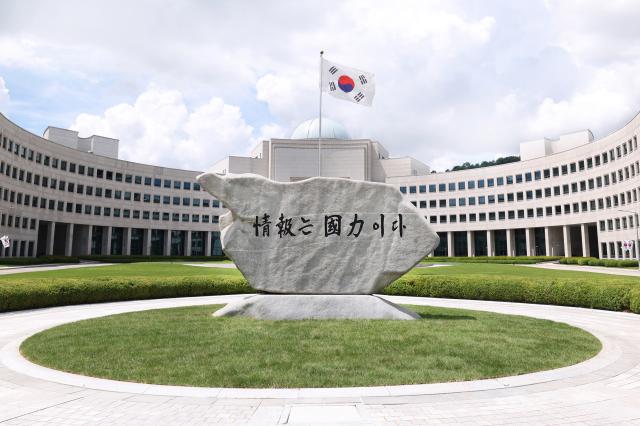
The issue will be discussed at a Cabinet-level meeting on Friday involving officials from the NIS, the Ministry of Unification, the Ministry of Education, the Ministry of Culture, Sports and Tourism, the Ministry of Science and ICT, and the Korea Communications Commission.
Under current law, most North Korean publications are classified as "special materials" under Article 7 of the National Security Act of 1970. The designation bans public access to materials deemed to promote or praise North Korea's political system or deny South Korea's democratic order.
According to Democratic Party lawmaker Youn Kun-young, a member of the National Assembly's Intelligence Committee, the NIS has notified lawmakers that it is reviewing whether to reclassify Rodong Sinmun at the request of the Ministry of Unification.

In a report to the National Assembly, the NIS said it is "positively considering expanding access to North Korean websites" in order to strengthen the public's right to know and promote inter-Korean exchange.
The agency also said it plans to cooperate with two bills currently under review by the National Assembly's Foreign Affairs and Unification Committee that would establish a legal framework for the management and use of North Korean materials.
At present, nearly 90 percent of all North Korean publications are classified as "special materials," making them inaccessible to the general public. Access is granted only with special approval from the Ministry of Unification and is limited to supervised viewing on designated computers at the Unification Education Institute. Ordinary users attempting to visit North Korean websites typically encounter a notice stating that the content is blocked as illegal or harmful.
As part of the policy shift, the NIS has also decided to abolish its existing internal guidelines on North Korean materials and transfer authority over their management to the Ministry of Unification, signaling a broader institutional realignment in how such content is regulated.
Copyright ⓒ Aju Press All rights reserved.