After interviewing Trump, The New York Times observed that he believes the United States can maintain — and even strengthen — its global hegemony by exercising military, economic and political power without restraint. The NSS reflects that conviction. It treats advanced technology not merely as a driver of growth, but as the core infrastructure of national power — and it assumes that U.S. dominance in that domain is not optional, but essential.
A 21st-Century Donroe Doctrine
What struck me most was how the NSS reordered geography. The Western Hemisphere comes first, mentioned ahead of Europe, Asia and the Middle East, alongside a pledge to “reaffirm and implement the Monroe Doctrine.” This rhetorical move has already produced new shorthand: the “Donroe Doctrine,” merging Donald Trump with James Monroe, and “geotech,” the idea that technology and geopolitics are now inseparable.
The administration’s logic is blunt. Crises reminiscent of the Cold War, especially near U.S. borders, must never be allowed to re-emerge. Arresting Venezuelan leader Nicolas Maduro — portrayed as a pro-China, pro-Russia rival — was framed as the first step in “putting our own house in order.” Trump went further, warning that “Colombia is very sick,” that “Cuba could collapse,” and that the United States would attack Iran if it killed protesters.
In Venezuela’s case, Trump made the economic rationale explicit. Calling it “the country with the world’s largest oil reserves,” he said the United States would oversee production, extract oil and manage the proceeds, returning part of them to Venezuelans. I read this not as subtle geopolitics but as something closer to imperial logic: direct control of foreign resources deployed to solve strategic and fiscal problems at home.
Europe Told to Take Care of Itself
Europe fares little better in this worldview. The NSS says European countries should take “primary responsibility” for their own defense and operate as sovereign states. Trump dismissed fears of NATO’s collapse, arguing that Europe is wealthy enough to pay for its own security.
Yet the imbalance remains hard to ignore. The European Union has roughly 600 million people and an economy far larger than Russia’s, yet still relies heavily on the United States while struggling to deter Vladimir Putin’s Russia of 140 million people. The NSS makes clear that Washington’s tolerance for this dependency is wearing thin.
A New Year’s poll illustrates the shift. Only 15 percent of Germans now see the United States as a partner; 78 percent name France. In Germany, debates once considered unthinkable — conscription, nuclear power and even nuclear armament — are no longer confined to the fringes.
Tariffs, Resources and the China Reality Check
Trump’s economic nationalism also reveals its limits. His enthusiasm for what he once called “beautiful” tariffs ultimately collided with China’s dominance in rare earths. Beijing’s recent ban on rare earth exports to Japan exposed a vulnerability that tariffs cannot fix.
The response has been increasingly territorial. The administration has floated Canada as a potential 51st state and openly discussed acquiring Greenland, an autonomous Danish territory and NATO ally. As Arctic sea routes open due to climate change, Trump has argued that Greenland is strategically essential — both to block China’s Arctic ambitions and to counter Russia’s nuclear submarines. Estimates suggest the island holds around 30 percent of global rare earth reserves.
Four Hours as a Strategic Message
The Maduro operation was not only about resources or regional order. It was also a demonstration. After the drawn-out wars in Iraq and Afghanistan, many Americans had come to view the U.S. military with skepticism. Capturing Maduro in what was described as four hours was presented as proof that U.S. special operations forces remain unmatched.
The contrast with Russia’s grinding, four-year struggle in Ukraine could not have been clearer. The message was aimed at allies and adversaries alike: American military power still works — quickly and decisively.
At the heart of the NSS is a sweeping redefinition of national security around technology. Advanced and emerging technologies are treated as pillars of national power, starting with artificial intelligence, described as “world-standard-setting” and foundational across both military and industry.
The strategy identifies 10 priority areas: AI; quantum technology and secure communications; biotechnology as a strategic economic and military field; semiconductors and advanced manufacturing as national security assets; autonomous and unmanned systems; cyber and digital technologies; energy and infrastructure that power AI systems; communications networks such as 5G; and related critical technologies and materials.
These technologies are no longer neutral. They are security assets, subject to export controls and strategic coordination, with China clearly in mind. The NSS insists that industrial and technological sovereignty is inseparable from national security — driving reshoring, supply-chain diversification and alliance-based standard-setting to entrench U.S.-centered technological dominance.
Genesis Mission: An AI Moonshot
A month before the NSS, Trump announced the Genesis Mission, a AI-driven effort to double U.S. scientific productivity and impact within a decade. Modeled explicitly on the Apollo program and the Manhattan Project, it aims to use AI to accelerate breakthroughs in fusion energy, drug development, advanced materials and aerospace.
Decades of federal scientific data would be opened for AI training, while private companies and universities would gain access to supercomputers at the Energy Department’s 17 national laboratories. The goal is unmistakable: to widen the technological gap with China, not merely maintain it.
China, Russia — and the Risks
The NSS draws a clear distinction between rivals. China is described as a competitor “in all fields,” while Russia is treated primarily as a military threat. Trump’s push to end the Ukraine war quickly appears, to me, less about peace than about loosening the China–Russia alignment.
The risks are obvious. A strategy built on technological primacy is likely to accelerate global rearmament and nuclear proliferation. That may explain why North Korea’s nuclear program barely features in the NSS at all.
At CES, Siemens CEO Roland Busch captured the industrial stakes succinctly: “As an example of AI driving a major industrial transformation, a fusion power plant can be implemented as a digital twin.”
What This Means for South Korea
For countries like South Korea, the implications are unavoidable. I draw one conclusion above all: self-reliance must be paired with stronger alliances to secure strategic autonomy.
That means strengthening AI and advanced technologies, reassessing military power — including debates that go beyond nuclear submarines — and aligning closely with U.S. technology and security frameworks. I do not believe the goal should be to become a top-three AI power. A more realistic path is a “1.5-power strategy” — riding on U.S. strength while securing independent capabilities.
In a winner-take-all era, there is no comfortable third place, and often not even a second. South Korea must expand its economic base, including through a deeper Korea–Japan economic community modeled loosely on the EU, and rethink its approach to North Korea as U.S. security strategy shifts.
The age of technology as neutral infrastructure is over. In Trump’s America, technology is power — and power, once again, is meant to be used.
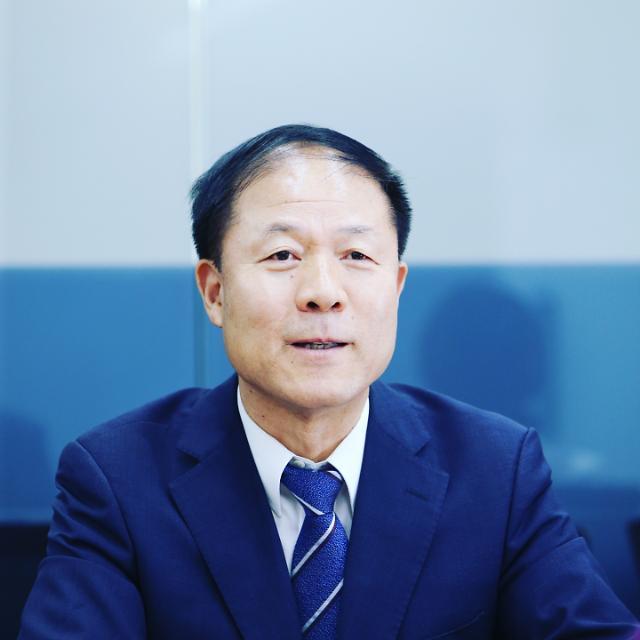
Kim Taek-hwan, director (Future Transition Policy Institute)
A national vision strategist who studies civilization. He earned a doctorate at the University of Bonn in Germany and was a visiting scholar at Georgetown University in the United States. He has worked as a JoongAng Ilbo reporter and a university professor. He has written more than 20 books, including “The U.S.-China Economic Hegemony War and the Future of the Korean Peninsula,” and has given more than 350 special lectures at the National Assembly and Samsung Electronics, among others.
* This article, published by Aju Business Daily, was translated by AI and edited by AJP.
Copyright ⓒ Aju Press All rights reserved.