SEOUL, January 27 (AJP) - A sudden jolt. A shudder. A mechanical doll's waist folds backward halfway, clanking onto the ground. Another teeters from side to side on a soft-soil running track before crashing headfirst, its legs flailing in a motion reminiscent of rigor mortis.
Steel Pinocchios were not born overnight.
The Defense Advanced Research Projects Agency (DARPA) Robotics Challenge, held from 2012 to 2015, often looked like child's play — engineers cheering on metal constructs of all shapes and sizes as they struggled through tasks that even toddlers might find trivial.
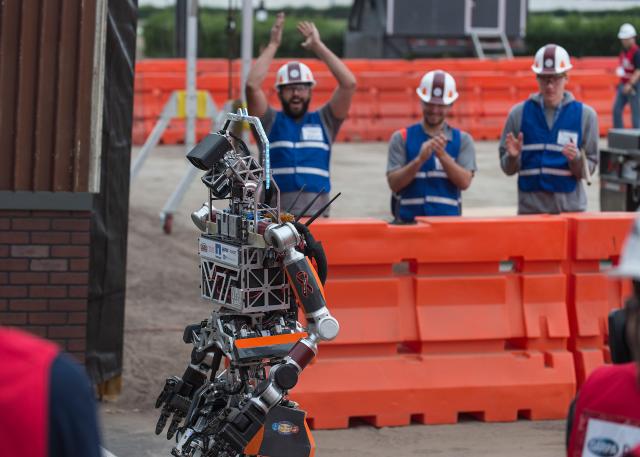
"Many participants in the DARPA challenge went on to join Figure AI or help develop Tesla's Optimus humanoid series," said Park Il-woo, project director at the Department of Machinery, Robotics & Equipment at the Korea Planning & Evaluation Institute of Industrial Technology (KEIT). "Even those who failed continued their research, making the challenge a critical milestone in the advancement of bipedal robots."
Early models struggled to open doors or walk in a straight line. Today's humanoids are ready to clock in.
The Tokyo pioneer
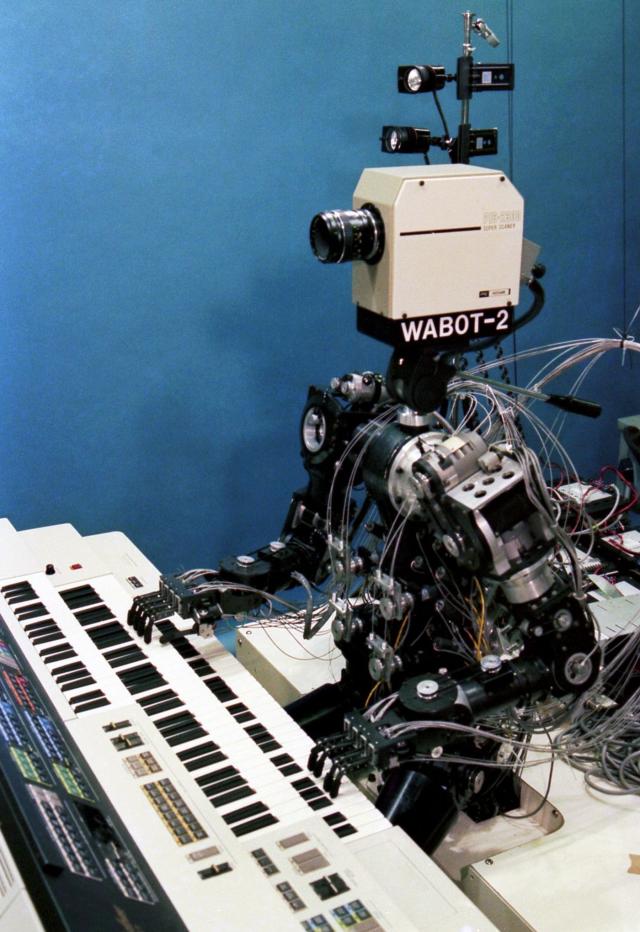
The project began in 1970, when four laboratories within Waseda's School of Science and Engineering joined forces to build an anthropomorphic intelligent robot. In 1973, they unveiled the world's first full-scale humanoid robot capable of quasi-dynamic walking, speaking Japanese, and grasping objects.
"The movements of early humanoids were, of course, awkward and crude compared with today's cutting-edge technology, but there is no doubt that this was an unprecedented and innovative challenge," said Atsuo Takanishi, director of Waseda University's Humanoid Robotics Institute, in a university news release.
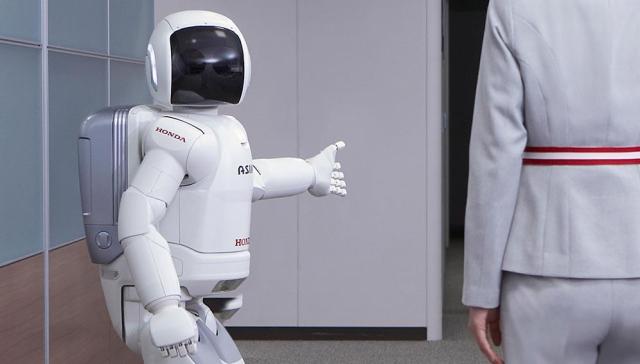
Honda Motor entered the race in 1986, spending a decade developing its E-series experimental models before unveiling P2 in December 1996 — the first self-regulating, two-legged robot capable of autonomous walking. That work culminated in ASIMO, introduced in November 2000.
While Japan led the early race, a different approach was taking shape across the Pacific. In 1992, roboticist Marc Raibert spun off Boston Dynamics from the Massachusetts Institute of Technology.
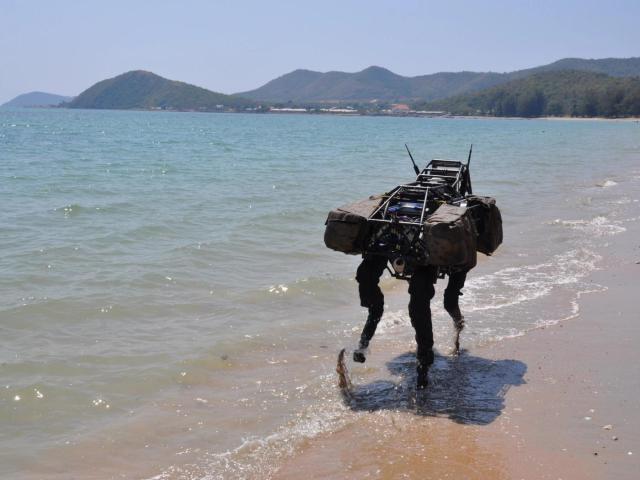
The company first made its name with quadrupeds. BigDog, developed in 2005, was designed as a robotic pack mule for soldiers. The military application proved short-lived — the U.S. Marines deemed it too loud for combat — but the company's mastery of dynamic balance would prove invaluable.
The March 2011 Tohoku earthquake and tsunami exposed a painful truth. The disaster crippled the Fukushima Daiichi nuclear power plant, triggering meltdowns and radioactive leaks. Robots should have been the solution — radiation made human intervention deadly — but Japan's machines proved inadequate.
DARPA responded by launching its most ambitious robotics program to date. The agency selected Boston Dynamics to build the humanoid platform: Atlas.
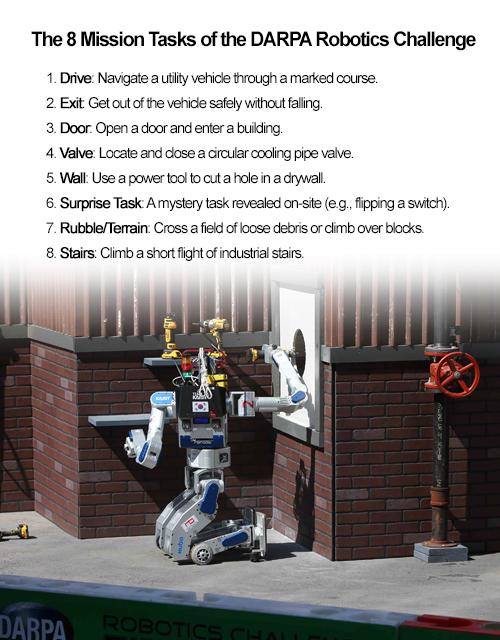
The DARPA Robotics Challenge Finals, held in June 2015 in Pomona, California, became a spectacle of mechanical ambition and frequent failure. Twenty-three teams competed, their humanoids tasked with driving vehicles, opening doors, and climbing stairs.
China's rapid ascent
While the United States, South Korea, and Japan traded blows in the humanoid arena, China quietly built its own robotics ecosystem. Only one Chinese team participated in the DARPA challenge.
Ubtech Robotics, founded in Shenzhen in March 2012, became China's first humanoid robot company to go public when it listed on the Hong Kong Stock Exchange in December 2023.
Its Walker series became China's first commercialized life-sized bipedal humanoid robots. By January 2026, Ubtech had produced its 1,000th Walker S2 unit at its Liuzhou factory.
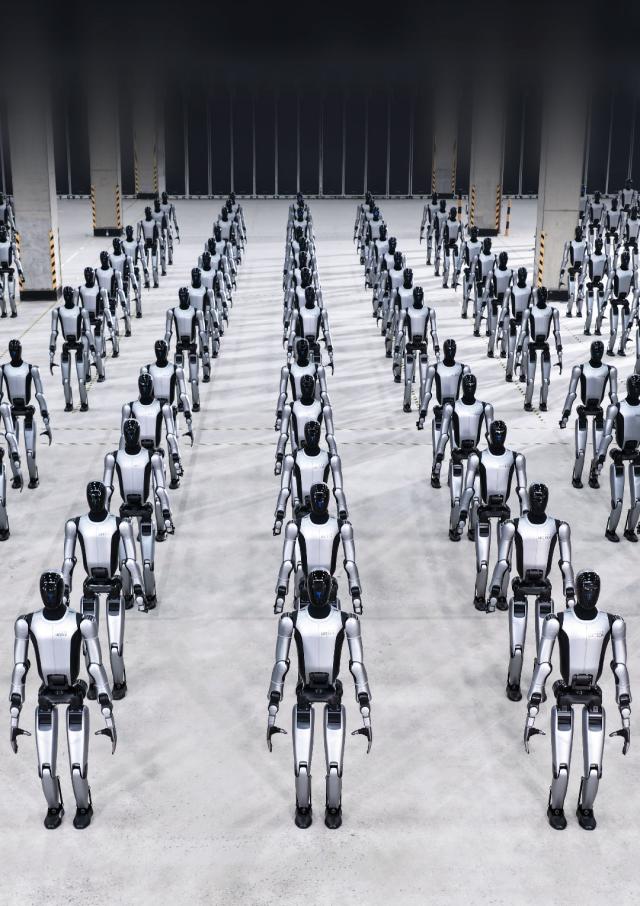
China now boasts more than 200 humanoid robot manufacturers, according to the China Machinery and Robotics Association. Cross-industry giants such as Xiaomi, XPeng Motors, and BYD have joined specialized startups in a three-pronged development push.
From hydraulics to electrons
Boston Dynamics continued refining Atlas after the DARPA challenge. The company changed hands several times — acquired by Google in 2013, sold to SoftBank in 2017, and purchased by Hyundai Motor Group for about $880 million in 2021.
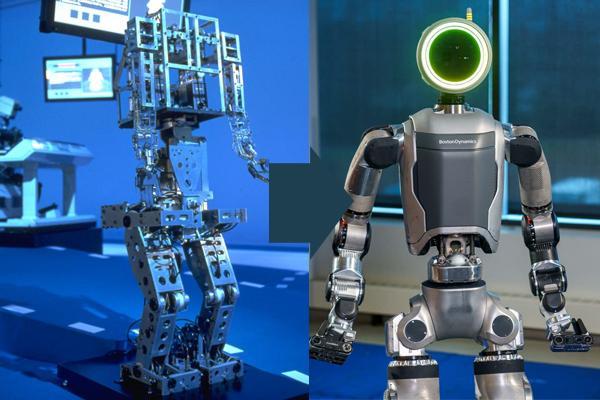
In April 2024, Boston Dynamics retired its hydraulic Atlas and unveiled a fully electric successor aimed at commercial use. At CES 2026, the company revealed the production version: 1.9 meters tall with a 2.3-meter reach, capable of lifting up to 90 kilograms, featuring 56 degrees of freedom and a four-hour battery life. Hyundai announced plans to produce 30,000 humanoid robots annually by 2028.
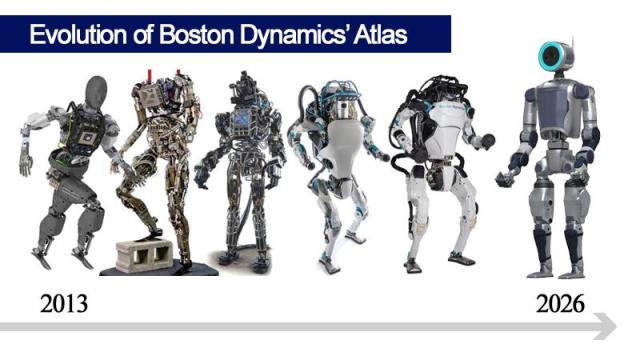
The humanoid industry now stands at an inflection point. What began as academic curiosity in Tokyo laboratories and military experiments in American deserts has evolved into a three-way race among the United States, China, and South Korea — each betting billions that bipedal machines will reshape manufacturing, logistics, and eventually daily life.
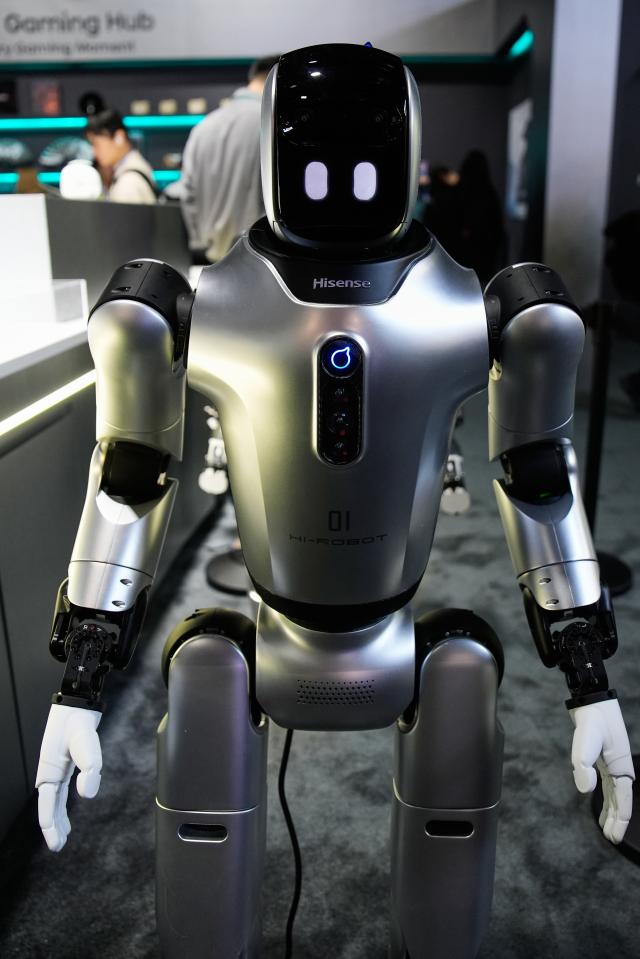
Hyundai's Atlas, Tesla's Optimus, and XPeng's Iron lead the automakers' push into robotics. Chinese startups such as Unitree and Ubtech are driving costs down at breakneck speed, while legacy players focus on precision and reliability.
"Now, with generative AI making it far easier to train robots and teach them new motions, the United States and China — which led those methodological breakthroughs — are pulling ahead."
The robots that stumbled and crashed at the DARPA challenge a decade ago are now walking factory floors. The question is no longer whether humanoids will work alongside humans, but how soon — and who will build them.

Copyright ⓒ Aju Press All rights reserved.