The Office of the United States Trade Representative (USTR) said Wednesday it had initiated investigations under Section 301 of the Trade Act of 1974 into the “acts, policies and practices” of major trading partners that may contribute to excess production and exports that burden U.S. commerce.
The probe covers South Korea, China, Japan, India, Taiwan, the European Union and several Southeast Asian economies including Vietnam, Thailand and Malaysia.
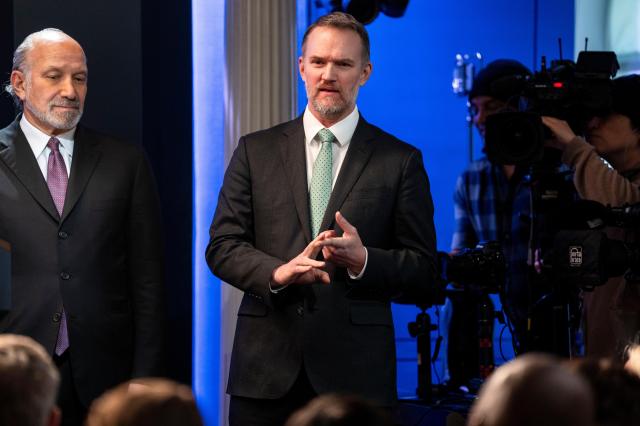
“The United States will no longer sacrifice its industrial base to other countries that may be exporting their problems with excess capacity and production to us,” U.S. Trade Representative Jamieson Greer said in a statement.
Greer said the investigation will determine whether government policies — including subsidies, state-backed financing, labor and environmental practices, and barriers to imports — have encouraged production levels “not aligned with market demand,” creating oversupply that harms U.S. manufacturers.
Section 301 investigations allow the U.S. government to impose retaliatory measures such as tariffs, fees or other trade restrictions if it determines that foreign practices are unfair or discriminatory.
The probe reflects Washington’s effort to reconstruct its tariff policy after the U.S. Supreme Court last month struck down the Trump administration’s country-specific “reciprocal tariffs” imposed under the International Emergency Economic Powers Act (IEEPA).
The administration had relied on emergency powers under the law to impose sweeping tariffs on several trading partners. The court ruled that the statute did not authorize such trade actions, effectively invalidating the measures.
U.S. officials have since indicated that Section 301 investigations will serve as a key legal pathway to pursue tariff actions on a country-by-country basis.
By launching investigations under the 1974 trade law, Washington can formally examine foreign trade practices and impose tariffs or other restrictions if they are deemed to harm U.S. commerce.
The process will include written submissions and public hearings. The USTR said comments are due by April 15 and hearings are scheduled to begin May 5.
The announcement adds to layers of complicated trade issues between Washington and Seoul despite the Korea-U.S. Free Trade Agreement.
South Korean officials have made a series of visits to Washington in recent weeks in an effort to ease tensions and prevent potential tariff measures.
Industry Minister Kim Jung-kwan and other trade officials have met with U.S. policymakers to explain Seoul’s investment and trade policies and highlight the scale of Korean corporate investment in the United States and address
concerns raised by U.S. policymakers regarding Seoul’s regulatory actions involving e-commerce platform Coupang.
South Korean authorities say the antitrust investigation into the company is part of normal competition enforcement, while U.S. officials have raised questions about whether such actions could disadvantage American investors.
The issue has emerged alongside broader U.S. complaints about market access, digital regulations and treatment of foreign technology companies.
Major U.S. investors in Coupang — Greenoaks and Altimeter — earlier this week withdrew a petition seeking a Section 301 probe into Seoul’s treatment of the company after U.S. officials signaled Washington may pursue a broader investigation into Korean trade practices affecting American firms.
Copyright ⓒ Aju Press All rights reserved.