![특사 자격으로 캐나다·노르웨이 방문을 마친 강훈식 대통령실 비서실장이 31일 인천공항 2터미널을 통해 귀국하고 있다. [사진=연합뉴스]](https://image.ajunews.com/content/image/2026/02/01/20260201090830767189.jpg)
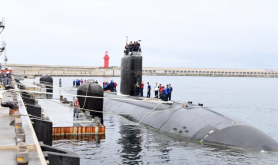
Presidential chief of staff Kang Hoon-sik said Saturday that Seoul remains confident in its technological edge, even as it competes against Germany for what is widely regarded as one of the world’s largest defense procurement projects.
“Our submarine technology is significantly better, and we believe any remaining issues can be addressed through long-term industrial cooperation with Canada,” Kang told reporters at Incheon International Airport upon returning from back-to-back visits to Canada and Norway, where he led a senior “Team Korea” delegation.
The delegation included officials and executives from a South Korean consortium led by Hanwha Ocean and HD Hyundai Heavy Industries, alongside representatives from Hyundai Motor and Korean Air. Seoul is pitching the bid as a broad industrial package rather than a stand-alone weapons sale.
Canada’s Canadian Patrol Submarine Project (CPSP) is estimated at up to 60 trillion won ($41.4 billion), including decades of maintenance, repair and overhaul. The Korean consortium was recently shortlisted as one of two final contenders, alongside Germany’s ThyssenKrupp Marine Systems.
While South Korea has emphasized its shipbuilding capacity, missile integration and faster delivery timelines, Kang acknowledged that Germany enjoys structural advantages. Canada and Germany maintain close security cooperation under the North Atlantic Treaty Organization, and German technology underpins parts of South Korea’s own submarine development.
Competing against Germany — which provided original technology for Korea’s submarine capabilities and shares NATO membership with Canada — "will not be easy to crack,” Kang said.
The stakes are high because Canada has made clear that submarine performance alone will not decide the winner. According to bidding instructions issued late last year, only 20 percent of the evaluation is based on platform capability. Half of the score is tied to long-term sustainment, with the remainder split between financial capacity and economic benefits to Canada.
That weighting has transformed the competition into what officials describe as a de facto industrial partnership contest. Seoul has positioned the submarine bid as a national strategic export project, promising investment across defense manufacturing, shipbuilding, automotive supply chains, energy and critical minerals — sectors that could generate tens of thousands of Canadian jobs over several decades.
Kang said Canadian Prime Minister Mark Carney expressed strong interest in South Korea during meetings that included corporate leaders, though he cautioned against reading too much into diplomatic signals at this stage.
Asked about the timeline, Kang said a final decision could come “as soon as six months” or take “up to a year,” adding that Canadian officials are expected to visit South Korea as part of the evaluation process.
Kang’s trip yielded more tangible results in Norway, where South Korea signed a 1.3 trillion won contract to export its Chunmoo multiple rocket launcher system. He said Norway’s decision could encourage neighboring countries such as Sweden and Denmark to consider South Korean defense systems, potentially expanding Seoul’s footprint in Northern Europe.
Copyright ⓒ Aju Press All rights reserved.