
Industry data released Monday showed shipyard utilization at HJ Heavy Industries, Daehan Shipbuilding and K Shipbuilding topped 100% last year.
Utilization above 100% indicates expanded working hours, including holiday and night shifts, as the companies ramp up production after recent contract wins.
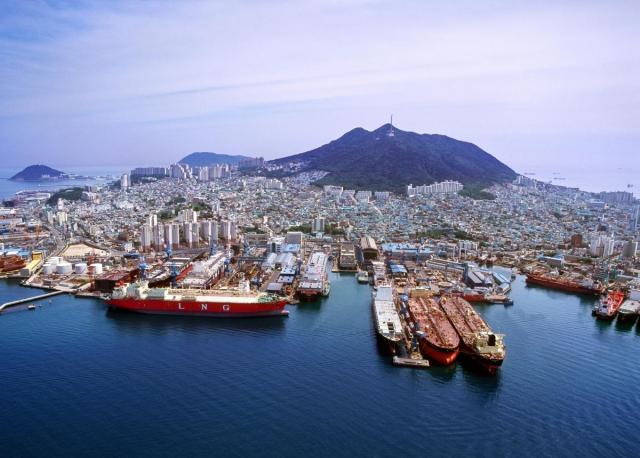
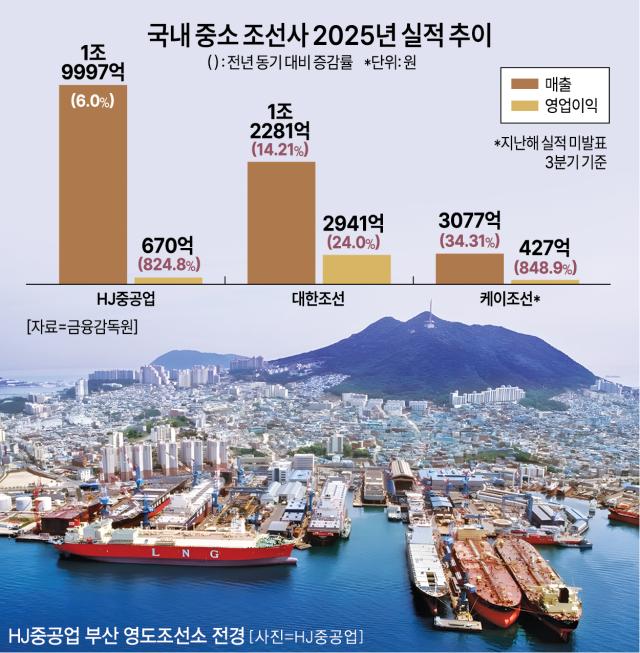
HJ Heavy Industries, which builds both naval and commercial vessels, has been building a steady order backlog. With wins in naval work, including U.S. Navy ship maintenance, repair and overhaul, its dock at the Yeongdo shipyard in Busan is already booked through 2028. Its shipbuilding order backlog rose to about 2.1026 trillion won as of the third quarter of last year, more than doubling from 915.1 billion won in 2021.
Daehan Shipbuilding has accelerated construction on the back of orders since the start of the year. In early January, it secured four Suezmax crude oil tankers from new customers, then added two more of the same type from a European shipowner. The company plans to lift revenue quickly by increasing dock turnover.
K Shipbuilding’s utilization also exceeded 110%, a sharp increase from 93.47% in 2024.
The expanding backlogs have translated into stronger earnings. HJ Heavy Industries posted operating profit of 67 billion won last year, up 824.8% from a year earlier, as shipbuilding revenue rose and profitability improved.
Daehan Shipbuilding maintained operating margins in the 20% range for five straight quarters. On a consolidated basis, its 2025 revenue was 1.2281 trillion won and operating profit was 294.1 billion won, up 14.2% and 86.1%, respectively, from the prior year.
K Shipbuilding has not yet finalized last year’s full results, but analysts point to improving utilization as orders increase. Its cumulative operating profit through the third quarter of last year was 84.7 billion won, more than four times the 15.8 billion won recorded a year earlier. Early this year, it also signed new shipbuilding contracts for four 50,000-ton petrochemical product carriers.
Some in the market say the gains at smaller shipbuilders reflect structural change rather than a temporary upswing, as they move away from low-priced volume orders and focus on selectively winning higher value-added vessel types.
“Smaller shipbuilders used to mainly fill gaps left by larger yards, but they have moved into a phase of focusing on higher value-added ship types,” an industry official said. “The biggest change is that profitability is improving even as dock utilization rises.”
* This article has been translated by AI.
Copyright ⓒ Aju Press All rights reserved.