
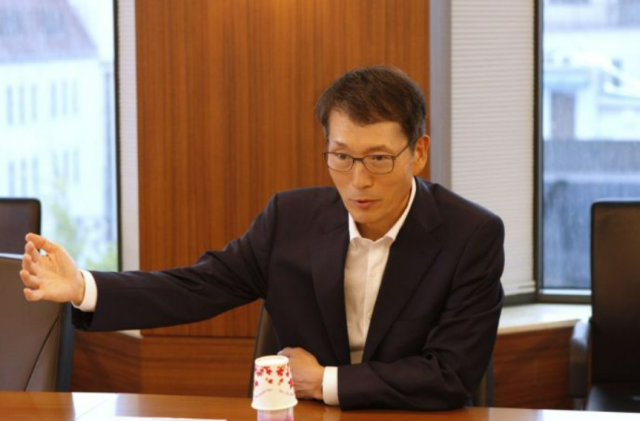
The Korea Automobile & Mobility Association, known as KAMA, said it held a meeting of its eco-friendly vehicle committee on Wednesday under the theme “Trends and implications of major countries’ auto environmental regulations and policy changes.”
KAMA said the session compared and analyzed regulatory and policy shifts in major markets to assess their impact on the competitiveness of South Korea’s auto industry and to draw lessons for more effective vehicle greenhouse-gas reduction policies.
Kang Nam Hoon, KAMA’s chairman, said major countries are “adjusting the pace of electrification” as EV demand weakens and governments move to protect domestic industry. He said the United States has reduced regulatory burdens on its auto industry, including scrapping EV mandates after the launch of the Trump administration. He added that the European Union, after running strict vehicle greenhouse-gas rules, has moved to adjust targets, expand flexibility for carrying over compliance and reflect preferential treatment for European-made EVs in its regulations to protect the auto ecosystem.
Kang said Japan, whose export structure is similar to South Korea’s, is keeping environmental rules relatively low and encouraging companies to transition voluntarily, even though it is the world’s No. 2 auto exporter and No. 3 producer. By contrast, he said, South Korean companies are already facing significant difficulties under current regulations.
He warned that moves to tighten rules further — to what he called the world’s highest level, linked to national emissions-reduction targets — would impose an “unbearable” burden on industry. “Excessive regulation could accelerate dependence on price-competitive Chinese EVs and their inflow into the domestic market, raising concerns that the domestic market could be eroded,” he said.
To cut greenhouse gases effectively, Kang said, policymakers should “boldly” reduce reliance on new-vehicle rules that pressure companies and instead focus on measures that create demand, including expanded support for scrapping aging vehicles, more charging infrastructure and stronger incentives to buy eco-friendly vehicles.
He also called for urgent, broad support to maintain and strengthen domestic production during the transition, including expanding production tax credits so EVs made in South Korea can secure real competitiveness.
Kim Cheol Hwan, a managing director at InnoThink Consulting, said global climate policy, once focused on carbon cuts, is being reshaped into an “industrial security and supply chain strategy” centered on protecting domestic industry and countering China. He said U.S. and EU tariffs and policy changes do not mean abandoning electrification, but show a commitment to watch market conditions while prioritizing keeping manufacturing bases within their regions.
Kim said the rapid shift to battery electric vehicles is running into practical barriers, including reduced purchasing power due to high interest rates and a lack of charging infrastructure, widening the gap between regulatory targets and what markets can absorb. He said consumers’ preference for hybrids will likely persist in the short to medium term.
He said major countries are increasingly diversifying realistic emissions-cutting options rather than locking in a single technology path to minimize industrial friction, adding that punitive regulation alone has limits in driving demand.
Kim urged South Korea to secure long-term stability by operating rules more flexibly, including institutionalizing conditional buffers if external variables that hurt electrification emerge, such as sudden market shifts or trade-related problems. He said the overall direction of targets should remain, but the role of hybrids should be recognized quantitatively based on their real contribution to carbon reductions, and flexibility in emissions-reduction pathways should be ensured.
Experts at the meeting agreed that, amid changes in the global regulatory environment, South Korea needs regulatory policies that fully consider auto industry competitiveness. They also said EV adoption should be paired with support measures that keep the domestic production base solid while meaningfully creating demand.
* This article has been translated by AI.
Copyright ⓒ Aju Press All rights reserved.