
The global spread of K-culture is translating into rising interest in learning Korean, industry officials said. With the Netflix animated series “K-Pop Demon Hunters” drawing attention to the language and BTS’ return in March also anticipated, demand for Korean study is expected to grow further.
Officials said the expanding reach of Korean content worldwide is naturally leading more people to seek out Korean-language learning.
This year is a milestone for Hangul, marking the 580th anniversary of the proclamation of Hunminjeongeum, the 100th anniversary of the establishment of Hangul Day and the 100th anniversary of the proclamation of Hunmaengjeongeum, the Korean Braille system. The government is pursuing projects to revisit Hangul’s history and value. With BTS’ comeback gaining momentum, expectations are rising that Korean-language study could increase sharply among K-pop fans.
Interest has also climbed in the United States, boosted by the popularity of “K-Pop Demon Hunters” last year. The New York Times reported that on the language-learning app Duolingo, the number of U.S. learners studying Korean rose 22% from a year earlier. Foreign media attributed the increase in part to the show’s original soundtrack, “Golden,” which includes Korean lyrics that drew fans’ attention to the language.
BTS are also cited as a leading example of the Korean-learning boom. In a 2022 blog post, Duolingo said Korean learners had been steadily increasing, reporting that from June 2021 to June 2022, the number of users learning Korean in English rose 29%. It said popular culture — especially BTS — was a major motivation for studying Korean.
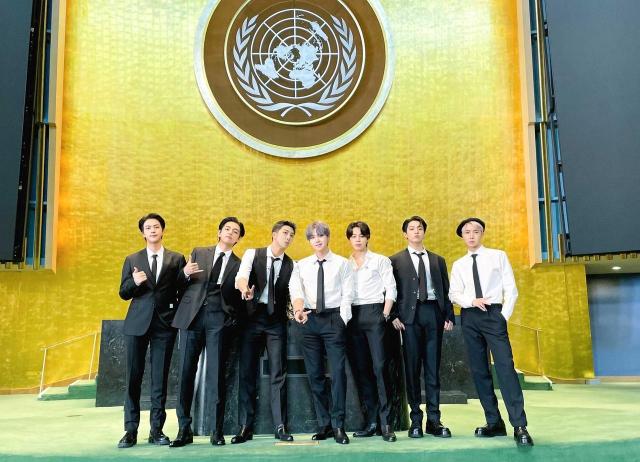
In 2021, BTS spoke as representatives of future generations at a special event of the U.N. General Assembly, the High-level Political Forum on Sustainable Development. The seven members took turns delivering their message in Korean.
Leader RM also addressed the changed status of K-pop and the Korean language in a speech at the “2025 Asia-Pacific Economic Cooperation CEO Summit” held in Gyeongju last year. “When BTS first went overseas 10 years ago, we never imagined that songs in Korean would work on the global stage,” he said. “But our fandom, ARMY, stayed with us beyond language, and thanks to that, we can stand here today.”
Some Hangul-related groups have also cautiously voiced hopes that a BTS performance at Gwanghwamun could help highlight the value of Hangul. With debate continuing over adding another Hangul signboard at Gwanghwamun, they said showcasing Hangul’s beauty through a media facade could help broaden public support for the idea.
* This article has been translated by AI.
Copyright ⓒ Aju Press All rights reserved.