
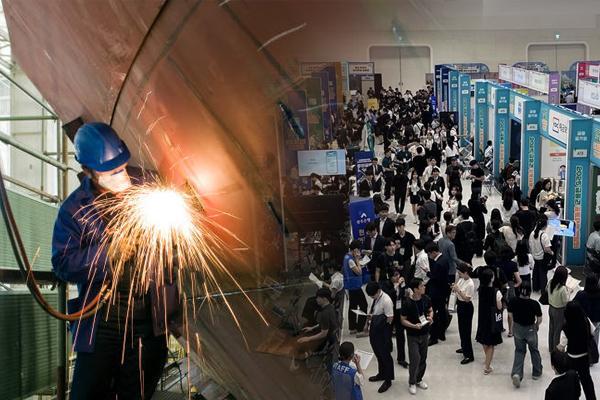
Leading the shift is HD Hyundai, the world's largest shipbuilder by order backlog, which plans to prioritize replacing departing foreign workers with Korean nationals as labor contracts expire.
As of the end of 2025, HD Hyundai's shipbuilding units employed about 11,300 foreign workers, including subcontractors, accounting for roughly 19.8 percent of its 47,000-strong workforce.
The industry's reliance on foreign labor has grown steadily in recent years. The number of overseas workers at Korean shipyards surged from 4,640 in 2021 to about 20,200 by the end of 2024, quadrupling in three years, as yards struggled to attract domestic workers to physically demanding jobs with relatively modest pay.
However, a prolonged shipbuilding supercycle has strengthened the sector's finances, enabling companies to absorb the higher costs of local hiring and invest aggressively in artificial intelligence and robotics.
The combined order backlog of Korea's three major builders stood at about $124 billion in late 2025, near record highs. Vessel exports reached $31.2 billion last year, up 22 percent, driven by demand for LNG carriers and large container ships, according to the Korea Chamber of Commerce and Industry.
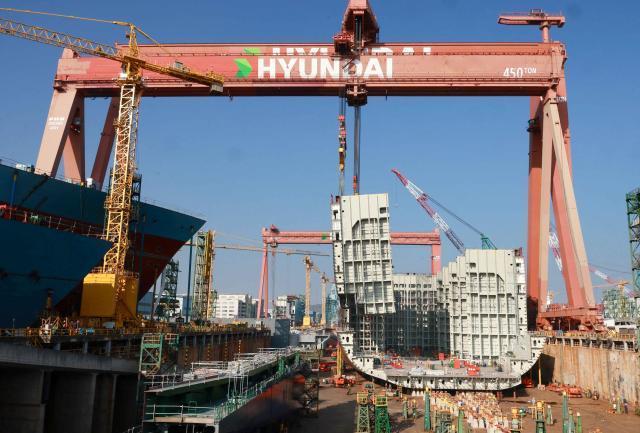
Domestic political pressure has added momentum. President Lee Jae Myung publicly questioned in January whether foreign workers were displacing Korean job seekers.
Yet domestic hiring is only one pillar of a broader transformation. Korean builders are simultaneously pouring resources into AI, digital twins and robotics to offset rising labor costs and chronic shortages of skilled technicians.
Earlier this month, HD Hyundai selected Siemens Xcelerator as the backbone of an integrated digital platform spanning its global shipyards under its "Future of Shipyard" program, targeting completion by 2030.
"The selection of Siemens Xcelerator represents an important milestone in advancing HD Korea Shipbuilding & Offshore Engineering's digital shipbuilding strategy," said Lee Tae-jin, executive vice president at HD Hyundai.
The group has also expanded its partnership with Palantir Technologies to deploy AI-driven analytics across its operations.
Hanwha Ocean is investing about 160 billion won to turn its Geoje yard into a smart facility, targeting automation of up to 70 percent of production processes. The company is deploying drones and internet-of-things sensors to collect real-time data, while expanding the use of welding and fabrication robots.
Hanwha is also applying its proprietary smart-yard technology to its Philadelphia shipyard in the United States as it seeks to expand in the North American maintenance, repair and overhaul market.
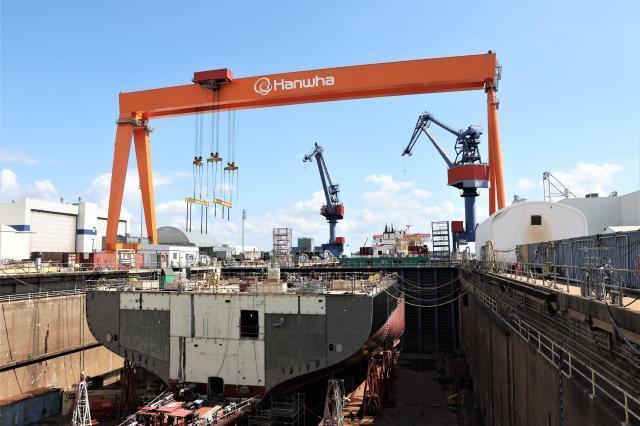
Industry officials say the parallel push for domestic hiring and automation reflects a calculated strategy to maintain Korea's competitiveness against Chinese rivals, which now control about 63 percent of global new vessel orders.
By pairing a more stable workforce with advanced digital tools, Korean shipbuilders are betting they can preserve their technological edge and long-term leadership in the global market.

Copyright ⓒ Aju Press All rights reserved.
