
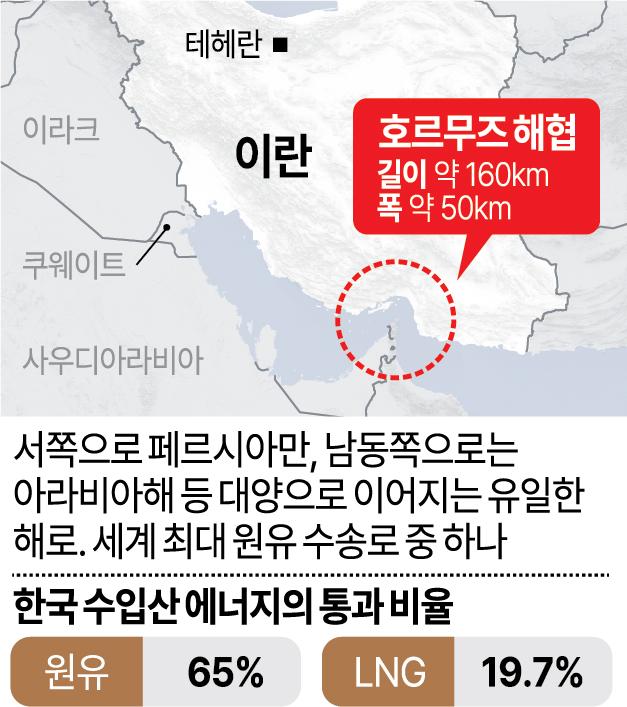
According to the shipping industry on Tuesday, global reinsurers are reviewing whether to raise reinsurance rates for war risk coverage on vessels passing through the strait.
Some observers had speculated that global marine insurers were pulling war risk coverage and halting related reinsurance. Industry sources said the issue is not a suspension but potential increases in reinsurance rates.
War risk insurance is an add-on policy, separate from standard liability coverage, that ships typically buy when entering areas where conflict is possible.
Premiums are generally calculated as a percentage of a ship’s value. While rates vary by vessel, they are typically about 0.01% in normal times, but can surge when military tensions rise. During last year’s Red Sea crisis, war risk premiums climbed to about 1% of ship value, nearly 100 times the usual level.
For ships transiting the Strait of Hormuz, war risk reinsurance rates are currently said to be about 1% of vessel value. Depending on the risk level by port of call, rates could rise to 2% to 3%. For a ship valued at 100 billion won, that would mean up to 3 billion won in additional premiums.
Industry officials said the burden would largely fall on shipping companies. While marine insurance contracts are signed directly between carriers and insurers, the terms are heavily influenced by reinsurers’ decisions.
The industry expects higher premiums to push up ocean freight costs and, over time, raise crude oil import costs and add to energy price uncertainty. Analysts said countries like South Korea, which rely heavily on imported crude, are especially exposed to swings in transport costs on Middle East routes.
President Trump early Tuesday mentioned providing military protection for tankers passing through the Strait of Hormuz and raised the possibility of insurance and guarantee support for energy transport vessels in the Gulf region through the U.S. International Development Finance Corp. Industry officials said the remarks appeared largely political and were unlikely to translate into policy.
South Korea’s government is also monitoring the situation and preparing responses. The Ministry of Oceans and Fisheries and other agencies are checking in real time the locations and safety conditions of South Korean-flagged ships operating in Middle Eastern waters, according to industry officials.
About 40 South Korean-flagged vessels are believed to be operating near waters around the Strait of Hormuz. They have moved to nearby safer waters as a precaution.
Still, anxiety among crews remains significant, sources said. While most sailors are continuing their duties calmly, they are reporting heavy psychological stress amid uncertainty over how long the situation will last.
“Given the limits on food and supply replenishment due to the nature of shipping, swift government action and support are needed to relocate vessels in the area,” one industry official said. “If tensions around the Strait of Hormuz drag on, we cannot rule out risks to ship safety and possible disruptions to crude oil transport.”
* This article has been translated by AI.
Copyright ⓒ Aju Press All rights reserved.