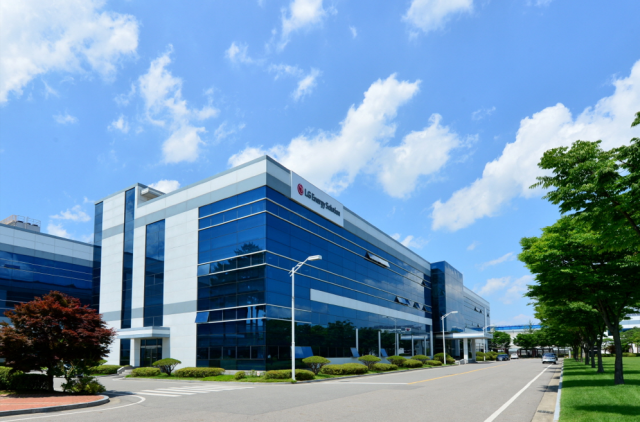
Chief Executive Kim Dong-myung told shareholders Friday at the company's annual general meeting in Seoul that the industry has entered a period of "value shift," in which growth is migrating away from electric vehicles and toward energy infrastructure.
"We will seize new growth opportunities amid structural changes in power demand," Kim said.
The remarks amounted to a formal acknowledgment that the battery sector's center of gravity is tilting from EVs to grid-scale storage, driven by rising electricity consumption from artificial intelligence data centers and the expansion of renewable energy generation worldwide.
LG Energy Solution, one of Korea's largest battery maker, plans to raise ESS cell production capacity to more than 60 gigawatt-hours by the end of 2026. The company's ESS order backlog stood at 140 GWh at the end of 2025, and it is targeting an additional 90 GWh in new orders this year.
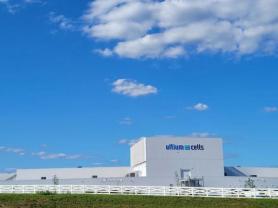
North America is the centerpiece of the push. The company now operates five ESS production sites in the region, including standalone plants in Michigan and a facility run by its Canadian subsidiary NextStar Energy, as well as joint ventures with Honda in Ohio and partnerships with Ultium Cells in Tennessee. It is also converting existing EV battery lines to ESS use to minimize fresh capital spending.
The North American focus carries a distinct policy advantage. Washington's Inflation Reduction Act restricts tax incentives for batteries and critical minerals sourced from Chinese supply chains, and LG Energy Solution's domestic manufacturing footprint positions it as one of the few non-Chinese suppliers of lithium iron phosphate cells in the United States.
In Europe, the company is repurposing idle EV production capacity for ESS manufacturing, a strategy designed to contain investment costs while responding to regional demand.
LG Energy Solution said it aims to raise the share of ESS and new businesses in its portfolio from about 20 percent at present to the mid-40 percent range, reducing its dependence on the volatile EV market.
Industry analysts say companies that secure ESS production capacity and non-Chinese supply chains early are likely to gain a durable competitive edge as the battery market transitions from a single reliance on electric vehicles to a broader energy infrastructure model.

Copyright ⓒ Aju Press All rights reserved.