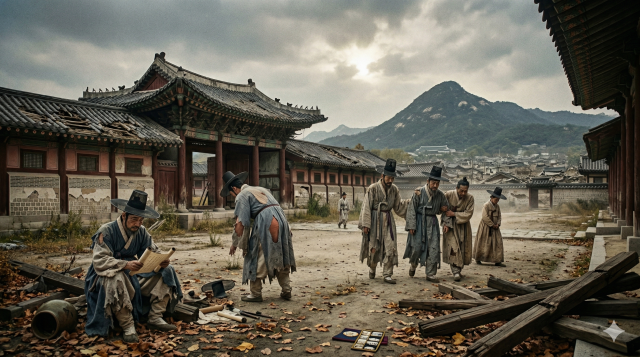
SEOUL, April 01 (AJP) - After surviving five centuries of invasions and internal coups, the Joseon Dynasty’s ultimate undoing was a systemic collapse of fairness that data scientists have now mapped for the first time. By analyzing 14,600 officials across the "Lee" regime's 500-year history, a joint research team from the Korea Advanced Institute of Science and Technology (KAIST) and Hong Kong universities has pinpointed exactly how power hoarding by a few elite families broke the state's back.
The study, led by Professor Park Ju-yong of the KAIST Graduate School of Culture Technology, used complex systems science to track the Total Success Index (TSI). This metric measured an official’s achievement by combining their rank with their length of service. The data shows that for 400 years, the dynasty remained remarkably resilient because its civil service system maintained a level of merit-based social mobility.
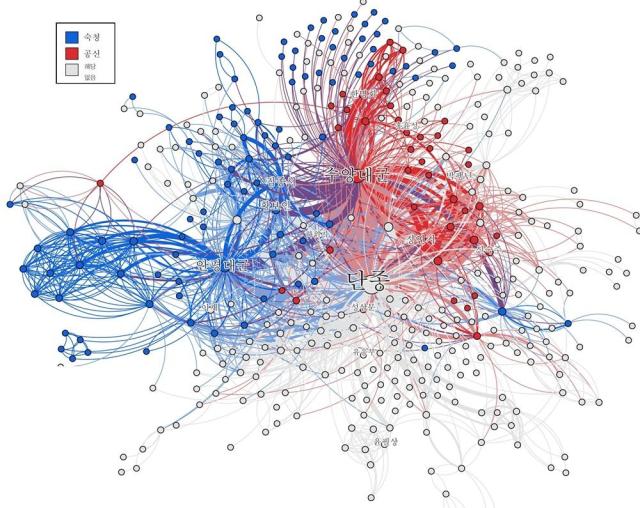
Even the bloody 1453 Gyeyu Jeongnan coup—which saw Grand Prince Su-yang seize the throne from his nephew, King Dan-jong—appears in the data as a localized shock rather than a systemic failure. The researchers' network analysis shows power shifting between royal factions, such as those surrounding Prince An-pyeong, but the broader bureaucratic machinery remained functional.
The secret to the dynasty's final collapse was found in the data from the 19th century. The maps show a sudden, sharp stratification where a handful of clans, such as the Andong Kim and Pungyang Cho, effectively hijacked the state. By monopolizing the civil service exams and high-ranking offices through influence rather than talent, these families destroyed the meritocracy that had sustained the Lee family's rule for half a millennium.
"The data proves that the fall of Joseon wasn't just a series of unfortunate events, but a structural death spiral," said Professor Park Ju-yong. "When the mechanism for fair recruitment broke, the foundation of the entire nation gave way."
The research team, which included first author Dr. Choi Dong-hyuk, plans to use these digital humanities tools to compare South Korea's historical bureaucracy with other global empires to see if similar patterns of elite capture predicted their downfall as well.
(Reference Information)
Journal/Source: Physica A: Statistical Mechanics and Its Applications
Title: Total Success Index and the Longitudinal Dynamics of Bureaucratic Stratification in Joseon Korea
Link/DOI: https://doi.org/10.1016/j.physa.2026.131353

Copyright ⓒ Aju Press All rights reserved.