SEOUL, April 05 (AJP) -A number of foreign-flagged vessels have begun slipping through the heavily militarized Strait of Hormuz, offering tentative signs of movement in a waterway that remains effectively under Iran’s control — but for South Korea, the path out is still far from clear.
The latest breakthroughs have come from Europe and Japan.
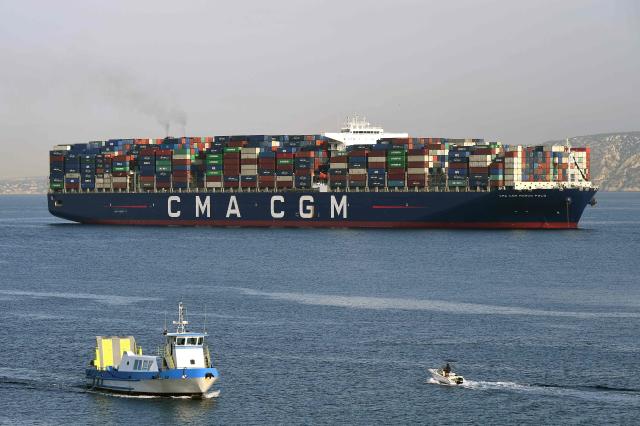
A French-owned container ship operated by CMA CGM successfully transited the strait this week, becoming one of the first Western-linked vessels to do so since Iran imposed its de facto blockade.
The ship reportedly signaled its nationality to Iranian authorities before entering, underscoring how passage is now contingent on political signaling as much as maritime protocol.
Japan has also managed limited progress. A liquefied natural gas carrier linked to Mitsui O.S.K. Lines exited the Gulf — the first Japan-related vessel to pass since the conflict began — followed by an LPG tanker that navigated through Iranian territorial waters.
Tokyo has stressed that these passages were not the result of direct government negotiations, suggesting that shipping firms are cautiously testing routes under evolving Iranian conditions.
These isolated crossings align with Iran’s increasingly explicit policy of selective access.
Tehran has moved beyond vague assurances and begun naming “friendly nations” eligible for passage. In a televised statement, a senior Iranian military spokesperson described Iraq as a “brother country” exempt from restrictions.
Iran has also indicated it will allow vessels carrying humanitarian goods — including food and livestock feed — to pass, while continuing to restrict ships linked to what it considers hostile states.
Still, the practical application of these rules remains opaque. Questions persist over whether exemptions apply based on a vessel’s flag, ownership, cargo, or destination — leaving shipping companies to weigh the risks of entering one of the world’s most volatile chokepoints.
Seoul is watching the situation with caution. South Korea’s Foreign Ministry said Sunday that the differing outcomes reflect a complex mix of variables, including a vessel’s nationality, ownership structure, cargo type, destination and even crew composition.
“Conditions vary by ship and by country,” the ministry said, adding that the government’s priority remains the safety of vessels and crew.
It emphasized that Seoul is working with international partners to ensure freedom of navigation in line with global maritime norms, rather than pursuing bilateral negotiations with Tehran.
For now, Korean shipping firms appear unwilling to act unilaterally. A total of 26 South Korean vessels, carrying 173 crew members, remain stranded inside the Gulf, with operators opting to wait for clearer security guarantees rather than attempt piecemeal exits.
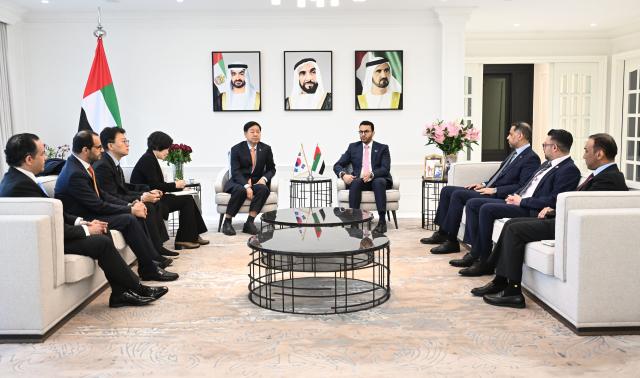
The envoys told Deputy Prime Minister and Finance Minister Koo Yun-cheol in a meeting on April 3 that Korea remains a “top-tier partner,” vowing close coordination to ensure stable supply of crude and other key resources.
The pledge came after Seoul requested uninterrupted access to critical inputs including crude oil, naphtha and urea, warning that a prolonged Middle East conflict could weigh heavily on the Korean economy.
Korea sourced 69.1 percent of its crude imports from the Middle East last year, with Saudi Arabia as its largest supplier and Qatar a key LNG provider. At the same time, Korea’s advanced refining capacity — designed to process heavy, sulfur-rich Middle Eastern crude into high-value products — has made it an indispensable node in the global energy supply chain.
Korean refiners supply a quarter of Australia’s imported petroleum products and nearly 70 percent of U.S. jet fuel imports. That interdependence helps explain why Korea is important to Gulf producers in fear of the country preferring alternative crude such as Brent or WTI.
Copyright ⓒ Aju Press All rights reserved.