SEOUL, April 06 (AJP) - Samsung Electronics is poised to deliver its strongest quarterly reports to date with January-March operating profit expected to approach or exceed full-year earnings for 2025, underscoring the sheer scale of the ongoing memory super-cycle driven by artificial intelligence demand.
According to market consensus compiled by FnGuide, the South Korean tech giant is projected to post an average operating profit of 40.5 trillion won ($29.9 billion) for the January–March period.
The estimate comes just shy of last year’s full-year operating profit of 43.6 trillion won, though some institutions have recently raised their forecasts as high as 53.9 trillion won.
The figures would mark a more than sixfold jump from 6.6 trillion won recorded a year earlier, and roughly double the previous quarterly high of 20.1 trillion won logged in the fourth quarter.
Samsung, the world’s largest memory chipmaker with businesses spanning semiconductors, smartphones and consumer electronics, is set to release its earnings guidance before the market opens on Tuesday.
Shares have jumped nearly 4 percent as of midday, outperforming KOSPI gain of 1.7 percent.
Analysts say the surge reflects an unprecedented “super-cycle” in memory chips, as explosive demand for AI infrastructure spills over into broader segments of the market amid tight supply.
“We assume that the year-on-year growth rate of facility investment by big tech companies will be revised upward to 92 percent, in which case DRAM demand growth this year will reach 20.3 percent,” said Song Myung-sup, an analyst at iM Securities, who projected operating profit of 45.3 trillion won.
Song added that Samsung’s return on equity for 2026 is expected to reach 39 percent, surpassing the previous 30-year peak of 34 percent set in 2004.
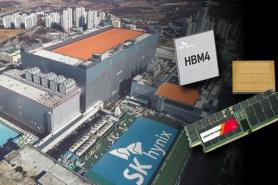
At the core of the rally is high-bandwidth memory (HBM), a critical component for AI servers, where Samsung Electronics and SK hynix effectively hold a duopoly — placing them in what industry observers describe as a rare “super-supplier” position.
Even if U.S. big tech firms slow capital spending, securing HBM — a core component in the AI arms race — remains non-negotiable. The current HBM4 and next-generation memory market is effectively dominated by the two Korean firms, ensuring structurally firm demand.
The balance of power has also shifted decisively toward suppliers. Memory makers are increasingly signing two- to three-year supply contracts with major tech firms — a departure from the industry’s traditionally short-term cycles — creating a structural buffer that prevents short-term market volatility from immediately translating into earnings deterioration.
The broader upcycle remains intact. Analysts expect average DRAM prices to rise more than 60 percent this year, driven by exponential increases in memory capacity per AI server and compounded by tight supply in conventional DRAM.
Unlike past cycles marked by aggressive capacity expansion and subsequent price collapses, Korean chipmakers have maintained disciplined production strategies, prioritizing profitability and sustaining pricing power.
Despite concerns over potential supply disruptions stemming from the Middle East conflict, industry observers say Korean memory makers are likely to maintain strong earnings momentum for several years, with demand structurally underpinned and sellers firmly in control of pricing.
Growth, however, is expected to be uneven across Samsung’s businesses. While the semiconductor (DS) division continues to drive earnings, the mobile (MX) and display (SDC) units are likely to face margin pressure from rising component costs.
Even so, Samsung is expected to press ahead with aggressive investment. Capital expenditure is projected to reach 114.3 trillion won in 2026, reflecting continued bets on AI-driven demand.
Macroeconomic uncertainties remain a variable, but their direct impact on production is expected to be limited.
“While geopolitical risks in the Middle East and North Africa persist, the stability of Samsung’s captive projects, such as the P4 and NRD-K facilities in Pyeongtaek, remains high,” said Ryu Tae-hwan, an analyst at Eugene Investment & Securities.

Copyright ⓒ Aju Press All rights reserved.