
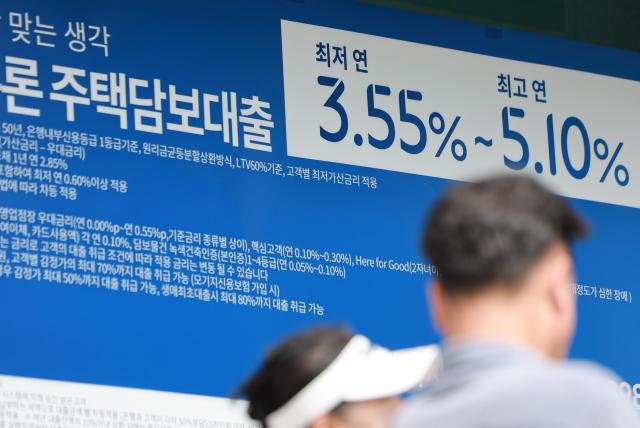
SEOUL, April 9 (AJP) — South Korea’s non-bank lending is expanding again as tighter bank regulations and elevated borrowing costs push credit demand into less-regulated sectors, demanding scrutiny amid fragile market conditions.
Financial authorities took notice and moved to curb subprime lending growth as rising market yields and exchange rate pressures are increasingly straining vulnerable households and businesses.
According to the Financial Services Commission (FSC), total household debt across all financial sectors rose by 2.9 trillion won ($2 billion) in February and bigger 3.5 trillion won in March.
The increase was driven largely by the secondary banking sector, which added 3.3 trillion won in February and 3 trillion won in March.
Within this segment, the mutual finance industry accounted for 3.1 trillion won and 2.7 trillion won in the respective months, sustaining growth of around 3 trillion won for two consecutive months.
Bank loans in contrast added just 500 billion won in March following a contraction in February, as stricter debt service ratio (DSR) rules and high interest rates curbed supply.
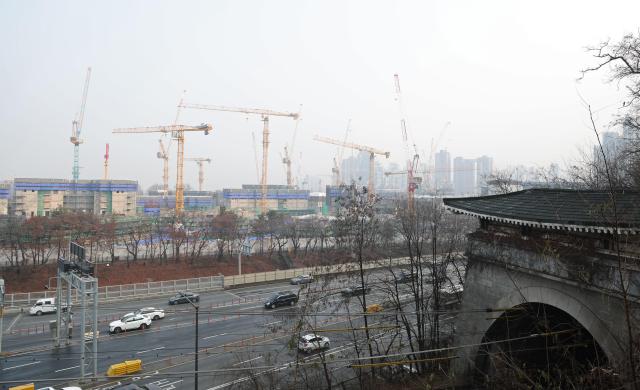
The phenomenon owes to the revival of the so-called “balloon effect,” where credit demand shifts to the non-bank sector when bank lending is constrained — a pattern that authorities warn could amplify structural risks, particularly as stress from real estate project financing (PF) lingers.
MG Community Credit Cooperatives led the March increase in mutual finance lending, accounting for 600 billion won. Its cumulative household loan growth reached 2.4 trillion won in the first quarter, prompting authorities to order zero growth from this week.
The Financial Supervisory Service (FSS) has also warned of potential on-site inspections if excessive expansion continues.
The risks are closely tied to the PF market, where loans are repaid through property sales. A cooling real estate market has delayed sales and increased unsold inventory, undermining repayment capacity.
Total PF exposure stands at around 174 trillion won, with about 14.7 trillion won — more than 8 percent — classified as “at-risk” or “concerning,” indicating significant latent distress beyond official delinquency rates.
While the overall PF delinquency rate has eased to 3.88 percent from a peak of 4.7 percent in mid-2024, analysts say the improvement may reflect restructuring and maturity extensions rather than a recovery in underlying cash flows.
More than 30 PF projects still rely on extensions or restructuring, raising doubts about the sustainability of the apparent stabilization.
“If the interest rate upward cycle returns, distress is likely to materialize, centered on vulnerable borrowers,” said Yoon Yeo-sam, a researcher at Meritz Securities.

The trend mirrors broader concerns over the expansion of “shadow banking” risks, as credit increasingly flows outside the traditional banking system.
Globally, the private credit market has grown to around $3 trillion, with rising borrowing costs adding pressure. The Secured Overnight Financing Rate (SOFR), a key benchmark, has climbed sharply, increasing repayment burdens.
In response, some lenders have resorted to extending maturities or restructuring loans, while practices such as Payment-in-Kind (PIK) structures and covenant-lite lending have become more prevalent — allowing risks to accumulate without immediately appearing as delinquencies.
Korean insurers hold about 29 trillion won in overseas private credit exposure, roughly 2 percent of their total assets, adding another layer of vulnerability.
The International Monetary Fund (IMF) has warned that shifts in capital flows toward non-bank financial institutions could heighten systemic risks and require closer monitoring.
FSS Governor Lee Chan-jin also cautioned that while current exposure levels remain manageable, a deterioration in global credit conditions could amplify risks, including potential misselling issues.

Copyright ⓒ Aju Press All rights reserved.
