
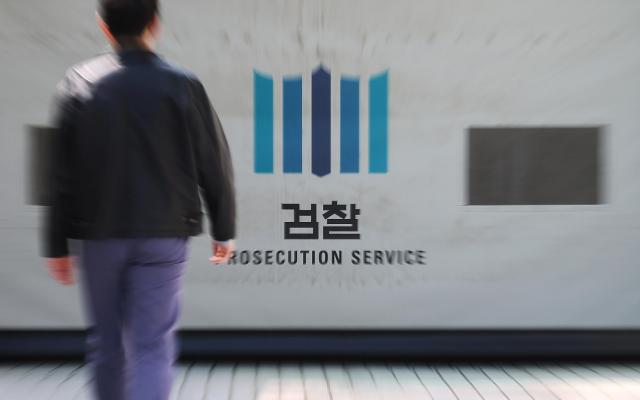
The prosecution has already lost much of its once-mighty power to the police and the Corruption Investigation for High-ranking Officials, with another agency pending, leaving it a near-defunct institution.
The dramatic downsizing is creating a severe bottleneck, turning what was once a sought-after post into a grind.
At the Cheonan branch of the Daejeon District Prosecutors’ Office, the numbers tell the story. Each prosecutor is now responsible for more than 500 unresolved cases.
"It's not something you can control with long hours anymore," one prosecutor said. "At 400 or 500 cases, the system is essentially in a state of panic."
Nationwide, the average caseload per prosecutor rose from 73.4 at the end of 2024 to 135.7 by late 2025.
Unresolved cases — defined as those not processed within three months — have surged. In Namyangju, caseload per prosecutor jumped from 169.6 to 295.2 within a year, with similar spikes in Jinju and elsewhere.
As workloads mount, prosecutors are increasingly unable to process cases before statutes of limitations expire, forcing closures without prosecution — directly affecting victims and undermining confidence in the system. The Supreme Prosecutors' Office has urged prioritization of long-pending cases.
Exodus of experience
Driving the surge is a sharp reduction in manpower.
Between last year and March, 233 prosecutors — more than 10 percent of the total — left the service, including 151 with more than 15 years of experience. A record number have taken leave, while dozens have been seconded to special investigations.
At Cheonan, only 17 prosecutors remain out of an authorized 35, with roughly half in their second or third year.
"Work overload is pushing people to their limits," said Cho Bae-sook, a lawmaker on the National Assembly's Legislation and Judiciary Committee.
She warned that delays are leading to more expired prosecutions, calling the situation "a judicial bankruptcy" in which the state's ability to impose criminal punishment is eroding.
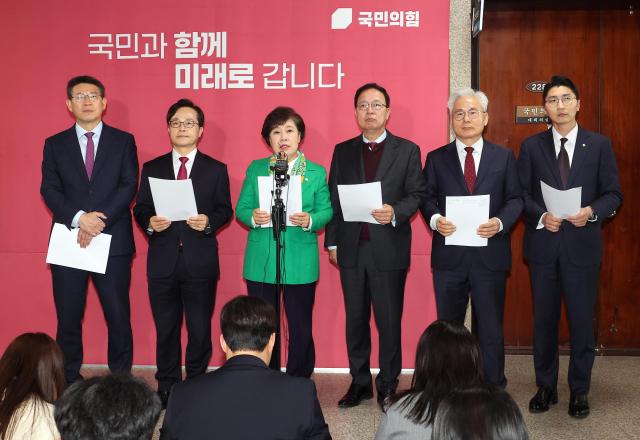
In March, the National Assembly passed landmark legislation that will effectively dismantle the traditional prosecution service.
A new entity — the Serious Crimes Investigation Agency — is to take over core functions, while prosecutors will, in principle, no longer conduct investigations. That authority will shift primarily to the police and the new agency.
The reforms also eliminate prosecutors' authority to direct and supervise certain investigative bodies, marking a decisive break from past practice.
The changes are scheduled to take effect later this year.
Efforts to curb prosecutorial power are not new. Since the early 1990s, critics have questioned political neutrality and the concentration of authority.
"Prosecutors' ability to both investigate and decide whether to indict creates efficiency," a senior incumbent prosecutor said. "But it also carries risk."
Supporters argue separating investigative and prosecutorial functions is essential.
"The belief that prosecutors investigate better than police is an illusion," said Kim Kee-Chang, a professor at Korea University Law School. "What prosecutors are good at is not investigation, but planning, building narratives and shaping cases."
He also criticized pretrial disclosures.
"In a system where prosecutors publicly declare someone guilty before trial, one has to ask what role remains for the judiciary," he said.
Opponents argue the reforms are moving too quickly.
Shin Dong-wook, a lawmaker on the same committee, described the overhaul as a "rough and ideological dismantling" of the prosecution service.
He warned that without safeguards such as supplementary investigative authority, enforcement capacity could weaken.
"If these systems are not properly designed," he said, "the result could be a country where criminals operate with greater impunity."
At the heart of the reform is whether the police can absorb expanded investigative responsibilities.
"That police conduct investigations is the standard model in modern states," Kim said, while acknowledging the need for stronger oversight and institutional safeguards.
Inside the prosecution service, the mood is subdued.
"People feel they have little room to speak," a senior prosecutor said.
The system is now undergoing simultaneous shifts in structure, staffing and workload, placing it in a transitional phase where capacity and institutional design are being tested in parallel.
Copyright ⓒ Aju Press All rights reserved.
