
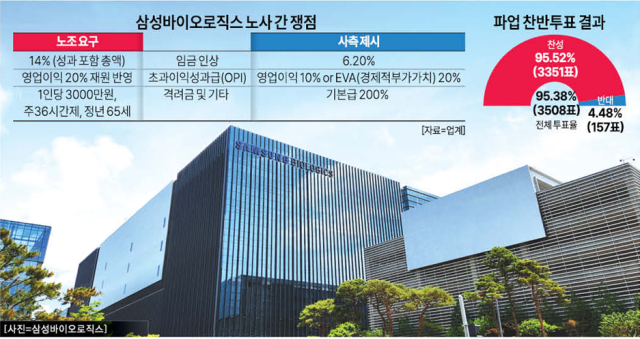
Labor tensions at Samsung Biologics are edging closer to a strike after management and the union failed to reach a deal following 13 rounds of wage and collective bargaining talks since last December. With global competition intensifying, industry officials warn a walkout could disrupt production and damage confidence in South Korea’s biotech sector.
Industry sources said Tuesday that the Samsung Biologics Sangsaeng Union plans to hold a rally of about 2,000 workers Wednesday at the company’s headquarters in Songdo, Incheon, and begin an all-out strike on May 1.
The two sides have been unable to narrow differences over pay raises, the company’s excess-profit incentive (OPI) and the size of encouragement payments. The union has argued compensation should reflect Samsung Biologics’ operating profit of about 2 trillion won last year. It has recently stepped up pressure after securing majority status as a local chapter under Samsung Electronics’ umbrella union, according to the report.
Samsung Biologics has asked the Incheon District Court to issue an injunction barring union industrial action. A court decision, expected as early as this week, is seen as a key turning point for whether the strike proceeds as planned.
The company cited Article 38 of the Trade Union and Labor Relations Adjustment Act, which restricts actions that obstruct normal operations or halt work needed to protect facilities during labor disputes.
The company argues that if skilled workers leave production lines, the stability of its contract manufacturing processes for biopharmaceuticals could be undermined. It has said a production stoppage could result in losses of 640 billion won a day and harm global trust.
The union has maintained a hard line. Union leader Park Jae-seong said he expects the court to dismiss the injunction request because the company is making what he called excessive claims. Still, he said even if the ruling favors management, the request does not seek a total ban on all labor action, and the May 1 strike would continue within what is allowed, with possible changes in participation depending on the decision. Park also said the union is planning a second round of action, even if it means going unpaid.
The union has also voiced dissatisfaction with follow-up measures after a personnel information leak in November last year. It is demanding that limits on access to personal data be written into work rules and that personnel action be taken against those suspected of union-busting, the report said.
Concerns are growing that a strike could weaken the company’s competitiveness and disrupt drug supplies. The medicines Samsung Biologics produces are mainly cancer treatments or therapies for rare diseases that require ongoing dosing, raising fears that supply problems could pose risks directly affecting patients’ lives.
Because Samsung Biologics’ business is based on contract development and manufacturing for global drugmakers rather than its own new drugs, a prolonged dispute could also hurt its credibility, industry officials said. Biopharmaceutical production involves cultivating and purifying living cells and requires continuous operation; even a single disruption could force the disposal of batches that took months to produce. A prolonged strike risk could extend beyond the company and erode global trust in the broader “K-bio” brand, the report said.
A biotech industry official said that if a strike leads to a production halt, the company’s competitiveness in global contract bids would likely take a serious hit.
* This article has been translated by AI.
Copyright ⓒ Aju Press All rights reserved.