
AI-driven drug developer Pharos iBio disclosed new research on next-generation cancer candidates at the American Association for Cancer Research meeting in San Diego, the company said. It said the presentations focused on overcoming drug resistance and expanding combination-therapy strategies, a major trend in global drug development.
Pharos iBio said it presented three posters on April 20 (local time) at AACR, highlighting results from its core pipeline programs.
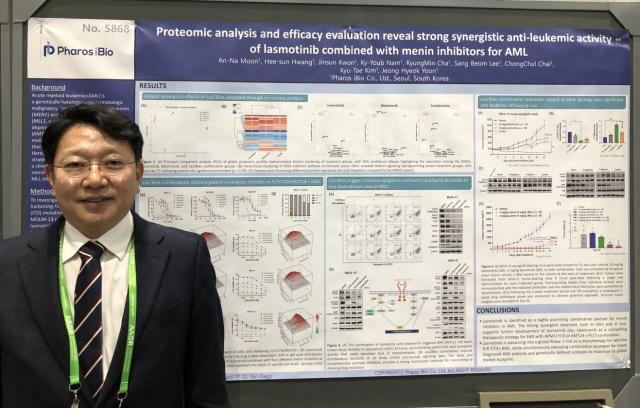
The company released combination-study findings for PHI-101, also known as “lasmotinib,” an FLT3 inhibitor in development. The study used five approved or investigational menin inhibitors, including Johnson & Johnson’s “bleximenib” and Syndax’s “revumenib.”
Pharos iBio said lasmotinib showed anti-cancer synergy when given in combination. When combined with bleximenib, tumor growth inhibition (TGI) remained at 82% to 89% two weeks after dosing was stopped, it said.
The company also introduced PHI-601, a next-generation menin inhibitor, as a new strategy for treating acute myeloid leukemia. PHI-601 is being developed to reduce the menin protein itself through a targeted protein degradation (TPD)-based mechanism, it said.
In preclinical research on PHI-501, a BRAF inhibitor, the company said anti-cancer effects improved when combined with immune checkpoint inhibitors. It said it observed potential for the candidate as a combination asset by modulating immune responses.
Nam Gi-yeop, head of new drug development at Pharos iBio, said the company would “strengthen competitiveness as a combination-strategy partner in the global oncology market” based on its differentiated R&D capabilities.
* This article has been translated by AI.
Copyright ⓒ Aju Press All rights reserved.