
“Alternative market” is the label often attached to the Global South. But it no longer fits. India and Vietnam are no longer just low-cost production bases meant to replace China. With U.S.-China tensions, war in the Middle East and U.S. tariff pressure colliding, the Global South is increasingly where South Korea must operate to keep its economy resilient.
In India, the shift is already visible in the numbers. POSCO’s planned 10 trillion won steel mill with JSW is hard to view as a routine investment. With China shaking markets through pricing, the move reflects a choice to absorb demand through local production and change the structure of competition. HD Hyundai’s push for shipyard cooperation, and Samsung and Hyundai Motor’s expansion in manufacturing and mobility, point in the same direction. With AI and digital technology added to the mix, India is becoming less a destination for entry and more a place to co-design industry — where India’s scale meets South Korea’s speed.
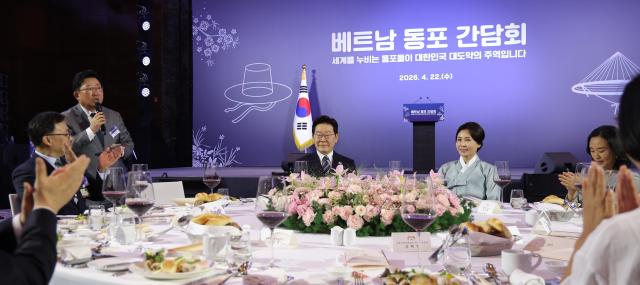
Vietnam matters in a different way. President Lee Jae-myung, in Hanoi, stressed that “the relationship between the two countries is truly special,” a message rooted in years of accumulated ties beyond headline figures. South Korea is Vietnam’s largest investor and is already deeply embedded as a production base. The question is what comes next. The message of building supply chains together through nuclear power, infrastructure and science and technology cooperation is directionally sound, but it remains closer to “potential.” For Vietnam to move beyond assembly into a supply-chain pillar combining energy and technology, South Korea will also need to change how it approaches the partnership.
That is where the limits of South Korea’s strategy show. The country has not fully moved beyond the model of “make well and export.” But the world no longer works that way. The United States is using tariffs to restrict market access, China is disrupting order through pricing, and the Middle East remains a variable that can halt supplies at any time. In that structure, South Korea cannot endure on its own.
The core of a Global South strategy, then, is not market expansion but shared risk management. Cooperation with India on naphtha and LNG, and talks with Vietnam on a nuclear-power supply chain, can be starting points. But if they remain one-off efforts, their value diminishes. What is needed is a framework that links energy, industry and finance. Japan built pathways long ago through official development assistance and policy finance, and China has combined infrastructure and resources to shape the playing field. South Korea is still at a stage of relying on the capabilities of individual companies.
The Global South should be treated not as a place to “enter,” but as a partner for joint design. Beyond a simple exchange — South Korea providing technology and speed, and local partners providing markets and resources — the goal should be a structure in which both sides produce together and consume together. That is how they can better withstand U.S. tariff risks and Middle East supply instability.
The Global South is no longer an option. From where South Korea stands now, it is already a direction that cannot be reversed. The question is not how fast South Korea gets there, but what kind of relationship it builds once it does.
* This article has been translated by AI.
Copyright ⓒ Aju Press All rights reserved.