
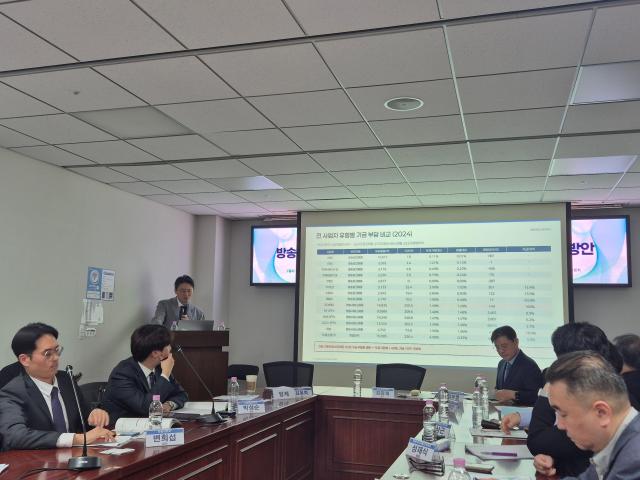
Calls are growing to overhaul South Korea’s Broadcasting and Communications Development Fund beyond temporary fee reductions, as media consumption shifts toward platform-based services. Speakers said the current system, built largely around traditional broadcasters, needs a redesign to remain sustainable.
Lee Sang-geun, a non-standing member of the Broadcast Media and Communications Commission, said at an April 22 seminar at the National Assembly that “the fund can be addressed in the short term through reductions, but it is difficult for that to be a fundamental solution.” He added that a broader reset is needed, “including revisions to the Broadcasting Act.”
The fund supports the development of the broadcasting and telecommunications industry and efforts to strengthen public interest programming. Under the Framework Act on the Development of Broadcasting and Communications, it is collected from terrestrial broadcasters, general programming channels and mobile carriers, among others, and is currently structured around legacy broadcasting operators such as cable TV system operators.
Lee said the approach of placing the burden mainly on existing operators has clear limits as the overall market shrinks. He said platform operators that do not pay into the fund are expanding their influence, deepening imbalances across the system.
That has fueled arguments for expanding the fund’s scope to include new media operators such as over-the-top streaming services. Lee said, however, that the current legal framework makes that difficult and that legal groundwork, including changes to the Broadcasting Act, would need to come first.
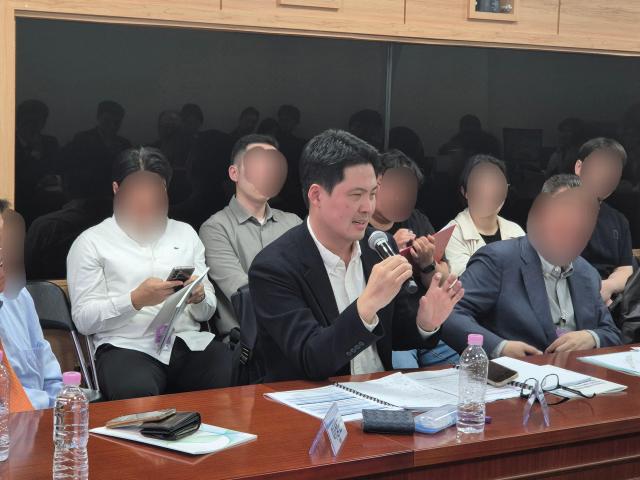
The commission also signaled support for structural changes. Seong Jae-sik, the planning and coordination officer and head of the finance team in the innovation planning office, said collection rates have been adjusted by sector to reflect crises, but “the overall market has now reached a critical point,” making it time to reexamine the system broadly.
As a key task, Seong pointed to integrating currently separate fund notices and unifying the collection framework. “Applying different standards even among similar operators raises fairness issues,” he said, adding that consolidation is needed to set consistent criteria.
Still, changes to collection rates are unlikely to move quickly. Seong said that even if reforms are pursued within the year, time is tight. He said the commission plans first to commission research covering the overall collection system, including pay TV and terrestrial broadcasters and general programming program providers.
Seong said a central issue is how to fill any funding gap if burdens are reduced. He said imposing the fund on platform operators such as OTT services and portals should be reviewed over the long term.
He also said spending may need adjustment, but noted that fund projects are decided through consultations with fiscal authorities, making unilateral changes by the commission difficult. Any spending restructuring, he said, would need to be pursued step by step through interagency talks.
Because interests are deeply intertwined, Seong said, reforms require sufficient deliberation. He said the commission will push mid- to long-term changes based on research and discussion.
* This article has been translated by AI.
Copyright ⓒ Aju Press All rights reserved.