
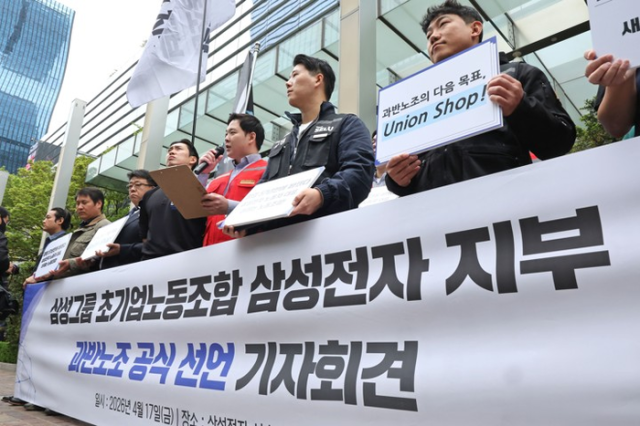
Samsung Electronics’ labor union is signaling a new confrontation, announcing plans for a large rally and warning of a general strike. The move has revived concerns of a repeat of the company’s first-ever strike two years ago, which disrupted its semiconductor operations, as global competition intensifies and critics warn the dispute could benefit rivals.
According to the industry on April 22, the union’s joint struggle headquarters will press ahead with a rally on April 23 at the company’s Pyeongtaek campus as a prelude to a planned general strike in May. The hard-line stance has heightened tensions by recalling conditions from two years ago, when management uncertainty and worsening chip results were at their peak.
In July 2024, the union launched a 25-day strike, demanding higher wages, expanded vacation and changes to the performance-bonus system. At the time, Samsung’s Device Solutions division — including memory, foundry and System LSI — was in an unusually deep downturn.
Among shareholders and investors, worries circulated that Samsung Electronics could be in serious trouble. With the technology gap narrowing and profitability weakening, the strike further damaged confidence, the article said.
The latest strike threat could be more damaging than the one two years ago, industry officials said. Even as the chip market enters a supercycle, competition is so intense that any disruption could push Samsung out of the front ranks. If a strike occurs, losses could reach the trillions of won and undermine trust among global customers, the article said.
Kim Dae-jong, a professor in the business administration department at Sejong University, said timely supply is critical in high-bandwidth memory and the foundry business. He warned that partnerships Samsung has built over decades with global big-tech companies could be weakened by internal labor-management conflict.
Rivals, by contrast, are focused on technology and expansion under what the article described as nonunion management. Taiwan’s TSMC, the world’s top foundry, along with U.S. chipmakers Intel and Micron, are expanding production lines and accelerating research and development with strong government support in a stable labor environment, it said.
The companies are closely watching Samsung’s labor moves and appear to be positioning for potential gains. Intel and Tesla have been recruiting memory engineers in South Korea with what the article called unusually generous terms. Micron has also begun stepping up communications efforts in South Korea this month to expand its presence in the market.
Major foreign media have warned that a strike at Samsung could hurt the global semiconductor supply chain. Bloomberg called it a serious setback at a time when competition for leadership in artificial intelligence is reaching a peak. China’s state-run Xinhua News Agency said it could have ripple effects across industries that use semiconductors, including autos, computers and smartphones.
Lee Jong-hwan, a professor in the system semiconductor engineering department at Sangmyung University, said Samsung is the only chip company in the world with capabilities in both memory and non-memory businesses. He said allowing internal conflict to hold the company back could become a self-defeating choice that undermines what it has built in semiconductors.
* This article has been translated by AI.
Copyright ⓒ Aju Press All rights reserved.