
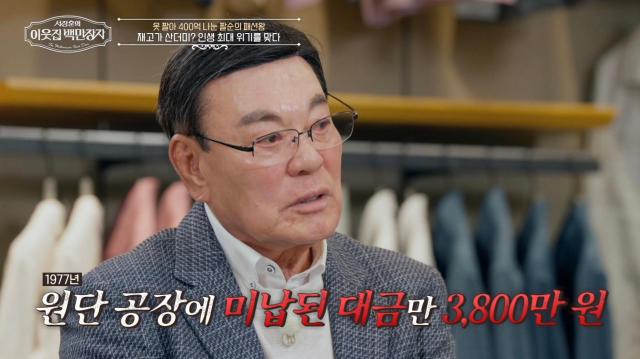
Park Sun-ho, known as South Korea’s “fashion king” for building a major fashion group from nothing, shared his life story on television, including his rise in business and decades of philanthropy.
On the April 22 broadcast of EBS’ “Seo Jang-hoon’s Next-Door Millionaire,” the program traced Park’s path from poverty to business success. Born the fourth of seven children in a poor family, he said he struggled even to eat as a child. Unable to attend middle school, he began farm work at 14 to help support his family and took a job at 16 at an underwear wholesaler in Masan.
Park recalled working in harsh conditions without a salary, but said he was grateful simply to be fed three meals a day while learning the trade. Two years later, he moved to Busan to pursue his own business. Seeking a shop, he pleaded with a landlord to wait “three to four months” for the deposit, and said the landlord’s decision allowed him to enter Busan’s largest market, Jungang Market, without paying a deposit upfront.
He later secured exclusive supply deals with 130 retailers and expanded into the wholesale market, saying he kept his promise. Park said he was called a “kid tycoon” in his 20s and recalled that he “scooped up money in sacks.”
After establishing himself in wholesale, Park moved into apparel manufacturing. He said he became the second in South Korea to succeed in producing cotton T-shirts, and that a self-developed “seamless turtleneck” became a major hit. He said the success enabled him to buy a two-story house and marry, marking his peak in his 20s.
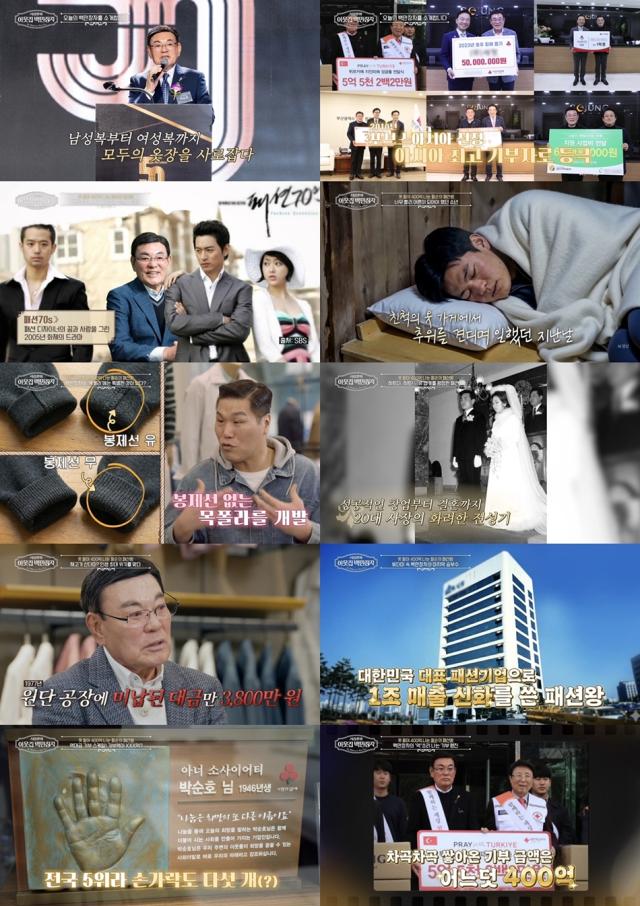
The momentum did not last. After long-sleeve T-shirts sold well in spring, he produced short-sleeve versions, but the thick fabric failed in the summer market, leaving him with large inventories. Park said unpaid factory bills totaled 38 million won at the time, which he said would be worth “tens of billions of won” today.
He said he pushed on, urging the fabric mill owner to invest more so he could repay the debt. After running the factory around the clock, he said he repaid the full amount in four years. His business then rebounded, he said, reaching 10 billion won in sales in 1987, surpassing 100 billion won in 1995, and hitting 1 trillion won in annual sales in 2011. His life also drew attention after being made into the 2005 drama “Fashion 70s,” the program said.
The broadcast also highlighted Park’s giving, describing him as a “sharing king.” It said he has donated a cumulative 40 billion won over about 40 years. The program said Forbes Asia named him a “top Asian philanthropist” in 2010, and that he received honors including a presidential commendation for volunteer service and the Order of Civil Merit, Dongbaek Medal.
It also said he has helped renovate homes for marginalized people, providing new housing for 300 households to date. When the show revealed he ranks fifth nationwide in the Honor Society, Seo Jang-hoon said, “I’m a member too, but the chairman’s amount is enormous.”
Near the end of the program, Park said, “Growing a company and making money are important, but I want to be remembered as someone who does what society truly needs.” He added, “You can’t take money with you when you die. What matters is using the money you earned through sweat and hard work in a meaningful way.”
* This article has been translated by AI.
Copyright ⓒ Aju Press All rights reserved.