
Markets do not operate on emotion or reputation; they function based on contracts, disclosures, and facts.
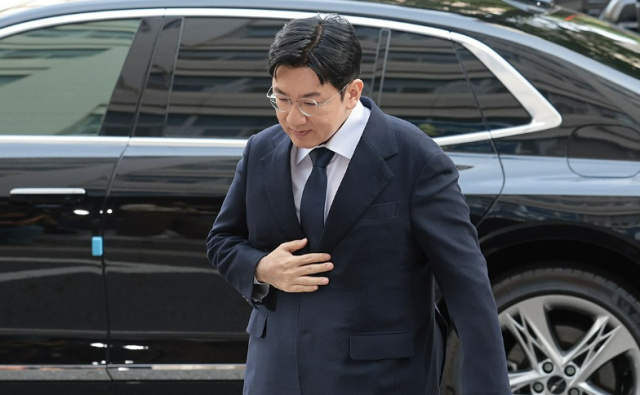
The recent decision by prosecutors to reject a warrant for Bang's arrest and request further investigation is significant. This indicates that there is insufficient evidence to justify an arrest at this stage, not a declaration of innocence. The fundamental principle of criminal justice is to conduct investigations without detention. Economic crimes often leave behind documentation, contracts, accounting records, and internal reports. Unless there is clear evidence of flight risk or potential destruction of evidence, arrest should be a last resort.
Moreover, Bang is already a globally recognized businessman. His domestic and international activities are public, and he has cooperated diligently with repeated summons for questioning. While equality before the law is essential, the proportionality and rationality of law enforcement are also components of justice. Arrest is a means of investigation, not punishment. Symbolic arrests to appease public sentiment lean more toward emotional politics than the rule of law. We should pursue justice without resorting to preemptively detaining individuals.
However, this case cannot simply be viewed as a judicial risk for one businessman; it reflects a broader historical context. The name Bang Si-hyuk has transcended individual identity to symbolize the founder of BTS, a global cultural asset. BTS is no longer just an idol group; they represent South Korea's cultural sovereignty on the world stage and are the epitome of K-culture.
The year 2026 is significant. With members returning from military service, the world is once again anticipating BTS. The fanbase, known as ARMY, is not merely a fan club but a vast cultural community that transcends borders. The competition to host BTS concerts spans from Seoul to Mexico, Vietnam, the United States, Europe, the Middle East, and Latin America, entering the realm of diplomacy.
In Mexico, the president has expressed hopes of hosting a BTS concert. This request goes beyond mere entertainment; it represents a massive economic event that can enhance national image, boost tourism revenue, and invigorate youth culture and consumption. Similarly, Vietnam is seeking a BTS concert as part of its cultural aspirations and national branding strategy. The desire of a nation's highest authority for a specific group's performance underscores the idea that culture is a form of national power.
BTS's world tours cannot be evaluated solely by ticket sales. They trigger a chain reaction across various industries, including aviation, hospitality, retail, cosmetics, fashion, food, and platforms. A single concert in Seoul can generate billions in economic impact, with international tours amplifying this effect. The spending around concert venues, along with the global exposure of Korean brands, enhances national image and attracts tourism, creating a vast economic ecosystem.
As K-food opens dining opportunities, K-beauty transforms lifestyles, K-defense builds national trust, and K-semiconductors lay the industrial foundation, BTS serves as the heart connecting all these K-series elements to global sentiments. Additionally, K-dramas and K-cinema must be included in this narrative. The global impact of "Squid Game" and the prestige of "Parasite" have demonstrated that the Korean cultural industry is not merely a commodity for export but a force capable of reshaping global civilization.
K-dramas have transformed Korean narratives into universally relatable stories, while K-cinema poses fundamental questions about humanity, class, family, and desire in uniquely Korean ways. If K-pop shakes the world with rhythm, K-dramas captivate hearts with storytelling, and K-cinema provokes thought, this is not just cultural export; it is about instilling the spirit and sensibility of South Korea in the world. Culture transcends borders and languages, leaving a lasting imprint in memory. This is true soft power.
Thus, the president's global diplomacy cannot be the sole responsibility of the foreign and industry ministries. Discussions at summits should include not just semiconductors and defense but also K-pop, K-dramas, and K-cinema. Diplomatic relations between heads of state do not end with contracts; they also involve emotions, trust, image, and goodwill.
Many world leaders are familiar with BTS, watch Korean dramas, and discuss Korean films. Culture is often the first to open hearts.
This is why culture must accompany the president on international trips. Industry creates interests, while culture fosters goodwill. Interests may change, but goodwill endures. We are no longer in an era where diplomacy is solely about tanks and treaties. It is a time for a comprehensive national strategy that includes concerts, films, dramas, and food.
In light of increasing global economic uncertainty, we need a new narrative for growth. Amid U.S.-China tensions, supply chain restructuring, instability in the Middle East, and soaring energy prices, the South Korean economy is once again called to combine strategic and cultural industries. Manufacturing alone is insufficient, nor is culture alone enough. Technology and emotion, industry and narrative must go hand in hand. At the intersection of these lies BTS and the K-series.
Of course, this does not mean we should halt legal proceedings for the sake of national interest; that would be more dangerous. The law must be fair to everyone. However, enforcing the law without considering national interest is also unwise. A state is not merely a machine for punishment. The purpose of law is the stability and sustainability of the community. If the truth can be sufficiently uncovered without detention, we must carefully consider whether it is necessary to damage a national asset in this manner.
We often place justice and national interest at opposing ends. However, true national interest does not come from abandoning justice, and genuine justice does not ignore the future of the entire community. The rigor of the law and national strategy should not be conflicting concepts but harmonized values.
Confucius advised that a gentleman should prioritize righteousness, and the I Ching speaks of carrying all things with deep virtue. A leader's path is to benefit all with profound virtue. The Tao Te Ching states that a great nation should lower itself to gather all waters. The same applies to governance. Laws should be established while considering the nation, and principles should be upheld while looking to the future.
South Korea stands at a crucial crossroads. Beyond the question of Bang Si-hyuk's guilt or innocence, we must ask how to protect national assets and realize justice. The return of the full BTS lineup is not just a comeback; it signifies the resurgence of K-pop and the entire K-series, including K-dramas, K-cinema, K-food, and K-defense, moving back to the center of the world stage.
In court, guilt must be contested until the end. However, detention is not synonymous with justice. What is needed now is not showy severity but a calm legal approach and mature national judgment. This is not just about one individual, but about how South Korea will handle its own future.
The judgment of the law and the completion of the K-series. At this crossroads, we must prioritize principles over emotions and consider national interest within those principles. That is the true essence of truth, justice, and freedom.
* This article has been translated by AI.
Copyright ⓒ Aju Press All rights reserved.