
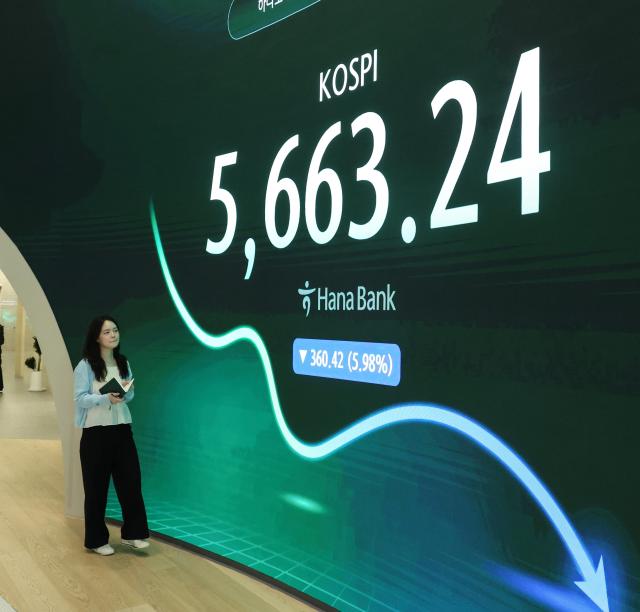
Industry sources say Sunday that the Financial Services Commission and the Financial Supervisory Service they would push an amendment to the capital markets act that would allow authorities to act swiftly to stabilize markets in a crisis.
The move follows a punishing bout of volatility fueled by a rush into semiconductor stocks and the leveraged products tied to them.
At the heart of the proposed amendment is a legal basis for regulators to directly lower the leverage on single-stock products, now fixed at two times, when markets turn turbulent.
Officials are understood to have drawn on the example of Hong Kong's Securities and Futures Commission, which recently permitted flexible adjustment of leverage on listed products.
Regulators are also weighing further trading curbs, including suspensions in cases of unfair trading.
In tandem, authorities plan to unify the single-stock leverage investment ceiling at about 20 percent of each account across brokerages, curbing the concentration of funds at particular firms and reining in outsized bets by wealthy investors.
Mandatory mock trading, mirroring the futures and derivatives markets, will be added to existing investor education.
The market has already cooled sharply.
After the basic deposit requirement was tripled to 30 million won ($20,790) from 10 million won on July 31, turnover in the 16 single-stock leverage products, including inverse funds, plunged to about 3 trillion won on the first day, roughly a quarter of the 12.4 trillion won traded the previous session.

Copyright ⓒ Aju Press All rights reserved.
