
To understand Iran, one must first look beyond the map and delve into its history. A single strait cannot encapsulate this nation. Iran's perspective is always focused on the road ahead. The road is not merely a passage; it represents a structure of power, the flow of wealth, and the center of order.
Persia has long stood at the crossroads of Eastern and Western civilizations. Rather than expanding its territory, it sought to control the routes and manage the flow of goods. This memory persists today. The modern Strait of Hormuz embodies this historical legacy.
Recently, some members of the Iranian parliament suggested, "Let’s buy oil passing through Hormuz at $110 and sell it at $200." This notion is not merely a random thought; it reflects a deeper issue of control rather than just price, resembling a geopolitical declaration rather than simple market logic. The ancient Silk Road principle that those who control the passage set the prices has been revived. Iran does not see itself merely as a nation in the Middle East; beneath its collective memory lies an imperial consciousness that asserts, "We were the masters of the road, and we must reclaim our central position."
Ancient Persia accumulated wealth through two primary methods: tolls and intermediary trade. Those who controlled the routes imposed fees on passing caravans, blocking or plundering them if they refused to pay. The second method involved securing goods from mountainous regions, re-pricing them at strategic locations for profit. These methods were not mere commercial practices but exercises of structural power, determining who could pass, what costs were justified, and what was permissible. Today's strategy in the Strait of Hormuz closely mirrors these two pillars.
The 'toll' that Iran suggests is not merely monetary; it encompasses currency systems, payment networks, and financial sovereignty. The mention of not only the dollar but also the yuan, euro, and rial indicates an intention to diversify payment systems. This resembles the financial and information networks established by Sogdian merchants along the ancient Silk Road. When logistics, finance, information, and diplomacy converge into a single network, the road transforms from a mere passage into a platform. Iran is now attempting to redesign that platform.
Logically, this strategy appears consistent. The Strait of Hormuz is a vital artery, with over 20% of the world's maritime oil traffic passing through it. While alternative routes exist, they cannot be fully replaced in the short term. Historically, nations controlling such passages have demanded costs.
However, the challenge lies in the dissonance between logical validity and practical feasibility.
The most significant difference between the past and present is the counterpart. In the past, the counterpart was trade groups with limited means of retaliation. Today, the counterpart is nation-states, particularly the United States and the G7, backed by global naval power. International law exists, and both financial sanctions and military responses are in play. While the power of controlling the passage remains, the costs of exercising that power have escalated dramatically compared to the past.
This is where the concept of 'reverse blockade' by the United States comes into play. Attempts to close Hormuz will inevitably clash with the force that seeks to keep it open. The U.S. possesses the capability to militarily ensure the passage remains open, going beyond merely protecting the strait. In a structure where maritime insurance, financial networks, and global shipping orders are controlled, a blockade risks self-harm. The longer a blockade persists, the more accelerated the release of strategic oil reserves and the establishment of alternative supply chains become, potentially diminishing the strategic value of the passage itself over time.
The figure of "$200" proposed by Iran encapsulates this dilemma. To raise prices, supply must be restricted. However, the moment supply is curtailed, the international community will respond immediately. Consequently, attempts to raise prices paradoxically deplete negotiating power. Excessive tolls along the ancient Silk Road prompted the exploration of new routes.
The historical transition from the overland Silk Road to maritime routes, and Portugal's discovery of the Cape of Good Hope, which disrupted the intermediary trade order, reiterate the same lesson. When those who control the road cannot restrain their greed, the road itself may vanish.
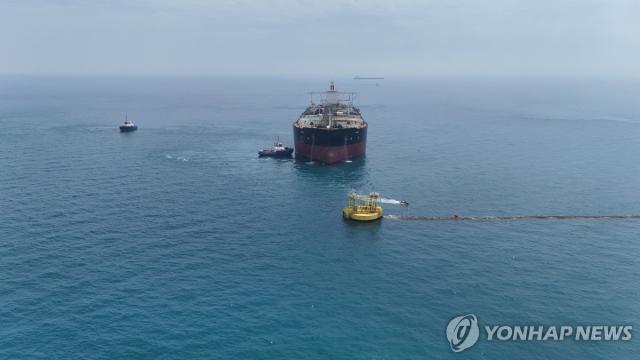
Shifting focus to the present, all these theories are already being tested in reality. The Strait of Hormuz has become not just a historical metaphor but the heart of a world economy in turmoil. As of 2026, this strait embodies a battlefield where actual control, blockades, and reverse blockades are simultaneously at play. Iran selectively opens and closes the strait, controlling passage, while the U.S. responds by blocking vessels entering Iranian ports.
Traffic has noticeably decreased, with some ships turning back or rerouting, and others engaging in what is termed 'shadow navigation' by turning off their signals. Oil prices have reacted sharply, surging in the short term, and financial and maritime insurance markets are experiencing ripple effects. This is not merely a blockade; it is a 'modern Silk Road war' over control of the passage.
Iran's approach is clear. It does not completely sever the road but maximizes uncertainty. Some vessels are allowed passage while others are blocked, thereby controlling both price and fear. This is the essence of the 'gray zone gateway control strategy.' However, this time, a decisively different scenario is unfolding. In ancient times, those who controlled the road held absolute power, but that is no longer the case. The U.S. is responding by blocking Iranian ports without directly closing the strait. Thus, while Iran holds the 'entrance,' the U.S. has seized control of the 'exit.'
This situation is not merely a military clash; it is a high-stakes strategic game over 'control of the road.' Iran's calculation is clear: to maintain a grip on the upper price limit without fully closing the strait. The idea of "buying at $110 and selling at $200" is a condensed expression of a strategy to secure pricing power through control of the passage.
Yet, reality is far more complex than logic. The longer a blockade lasts, the more the international community will respond. The release of strategic oil reserves, diversification of supply chains, and enhanced military escorts will occur simultaneously. Some logistics will shift to long-distance detours, increasing costs but not entirely halting the flow. Ultimately, control may raise prices but simultaneously weaken the exclusive value of the passage.
This is where China's calculations come into play. While China is an ally of Iran, it is also the world's largest energy importer. Iran's control may enhance its negotiating power in the short term, but long-term instability could be detrimental to the Chinese economy. Therefore, China adopts a 'dual strategy,' cooperating in payment networks while promoting diversification in supply chains, neither fully supporting Iran nor completely aligning with U.S. interests.
Ultimately, Iran, the U.S., and China are each pursuing the same goal through different means: 'to dominate the road.' Iran seeks physical control, the U.S. aims for military and financial order, and China focuses on payment and supply chain dominance. The point of collision for these three powers is the Strait of Hormuz.
The essence of this conflict is not about guns and missiles but about who opens the road, who blocks it, and who determines the costs. The answer to this question remains unresolved. Iran is holding firm, the U.S. is tightening its grip, and China is calculating its next move.
However, one undeniable fact remains unchanged: the road is power. But the moment that road is held too tightly, the world will inevitably seek alternative routes. Iran's 5,000-year history has repeatedly demonstrated this truth. And now, that ancient principle is once again being tested.
* This article has been translated by AI.
Copyright ⓒ Aju Press All rights reserved.