
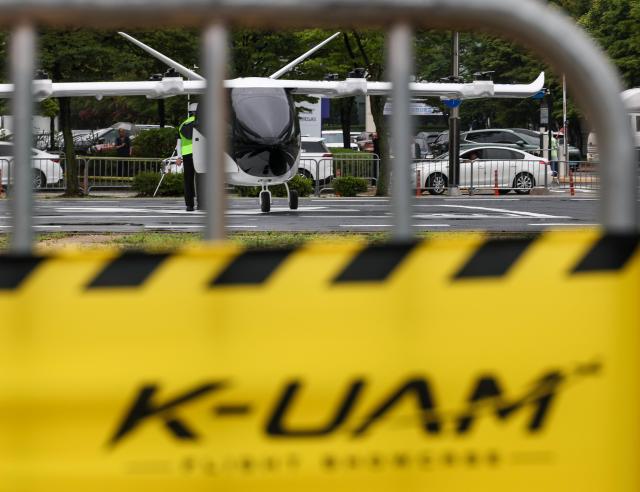
INCHEON, July 15 (AJP) - The future of Korean aviation spent Wednesday sitting quietly on a launch pad.
It was supposed to rise above Songdo's skyline at 10 a.m. Instead, it never left the ground.
Long before the scheduled demonstration, spectators, engineers, investors and journalists gathered outside the INU Innovation Center at the University of Incheon. A steady drizzle swept across the flight zone as umbrellas dotted the viewing area, prompting quiet speculation over whether the weather would spoil South Korea's first public flight demonstration of a privately developed urban air mobility aircraft.
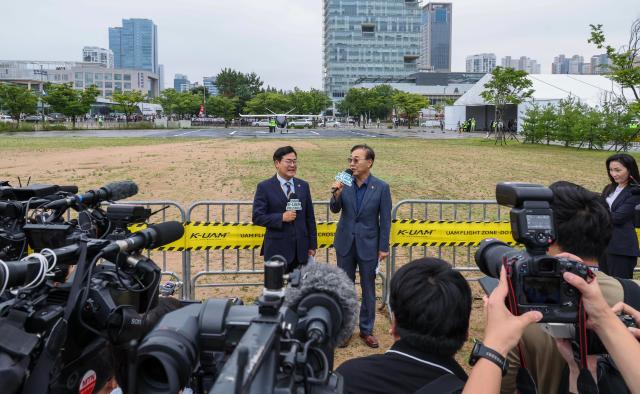
Then came an unexpected twist. Just before 10 a.m., the rain stopped.
The clouds remained low, but the air grew still. Umbrellas disappeared almost simultaneously as camera lenses replaced them. Television crews adjusted tripods. Photographers crouched along the safety barriers searching for the perfect takeoff angle. Smartphones rose above the crowd.
At the center of every lens stood a sleek white aircraft developed by Sambo Motors Group, its multiple rotors poised for vertical flight.
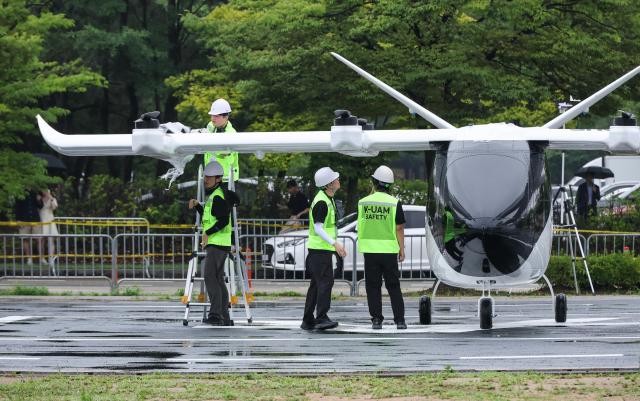
Nothing happened. Ten minutes passed. Then twenty. Then forty.
The aircraft remained perfectly still, its propellers silent against a grey sky.
Around it, however, the scene never stopped moving.
Engineers repeatedly approached the aircraft, checking instruments before stepping back. Event staff hurried between control stations speaking into radios. Organizers periodically addressed the waiting crowd, promising another update in a few minutes.
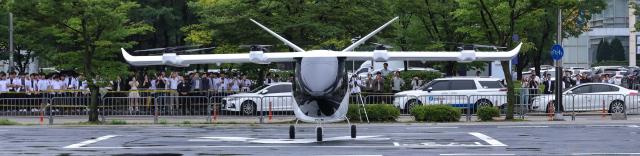
The audience developed its own rhythm of patience. Some checked weather apps. Others refreshed social media.
Several university students who had slipped out between classes lingered for as long as they could before reluctantly returning to campus buildings overlooking the flight site.
Professional photographers kept their long lenses trained on the aircraft, unwilling to risk lowering them in case the rotors suddenly sprang to life.
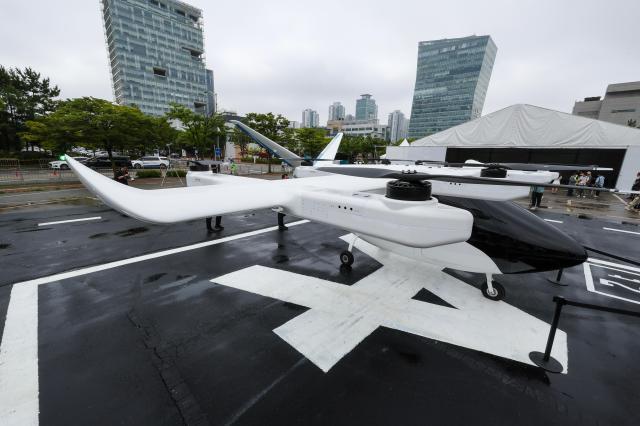
They never did. Eventually came the announcement. The demonstration would be postponed until Thursday after radio signal interference prevented a safe flight.
Sambo Motors officials said the aircraft had successfully completed earlier demonstration flights in Taean and had flown without incident during rehearsals only a day before. Engineers will analyze flight data before attempting another public flight.
Disappointment rippled through the crowd. But few people left immediately.
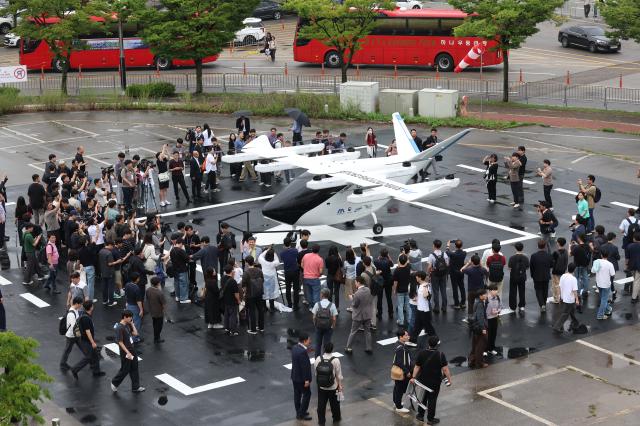
Instead, many walked closer to the aircraft, photographing details that would have disappeared into the sky had the demonstration gone ahead. Children pointed toward the rotors. Engineers answered questions. Visitors circled the aircraft from every angle, examining a machine designed to one day rise above city traffic.
Perhaps that was fitting.
Urban air mobility is still an industry waiting for liftoff.
The technology promises electric aircraft carrying passengers and cargo across cities, supported by vertiports, digital traffic management systems and autonomous flight software. South Korea hopes to begin public UAM services in 2028, following years of government-backed demonstrations.
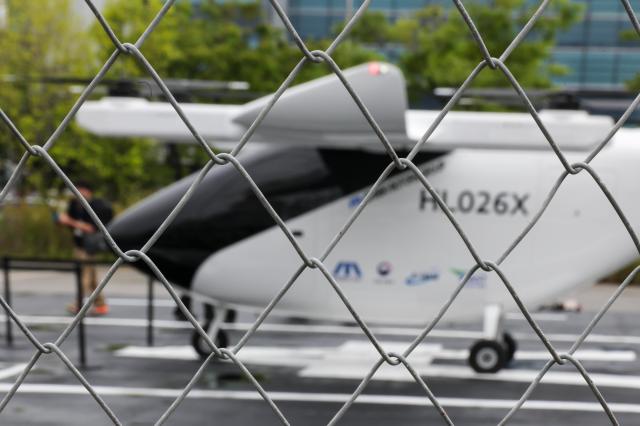
Wednesday's aircraft represented another milestone—the first public appearance of a UAM aircraft developed by a South Korean private company.
Nearby, the 2026 Korea Drone & UAM Expo at Songdo Convensia buzzed with optimism. More than 130 companies showcased autonomous drones, AI flight systems, delivery technologies and future mobility platforms.
Inside the exhibition halls, the future appeared almost inevitable.
Outside, it proved considerably more fragile.
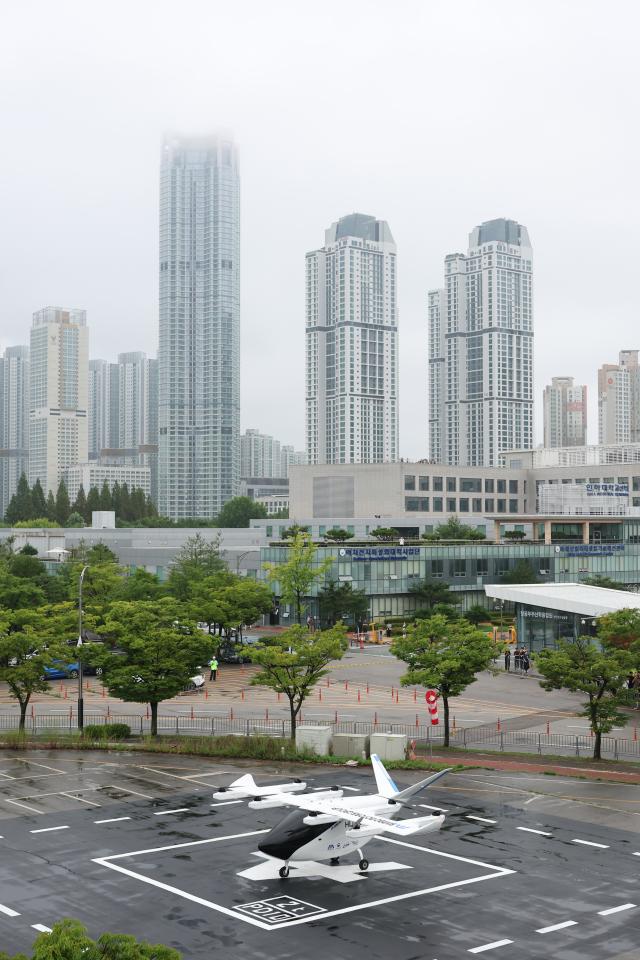
A burst of radio interference was enough to keep an aircraft firmly planted on the ground.
For one long morning, Korea's flying future never actually flew.
Yet hundreds of eyes remained fixed on a motionless aircraft until the very end, as if simply seeing it there—waiting—was enough to remind everyone that every new era of transportation begins not with a routine flight, but with a first attempt.
Sometimes, even the waiting becomes part of the journey.

Copyright ⓒ Aju Press All rights reserved.
