
The South Korean government confirmed that the HMM Namoo, a heavy-lift vessel, was struck by what is believed to be a suicide drone on May 4, resulting in a fire onboard. This incident has raised alarms for domestic companies involved in transformer exports to the Middle East and their subsequent engineering, procurement, and construction (EPC) contracts. As HMM's operations face disruption, there are concerns that Chinese shipping companies like COSCO may benefit from this situation.
According to the shipping industry on May 11, HMM Namoo has completed an initial site investigation and will now focus on repairs in the Middle East.
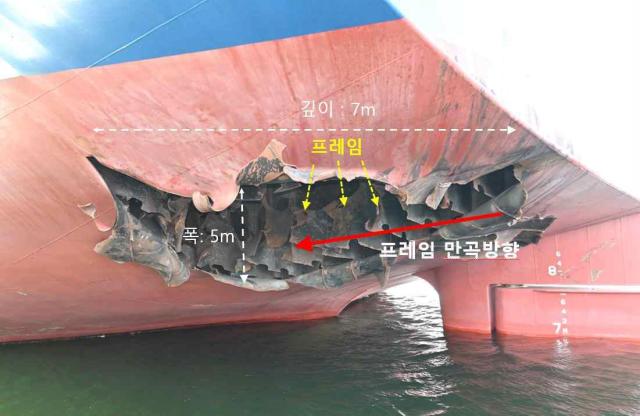
The impact area from the unidentified flying object resulted in a breach approximately 5 meters wide and 7 meters deep, with the hull bending inward. A significant fire also occurred inside the vessel, completely destroying the engine room.
HMM stated, "We plan to establish a repair schedule in consultation with local shipyards."
The main concern now is the cost and duration of repairs. It is currently unclear how extensive the repairs will need to be. Experts predict that since repairs will take place at a shipyard in Dubai rather than at the Chinese CSSC shipyard where the vessel was built, significant additional costs and time will be required.
Having launched last September, the latest heavy-lift vessel's departure will inevitably disrupt HMM's future business plans. As HMM has played a crucial role in exporting domestic transformers and plant materials to the Middle East, local transformer and EPC companies are closely monitoring the situation.
HMM entered the heavy-lift shipping business in 2007 and, last year, added four vessels, including the Namoo, to its fleet, demonstrating a strong commitment to this sector. This decision was made in response to the rapid growth of domestic transformer and EPC businesses, particularly in the Middle East and U.S. markets.
While the market situation remains somewhat fluid, HMM has deployed seven of its eleven heavy-lift vessels on routes to the Americas and four to the Middle East, effectively serving as a bridge for domestic and international companies. In fact, both the Namoo and the Narae are currently stranded in the Hormuz Strait after delivering cargo, while the Naru and Masan are waiting outside the strait to deliver their loads.
The transformer and EPC sectors predict that the impact on Middle Eastern exports will be limited due to long-term contracts in place. A representative from a transformer company noted, "Contracts for transformer supplies in the Middle East are long-term, so they are not significantly affected by the closure of the Hormuz Strait or the shortage of heavy-lift vessels. However, we may need to consider securing alternative transport networks."
An EPC company representative added, "There have been no reported disruptions to ongoing plant construction projects in the region due to the conflict in the Middle East. We plan to focus all efforts on responding to the reconstruction opportunities that may arise following U.S.-Iran ceasefire negotiations."
However, HMM is expected to expedite efforts to secure additional heavy-lift vessels through early returns of the Namoo and long-term charter contracts, as there are concerns about losing major clients.
Historically, the heavy-lift shipping market was dominated by European companies from Germany and the Netherlands, but the rapid growth of Chinese transformer and EPC firms has strengthened the influence of COSCO, a state-owned shipping company in China. COSCO operates a fleet of over 20 heavy-lift vessels, focusing on serving as a spearhead for Chinese enterprises.
A shipping industry insider remarked, "The Middle East, along with routes to the Americas, is a key route for domestic heavy-lift vessels, and container shipping has only recently recovered after the bankruptcy of Hanjin Shipping. Even if the closure of the Hormuz Strait is lifted, the government needs to work closely with countries related to the strait to ensure the safe operation of domestic container and cargo vessels in the region."
* This article has been translated by AI.
Copyright ⓒ Aju Press All rights reserved.