
The Korean pharmaceutical and biotech sectors have reported strong performance for the first quarter of this year. Companies with a high export ratio have achieved record results, driven by global sales expansion and increased production capacity. Traditional pharmaceutical firms have also managed to grow and maintain profitability despite the challenges posed by price reduction policies.
According to industry reports, Samsung Biologics and Celltrion led the sector's performance in the first quarter, benefiting from increased overseas sales.
Samsung Biologics recorded consolidated sales of 1.2571 trillion won and an operating profit of 580.8 billion won for the first quarter. This represents a 25.8% increase in sales and a 35% rise in operating profit compared to the same period last year, marking the highest quarterly performance in the company's history. Full operation of its factories and strong demand for contract manufacturing of biopharmaceuticals from major clients have contributed to this success, allowing the company to set new records for five consecutive years.
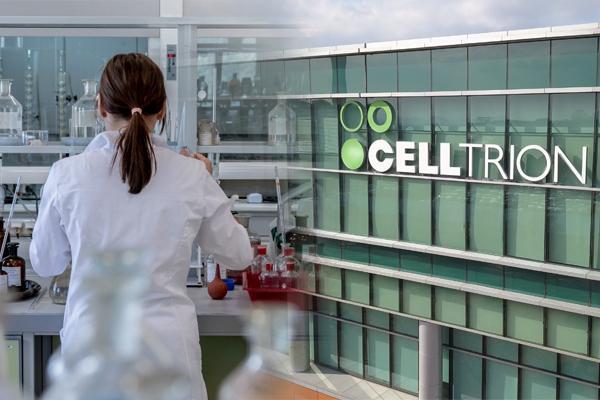
Celltrion also achieved its highest quarterly performance to date, with consolidated sales of 1.145 trillion won and an operating profit of 321.9 billion won. Sales increased by 36% and operating profit surged by 116% year-on-year. The company noted that excluding temporary impacts from scheduled maintenance at its U.S. production facility, its actual operating profit margin reached the 30% range. The expansion of sales for new biosimilar products in Europe and the U.S. has improved both revenue and profitability. Market analysts predict that Celltrion may exceed its initial annual targets of 5.3 trillion won in sales and 1.8 trillion won in operating profit based on its growth strategy.
The growth trend driven by export competitiveness was also evident at SK Biopharm, which reported first-quarter sales of 227.9 billion won and an operating profit of 89.8 billion won. Operating profit increased by approximately 250% compared to the previous year, achieving a record high. The sales growth of its epilepsy drug Cenobamate in the U.S. was a key driver, along with milestone payments from approvals in other countries. Notably, despite increased research and marketing expenses, the company's profitability has significantly improved, demonstrating the strength of export-oriented pharmaceutical firms.

Traditional pharmaceutical companies also performed well despite facing threats from price reductions. Chong Kun Dang reported standalone sales of 447.7 billion won and an operating profit of 17.6 billion won for the first quarter, marking increases of 12.2% and 36.9%, respectively, compared to the same period last year. Sales of both new and existing key products grew steadily, leading to improved profitability. JW Pharmaceutical also reported standalone sales of 198.5 billion won and an operating profit of 31.7 billion won, reflecting increases of 8.1% and 40.4%. The growth of both prescription and over-the-counter medications helped maintain an operating profit margin of 16%.
GC Green Cross also saw improvements in its overseas business, with consolidated sales of 435.5 billion won and an operating profit of 11.7 billion won, representing increases of 13.5% and 46.3%, respectively, year-on-year. Sales of its blood product 'Aliglo' in the U.S. continued to grow, bolstered by its plasma fractionation business. Vaccine products and prescription medications also contributed to overall revenue growth.
While expectations for Yuhan Corporation fell slightly short, both sales and operating profit increased. Yuhan reported consolidated sales of 526.8 billion won and an operating profit of 8.8 billion won for the first quarter, up 7.2% and 37.3% from the previous year. The balanced growth of its pharmaceutical, overseas, and healthcare sectors is expected to continue, with further growth anticipated in the second quarter due to milestone payments related to its drug Lecarza.
An industry representative stated, "The first quarter of this year can be viewed as a period of 'high growth for export-oriented biotech' and 'confirmation of the fundamental strength of traditional pharmaceutical companies.'" They added, "In the second half of the year, key factors for the biotech sector will include the expansion of production capacity at Samsung Biologics, the continued sales of new biosimilars by Celltrion, and the overseas expansion speed of SK Biopharm's Cenobamate. For traditional pharmaceutical companies, the impact of price reductions will become more pronounced, and the recognition of profits related to Lecarza at Yuhan, the performance of Hanmi Pharmaceutical's obesity and metabolic disease pipeline, and the continued growth of Chong Kun Dang and JW Pharmaceutical's key prescription drugs will determine the direction of their performance."
* This article has been translated by AI.
Copyright ⓒ Aju Press All rights reserved.