
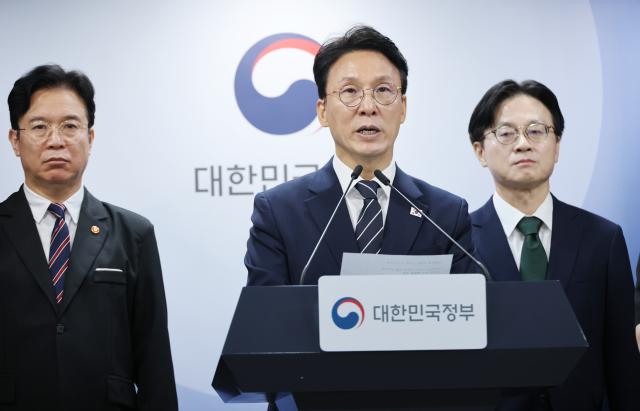
SEOUL, May 17 (AJP) - The South Korean government officially raised the possibility of invoking emergency mediation powers for the first time to avert a looming general strike at Samsung Electronics. Prime Minister Kim Min-seok issued a public statement on Sunday, warning that the state would use all available legal measures if the walkout severely damages the national economy.
The announcement puts maximum pressure on both management and labor ahead of a critical post-mediation meeting scheduled for May 18 at the National Labor Relations Commission. This session represents the final opportunity for both sides to reach an agreement before the planned strike begins.
During his address at the Central Government Complex in Seoul, Kim emphasized the heavy responsibility resting on the negotiators. He stated that if the Samsung Electronics strike threatens to inflict massive damage on the national economy, the government will be forced to consider all options, including emergency mediation, to protect public interests.
Labor Minister Kim Young-hoon attended the briefing alongside the prime minister. As the labor minister, he holds the exclusive legal authority to invoke the emergency mediation order.
Under South Korean labor law, an emergency mediation order can suspend any planned strike for a mandatory thirty-day period if the labor action jeopardizes daily public life or threatens the national economy. During this freeze, the National Labor Relations Commission conducts mandatory arbitration, and it can enforce a binding settlement if an agreement cannot be reached voluntarily.
The government previously maintained that it was too early to review such a drastic measure, preferring that the two sides resolve the dispute independently. However, state officials shifted their stance as industry warnings grew over potential direct and indirect economic losses reaching one hundred trillion won.
Major labor organizations strongly condemned the government's announcement. The Korean Confederation of Trade Unions released a statement opposing any attempts to restrict the constitutional rights of workers using economic logic, while the Federation of Korean Trade Unions criticized the potential application of emergency mediation as an inappropriate restriction on the right to strike.
The high-stakes meeting on May 18 was secured after Kim Young-hoon held consecutive meetings with union leaders and management on May 15 and May 16. In a minor breakthrough, management agreed to replace its chief negotiator, Vice President Kim Hyung-ro, while the union accepted a request to let him attend the session without speaking.
The Samsung Electronics union has scheduled an eighteen-day general strike from May 21 to June 7, with labor leaders expecting up to fifty thousand members to participate. The union is demanding a fixed performance bonus equal to fifteen percent of the company's operating profit, while management proposes maintaining the current system alongside uncapped special rewards.
Copyright ⓒ Aju Press All rights reserved.
