
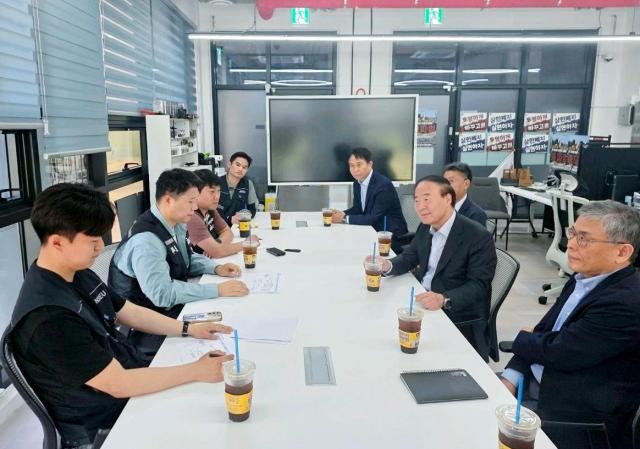
As tensions rise between Samsung Electronics and its labor union, the possibility of the government activating its "emergency mediation authority" is drawing attention in the industrial sector. Legal experts believe that if this authority is invoked before a strike occurs, it would be an unprecedented preemptive activation.
According to legal sources on May 18, the emergency mediation authority is based on Article 76 of the Labor Union and Labor Relations Adjustment Act. The Minister of Employment and Labor can decide to activate emergency mediation if a labor dispute threatens public interest, is large in scale, or poses a significant risk to the national economy or daily life. Before activation, the minister must consult with the chair of the Central Labor Relations Commission. Once activated, the union must immediately cease any strike actions and cannot resume them for 30 days.
Legal interpretations suggest that there is no explicit prohibition against activating this authority before a strike begins. However, the requirement of an existing risk means that substantial objective evidence is necessary for actual activation. Lee Jun-hee, a professor at Kwangwoon University, stated, "There is no legal text that makes it impossible under the current law, so it is not unfeasible. However, it must be strictly evaluated whether a risk exists, and there must be objectively recognizable grounds."
Historically, the emergency mediation authority has typically been invoked after strikes have already begun and damages have occurred. During the 1993 Hyundai Motor strike, the government initiated the activation process after estimating that long-term disputes had caused losses of 672.7 billion won, including impacts on partner companies. Following the activation, negotiations resumed, leading to a tentative agreement within about 21 hours.
In 2005, the government activated the emergency mediation authority during a 25-day strike by Asiana Airlines pilots, which had already resulted in direct damages exceeding 400 billion won. After the activation, the pilots returned to work, and mediation procedures were initiated.
In the same year, during a strike by Korean Air pilots, the government activated the authority on the fourth day of the strike, estimating that damages over three days had reached 189.4 billion won. The government feared that prolonged strikes could severely disrupt air logistics and exports. Subsequently, the Central Labor Relations Commission issued a mediation decision that included a 2.5% basic salary increase, resolving the situation.
The Samsung Electronics strike situation differs from previous cases. In the Hyundai and airline strikes, government intervention occurred only after production and transportation disruptions had accumulated. In contrast, Samsung is facing potential disruptions before they occur, with signals of intervention coming from the president, political circles, and the judiciary, making this situation unusual. Some analysts have even suggested that a strike could lead to losses of around 100 trillion won, highlighting the seriousness of the matter.
Even if the emergency mediation authority is activated, the situation will not automatically resolve within 30 days. Professor Lee explained, "If the Central Labor Relations Commission begins mediation, there is a procedure to confirm the mediation proposal and present it to the parties involved, and during those 30 days, they cannot engage in disputes. If the proposal is rejected or mediation fails, the union can strike again after the 30-day period."
Thus, the conflict between Samsung Electronics and its labor union presents a larger challenge beyond the activation of the emergency mediation authority. Even if a strike is halted, conflicts over performance bonuses and internal divisions have already become apparent and are unlikely to be resolved quickly. The industrial sector views this situation as a test not only for the labor relations at Samsung Electronics but also for the crisis response systems of key domestic manufacturing industries.
* This article has been translated by AI.
Copyright ⓒ Aju Press All rights reserved.