
SEOUL, June 10 (AJP) - When Elon Musk posted "Korea is Awesome" on X last month, the comment carried more significance than it appeared.
It came after Tesla achieved something no foreign automaker had managed before in South Korea.
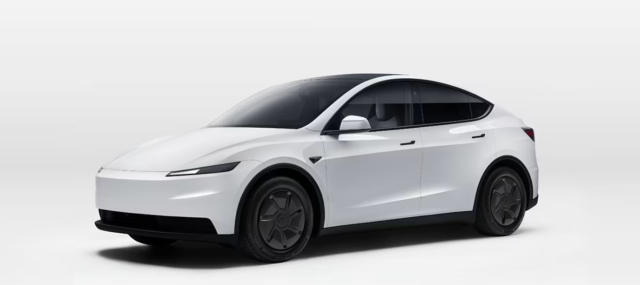
Tesla's Model Y became the country's best-selling passenger vehicle in May, with 8,762 units sold, surpassing the Kia Sorento's 7,836 units and the Hyundai Grandeur's 5,183 units. It marked the first time an imported vehicle topped South Korea's monthly passenger car sales rankings, breaking through a market long dominated by Hyundai Motor and Kia.
Tesla's broader performance was equally striking.
The U.S. electric vehicle maker sold 10,866 vehicles in South Korea in May, making it the country's top imported brand for the month. From January through May, Tesla sold 45,020 vehicles, roughly 3.5 times the 12,835 units recorded during the same period a year earlier.
The milestone highlights how rapidly South Korea's EV market is evolving from one defined by domestic brand loyalty into one driven increasingly by technology, charging convenience and total ownership costs.
For decades, foreign automakers struggled against structural advantages enjoyed by Hyundai and Kia. Korean consumers favored domestic brands for their extensive service networks, strong resale values, familiar driving characteristics and lower maintenance costs.
Imported vehicles were often viewed as premium products that were more expensive to purchase, repair and maintain.
The transition to electric vehicles is beginning to change those assumptions.
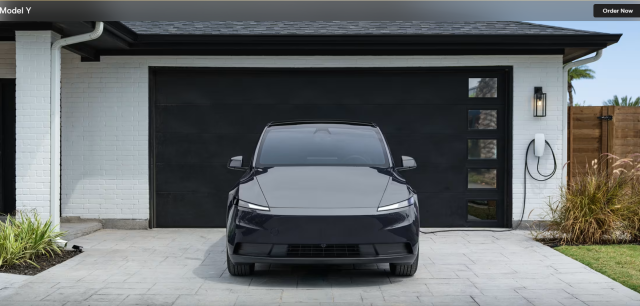
Tesla has aggressively positioned the Model Y within South Korea's subsidy framework, allowing some variants to compete directly with domestic electric SUVs and even some gasoline-powered family vehicles after government incentives are applied.
Just as important has been charging infrastructure.
Unlike North America, where many EV owners charge vehicles at home, a large share of South Koreans live in apartment complexes with limited access to private chargers. Public charging convenience therefore plays an outsized role in purchasing decisions.
Tesla's Supercharger network and integrated charging ecosystem have helped address one of the biggest concerns among first-time EV buyers.
"Charging convenience was probably the most important factor for me," said Kim Min-seon, a 37-year-old designer in Seoul who purchased a Model Y earlier this year. "In Korea, you cannot simply plug in at home the way you might in a private garage."
Kim, who previously drove a Hyundai Grandeur, said lower operating costs also influenced her decision.
"It is much cheaper than gasoline," she said. "Once I started comparing fuel costs with charging costs, the difference was hard to ignore."
Tesla also continues to benefit from a powerful brand advantage.
For many Korean consumers, Tesla remains synonymous with electric vehicles in much the same way Apple became synonymous with smartphones. Even as Hyundai, Kia and Chinese competitors expand their EV lineups, Tesla retains the image of the company that defined the modern EV industry.
That perception remains difficult for competitors to replicate.
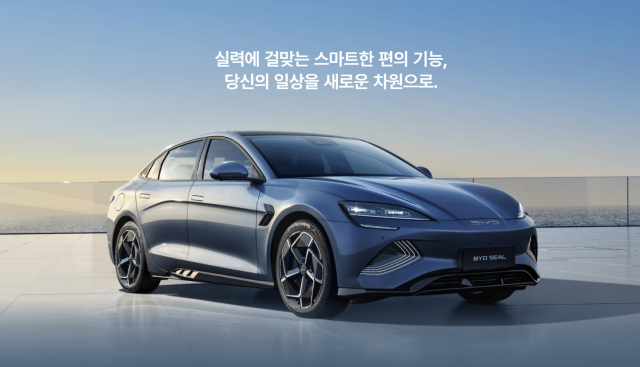
Chinese automaker BYD has gained attention since entering South Korea in early 2025 with aggressively priced electric vehicles and strong global sales growth. Yet its scale remains far smaller than Tesla's.
BYD registered 1,032 vehicles in May, roughly one-tenth of Tesla's monthly total.
Consumer perception remains a challenge.
Chinese EV makers are becoming more visible, but concerns over brand familiarity, after-sales service and long-term reliability continue to influence purchasing decisions.
Kim Yun-seong, a 30-year-old marketer in Seoul's Songpa district, said she considered BYD before ultimately purchasing a Kia EV4.
"I just did not know enough about BYD," she said. "There is also still some hesitation about Chinese-made cars here. It is difficult to explain clearly, but it exists."
Japanese brands face a different obstacle.
Toyota and Lexus maintain strong reputations in hybrid vehicles but have yet to produce a battery-electric model in South Korea capable of generating demand comparable to Tesla's Model Y.
Domestic manufacturers still retain significant strengths.
Hyundai and Kia continue to benefit from extensive service networks, pricing flexibility and deep consumer trust. For many buyers, repair costs, interior space, reliability and after-sales service remain as important as software features or charging speed.
Kim Yun-seong said she also considered purchasing a Tesla Model Y before choosing Kia's EV4.
"I heard Tesla repair bills can be very expensive," she said. "That genuinely made me hesitate."
Tesla's May performance does not signal the end of Hyundai and Kia's dominance.
But it does suggest that South Korea's EV market is becoming increasingly competitive. Consumers who once defaulted to domestic brands are now comparing vehicles across software capabilities, charging access, ownership costs, design and brand appeal.
That shift may represent the most important development behind Tesla's record sales.
Hyundai and Kia still possess scale, loyalty and service advantages that foreign competitors struggle to match. Yet Tesla's breakthrough demonstrates that those advantages alone may no longer guarantee leadership in the electric vehicle era.
For now, Tesla has moved well beyond its image as a niche imported EV brand. By placing the Model Y at the top of South Korea's sales rankings, the company has shown that even one of the world's most protected home markets is becoming contestable in the transition to electric mobility.
Copyright ⓒ Aju Press All rights reserved.
