
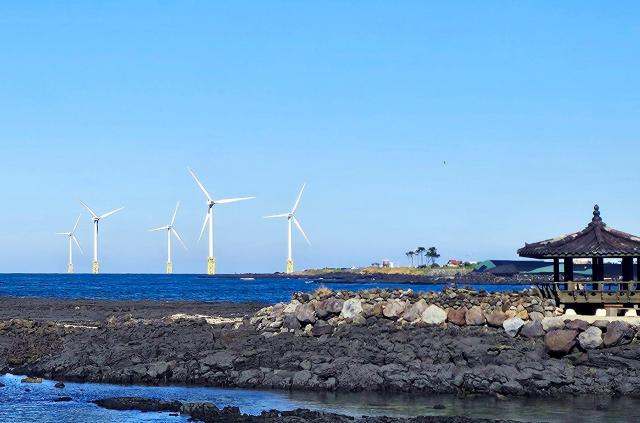
According to a report by the Korea Energy Economics Institute titled "Insights into the Global Energy Market - Trends in Domestic and International RE100 and Implications for Renewable Energy Policy," the number of companies participating in RE100 has steadily increased since its launch in 2014. Recently, there has been a rise in new memberships from large global companies with significant electricity demands, expanding the volume of renewable energy addressed by RE100.
The participation of South Korean companies in RE100 began in earnest in 2020 when six subsidiaries of SK Group joined. Major manufacturing and IT firms such as Samsung Electronics, SK Hynix, Hyundai Motor, LG Energy Solution, Naver, and Kakao have since joined, bringing the total number of participating companies to 36 as of this year. These companies are estimated to consume 66.7 TWh of electricity in 2024.
However, the level of renewable energy procurement remains low. By the end of 2024, the procurement rate for renewable energy among domestic RE100 companies is expected to reach only 12%. To fully meet their renewable energy needs, an additional 59.6 TWh will be required.
The demand is projected to increase sharply in the coming years. The report estimates that the electricity demand from domestic RE100 companies will reach 160 TWh by 2038. Assuming they meet their renewable energy procurement goals, the achievement rate for RE100 among these companies is expected to reach 83.2% by that year.
From a supply perspective, there is expected to be sufficient volume in the medium to long term. Based on the government’s 11th Basic Plan for Power Supply and Demand, the combined supply of renewable energy and clean hydrogen and ammonia is estimated to be about 249.6 TWh by 2038. It is projected that renewable energy and clean hydrogen will account for approximately 35.4% of the central power market in that year.
However, there are many variables that could affect the implementation of RE100. Smooth certification processes for hydropower, biomass, and clean hydrogen used domestically are essential. Additionally, various practical constraints such as grid limitations, regional acceptance, and transmission and distribution network shortages could arise simultaneously.
The report suggests that policy responses should not only focus on expanding capacity but also on establishing a market, grid, and institutional framework. This means that large-scale renewable energy expansion centered on the central power grid should be complemented by the development of distributed renewable energy based on industrial complexes, urban areas, and localities.
Investments to ensure grid stability and flexibility are also identified as key challenges. As inverter-based power sources like solar and wind energy increase, different technical responses will be necessary compared to traditional power grid operations. Expanding transmission and distribution networks, along with energy storage systems (ESS), demand response (DR), and ancillary services, will help alleviate output control and inter-regional grid congestion issues.
The report states, "Responding to RE100 has become a new market order that influences global supply chains and industrial competitiveness. Securing renewable energy volumes is linked to industrial and trade policies and can directly impact investment attraction and export competitiveness." It concludes that expanding renewable energy volumes and establishing a stable procurement system will be crucial for maintaining the competitiveness of the manufacturing sector.
* This article has been translated by AI.
Copyright ⓒ Aju Press All rights reserved.