
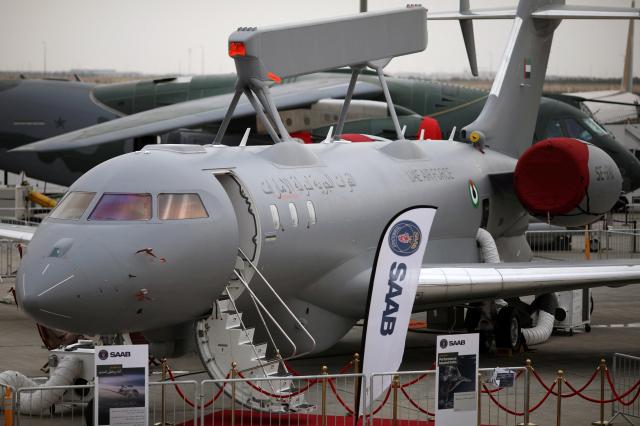
The Canadian government has selected Sweden's Saab to supply its next-generation surveillance aircraft, opting for the GlobalEye model instead of the U.S. Boeing option. This decision reflects Canada's efforts to reduce its reliance on U.S. defense systems and enhance its Arctic defense capabilities amid strained relations since the Trump administration took office.
On May 27, Canadian Prime Minister Mark Carney announced the plan to acquire Saab's GlobalEye during a defense conference in Ottawa. The GlobalEye is based on Bombardier's Global 6500 jet.
Although Boeing's E-7 Wedgetail was also a contender, it was ultimately not selected due to delays in delivery and cost overruns. Reuters reported that this decision aligns with the Canadian government's strategy to decrease dependence on U.S. defense contractors.
Carney stated, "Saab's GlobalEye, equipped with advanced sensors and mission systems, will be a key asset for the Canadian military to detect and deter threats across the Arctic region."
While Canadian military officials did not disclose the specific contract value, they previously indicated plans to purchase six surveillance aircraft. Saab has expressed intentions to invest in research and development in Canada if the contract is finalized.
Canada has historically relied on cooperation with the U.S. to monitor its vast Arctic territory, which spans over 4.4 million square kilometers. In March, Carney affirmed that Canada would take full responsibility for defending its Arctic territory.
Recently, Canada has indicated a shift towards strengthening cooperation with Nordic countries on Arctic defense and security issues, citing a perception that the U.S. has become a relatively less reliable partner.
Philip Lagassé, associate professor of international relations at Carleton University in Ottawa, told The Guardian that Canada's decision to purchase the GlobalEye is a significant test of the Carney government's policy to move away from U.S. military capabilities. He noted that this decision reinforces the relationship between Canada and Sweden, a new NATO ally.
Swedish Prime Minister Ulf Kristersson also commented on social media, stating, "GlobalEye is already creating jobs in Canada and collaborating with Canadian supply chains. This decision will further strengthen the ties between our two countries."
Saab is also pursuing the sale of its Gripen fighter jets as part of Canada's fighter jet acquisition program. Canada has a contract to purchase 88 Lockheed Martin F-35 fighter jets, but following the imposition of tariffs on key Canadian imports by the U.S. last year, Carney instructed the military to consider reducing order sizes and exploring options for aircraft from other manufacturers.
Meanwhile, Canada's reassessment of its reliance on U.S. weapons is evident in other procurement initiatives. According to military media outlet The War Zone, the Canadian military plans to acquire 250 armored combat vehicles within the next five years and is considering upgrades to its existing Leopard 2 tanks. Notably, candidates to replace U.S.-made M-113 armored vehicles include models from Germany, South Korea, and Sweden.
* This article has been translated by AI.
Copyright ⓒ Aju Press All rights reserved.