
The Middle East situation, which seemed to be showing signs of resolution, has once again become uncertain. President Donald Trump stated that the U.S. has not yet reached a satisfactory level in negotiations with Iran regarding a ceasefire, coinciding with renewed military clashes between the two nations.
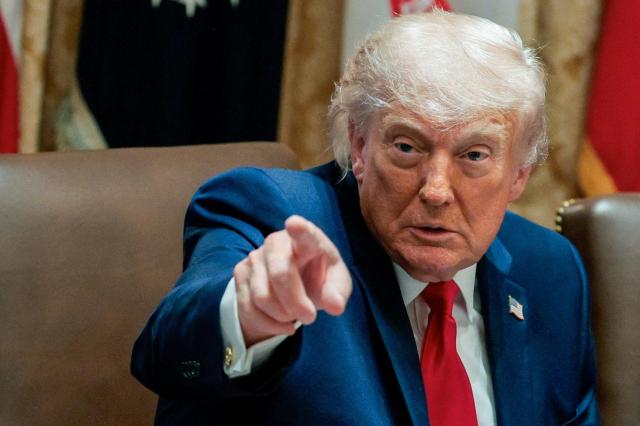
On May 27, during a cabinet meeting at the White House, Trump remarked, "Iran is very eager to make a deal," but added, "so far, they have not reached a level that satisfies us." He expressed optimism that a satisfactory agreement could be achieved, but warned, "Either we reach an agreement, or we will just have to wrap things up ourselves."
Trump clarified red lines on key negotiation topics, including the Strait of Hormuz and uranium processing. Regarding the Strait, he stated, "It will be accessible to all nations, and no one can control it under international regulations," adding, "We will monitor it."
When asked if he would accept a proposal for Iran's enriched uranium to be processed by China or Russia, he replied, "No, that would make me uncomfortable." Previously, Trump had suggested the possibility of allowing the disposal of Iran's enriched uranium in Iran and three other countries, but he reversed course on this issue.
This development comes as reports emerged that Iran is considering transferring 60% enriched uranium to China as part of ongoing ceasefire negotiations. The Jerusalem Post reported that Iran is reviewing this option, and China has not denied related reports, with the Chinese Foreign Ministry stating it will continue to play a constructive role in the political and diplomatic resolution of Iran's nuclear issues.
In contrast, Iran has made it clear that it will not back down on key issues. Ebrahim Azizi, a member of Iran's Parliament National Security Committee, stated on social media platform X (formerly Twitter), "Iran will not retreat from its red lines regarding uranium enrichment rights, possession of enriched uranium, control over the Strait of Hormuz, and the lifting of sanctions."
Renewed Military Clashes
Amid these tensions, military clashes between the two countries, which are currently in a ceasefire, have resumed. On the same day, the U.S. Central Command announced it struck Iranian military facilities near Bandar Abbas that posed a threat to U.S. troops and commercial maritime traffic in the Strait of Hormuz. Additionally, U.S. forces intercepted and shot down several Iranian drones that posed similar threats.
In response, the Islamic Revolutionary Guard Corps (IRGC) claimed to have attacked a U.S. airbase. According to the semi-official Tasnim news agency, the IRGC stated in a release, "The U.S. previously conducted airstrikes near Bandar Abbas airport," and added, "We responded at 4:50 a.m. local time." The IRGC characterized this as a retaliatory measure, warning that "if aggression is repeated, there will be a firmer response" and that "the responsibility for escalating tensions lies with the aggressor." However, details regarding the means of attack, launch points, target bases, and damage inflicted were not disclosed.
Military tensions are also affecting neighboring countries. According to the Associated Press, the Kuwaiti military reported that its air defense systems intercepted missiles and drones, stating, "Explosions may be heard, which is due to interception operations." However, they did not disclose the targets, extent of damage, or the identity of the attacking forces. Kuwait, which hosts U.S. military bases, is considered a primary target for Iranian regional attacks.
The U.S. is expanding its economic sanctions alongside military pressure. On May 27, the U.S. Treasury Department's Office of Foreign Assets Control (OFAC) announced on its website that it has added the Iranian Persian Gulf Shipping Association (PGSA) and all individuals or entities cooperating with it to the Specially Designated Nationals and Blocked Persons (SDN) list. Being placed on this list results in the freezing of assets in the U.S. and a ban on financial transactions.
As both nations engage in ceasefire agreement negotiations mediated by Qatar, the outbreak of military clashes has once again plunged the Middle East situation into uncertainty. This is reflected in the nearly 3% rise in Brent and West Texas Intermediate (WTI) crude oil prices during Asian trading on May 28, following a sharp decline the previous day.
Reuters noted, "As the U.S. and Iran exchange hostilities, hopes for reopening negotiations regarding the Strait of Hormuz are fading."
* This article has been translated by AI.
Copyright ⓒ Aju Press All rights reserved.