The proposal would extend the UAE's existing strategy of bypassing Hormuz beyond crude oil to containerized and general cargo, allowing trade to continue even if traffic through the narrow waterway is disrupted.
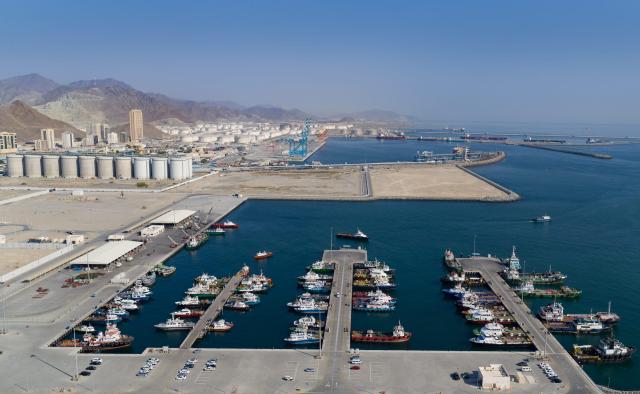
Fujairah occupies a unique position on the UAE's eastern coast facing the Gulf of Oman, outside the Strait of Hormuz. Unlike Dubai's Jebel Ali Port—the region's largest container hub located inside the Persian Gulf—ships calling at Fujairah can avoid passing through one of the world's most strategically vulnerable maritime corridors.
The importance of that distinction has grown rapidly.
Trump, renewing military operations against Iran, said the United States would charge a 20 percent fee on commercial vessels using the Strait of Hormuz, adding another layer of cost to a route already threatened by escalating regional conflict.
The security risks were highlighted Tuesday when the UAE said two state-owned tankers were struck by Iranian cruise missiles while navigating the southern shipping lane in Omani waters.
One Indian crew member aboard the Mombasa was killed, while eight sailors—six Indians and two Ukrainians—were injured, four of them seriously. Both the Mombasa and the Al Bahiya caught fire following the attack, according to the UAE Ministry of Defense.
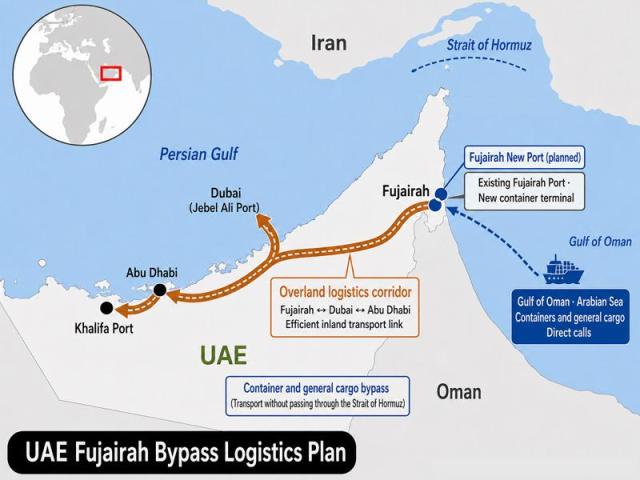
Rather than routing containers through Jebel Ali inside the Gulf, cargo could be discharged at Fujairah before continuing inland by road or rail, allowing trade to continue even during disruptions inside Hormuz.
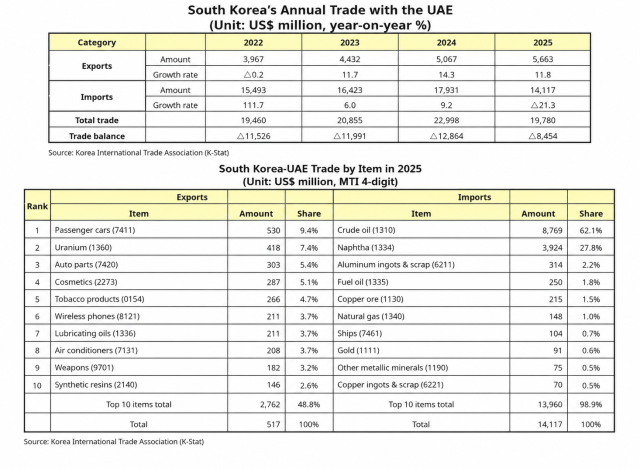
For South Korea, whose exports to the UAE reached $5.66 billion in 2025, such a hub could become an important contingency gateway.
Machinery and mechanical equipment accounted for the largest share of exports at $1.36 billion, followed by automobiles and auto parts worth $968 million and electrical and electronic products totaling $695 million. Cosmetics, medical devices, plastics and steel products also represented significant export categories.
While finished automobiles are transported primarily on dedicated vehicle carriers, most Korean manufactured goods—including machinery components, electronics, cosmetics and medical equipment—move in containers.
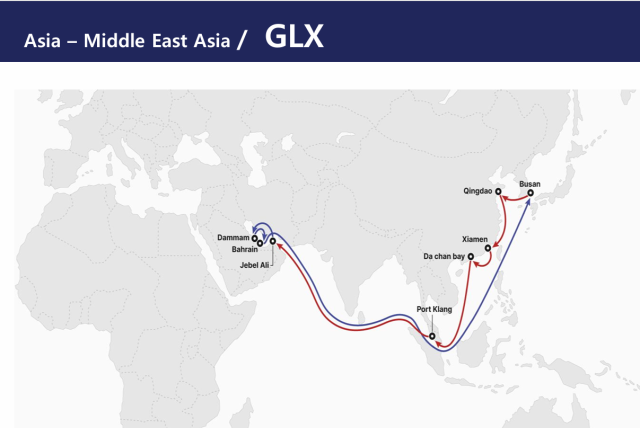
HMM does not disclose what proportion of its Middle East cargo passes through Dubai, but its second-quarter service network illustrates the port's strategic role.
Both its Korea Middle East Express (KMP) and Gulf Asia Liner Express (GLX) services connect Busan directly with Jebel Ali in approximately 24 to 25 days. The company also uses Dubai as a transshipment hub for cargo bound for the Red Sea and the Horn of Africa.
A container terminal at Fujairah would therefore provide HMM and Korean exporters with a potential alternative should access to Jebel Ali become restricted.
The company has not announced plans to add Fujairah to its liner network.
The proposal also aligns with broader efforts by the UAE to diversify trade infrastructure as geopolitical tensions reshape global shipping routes.
DP World, the UAE port operator expected to play a central role in any Fujairah expansion, already maintains a growing presence in South Korea through a $50 million logistics center under development at Busan New Port.
Although the company has not announced a direct operational link between Busan and Fujairah, the investment provides a foundation for closer integration should the bypass project proceed.
Industry analysts say the significance of Fujairah extends beyond the current conflict.
For decades, Gulf shipping has relied overwhelmingly on ports inside the Persian Gulf, assuming uninterrupted access through Hormuz. The combination of military conflict, higher insurance costs, possible U.S. transit charges and repeated attacks on commercial shipping is now prompting governments and logistics operators to rethink that assumption.
If Fujairah succeeds in evolving from an oil export terminal into a regional container gateway, it could fundamentally alter cargo flows across the Middle East, offering Asian exporters—including South Korea—a maritime route that bypasses one of the world's most vulnerable strategic chokepoints.

Copyright ⓒ Aju Press All rights reserved.