
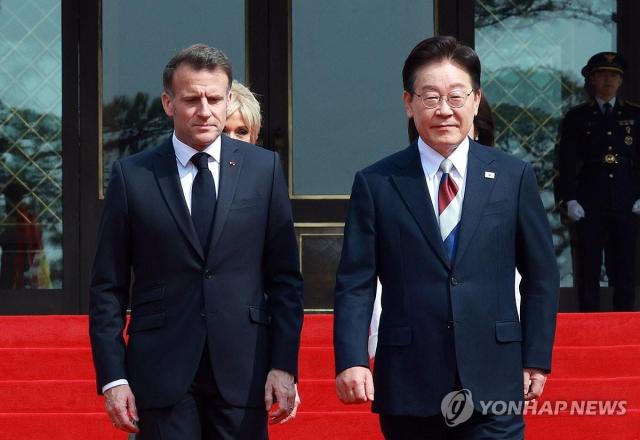
Last week, a significant event took place in the National Assembly. The French Chamber of Commerce in Korea hosted a forum to commemorate the 140th anniversary of diplomatic relations between Korea and France, as well as the 40th anniversary of the chamber's establishment. The organizers chose the National Assembly as the venue to symbolize democracy and the shared values of both nations. While economic exchanges between the two countries are robust, they emphasized the importance of liberal democracy as the foundation of their relationship.
Korea's rising status in the international community is partly due to this emphasis. The country boasts world-class competitiveness in advanced industries such as semiconductors, batteries, shipbuilding, and defense, while also maintaining a liberal democratic system. Amid increasing uncertainty in the international order due to U.S.-China competition and conflicts in the Middle East, democratic nations are seeking reliable partners rather than merely low-cost production bases. Korea stands out as a nation that is both trustworthy and capable.
The era when industrial competitiveness alone earned respect in the international community is fading. As authoritarian regimes weaponize technology and resources, the importance of solidarity among nations that share democracy, rule of law, and market order is growing. Conversely, nations that merely proclaim liberal democratic values without industrial competitiveness struggle to be seen as practical partners during supply chain crises. In this context, Korea is recognized as a rare example of achieving both democratization and industrialization.
However, the phrase "crisis of democracy" is being discussed globally. Political polarization, populism, and distrust in representative systems have led some to argue that authoritarian regimes are more efficient. Yet, history shows that societies lacking freedom of expression, rule of law, and checks on power ultimately collapse due to internal corruption, violence, and economic distortion. While liberal democracy is not perfect, it is difficult to deny that it is the best system for both individuals and groups among the political systems humanity has created.
Korea has demonstrated this truth through its own history. The nation has achieved both industrialization and democratization, maintaining its democratic system even amid economic crises and political upheaval. Thus, liberal democracy is not just a political slogan; it is the foundation of today's Korean economy and international trust.
Nevertheless, industrialization and democratization are ongoing processes, not completed tasks. In the context of a global AI revolution, Korea must continue its efforts toward new industrialization while also safeguarding and advancing democracy. The existence of movements that advocate for armed insurrection against the people indicates that the authoritarian legacies threatening democratic order have not been entirely eradicated. The ongoing discussions about enshrining the spirit of the May 18 Democratic Movement in the constitution also face significant obstacles.
The most fundamental mechanism for protecting liberal democracy is elections. Therefore, the upcoming local elections will serve not only to select local leaders but also as a test of the health of Korean democracy. The importance of local elections is often overshadowed by major national political issues, but democracy ultimately strengthens through participation at the local and everyday levels.
Democracy does not collapse suddenly; it weakens gradually amid indifference and resignation. Conversely, democracy grows stronger when citizens remain engaged and involved. The reason the world is paying attention to Korea is not solely due to its economic power. After countless sacrifices beginning with the Korean War, Korea has preserved its liberal democracy and continues to strive for its advancement, which is as significant an asset as its semiconductor industry.
* This article has been translated by AI.
Copyright ⓒ Aju Press All rights reserved.