
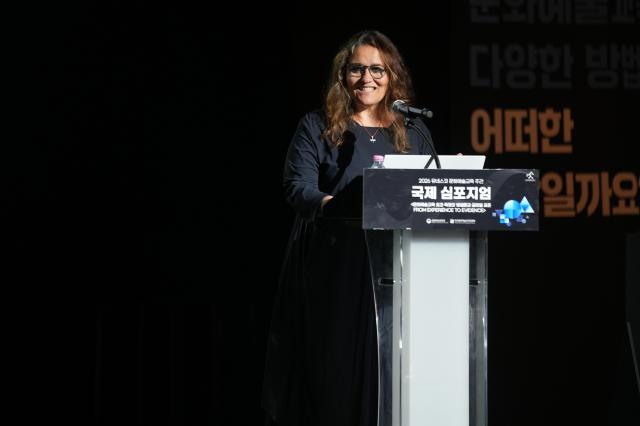
"Human flourishing is made possible through cultural arts education. It allows individuals to blossom," said Valeria Pica, a researcher from Italy's G. d'Annunzio University, during the international symposium linked to the 2026 UNESCO Cultural Arts Education Week at the National Museum of Modern and Contemporary Art in Seoul on May 21.
The symposium, hosted by the Ministry of Culture, Sports and Tourism and the Korea Arts and Culture Education Service, brought together global scholars who unanimously stressed the significance of cultural arts education.
Pica introduced the Culture 3.0 paradigm, highlighting the productive role of culture. Culture 3.0 views culture as an active and participatory endeavor, moving beyond Culture 1.0, where experts provide culture to individuals, and Culture 2.0, which symbolizes the popularization and mass production of culture.
"In Culture 3.0, the barriers between those who create and those who use culture are broken down," Pica explained. "It signifies that many people participate in creating platforms or redefine themselves through cultural arts, returning to their inherent values."
She particularly emphasized 'cultural and artistic subjectivity,' stating, "Culture is not just for the elite or only for special festival periods. Culture and art must become part of everyday life."
Pica noted that creativity, innovation, and critical thinking are all achievable through cultural arts education, which fosters a virtuous cycle of professional training and cultural enjoyment when both producers and consumers coexist. She warned that without cultural arts education, not only could the creative economy suffer, but social cohesion could also weaken, asserting that cultural rights, as a foundation for civic participation, are as crucial as human rights.
To accurately assess the effects of cultural arts education, Pica advocated for a 'multi-model approach.' She stated, "We should not measure the effects of cultural arts activities solely quantitatively. Evaluation methods must capture effects across cognitive, emotional, social, and developmental dimensions."
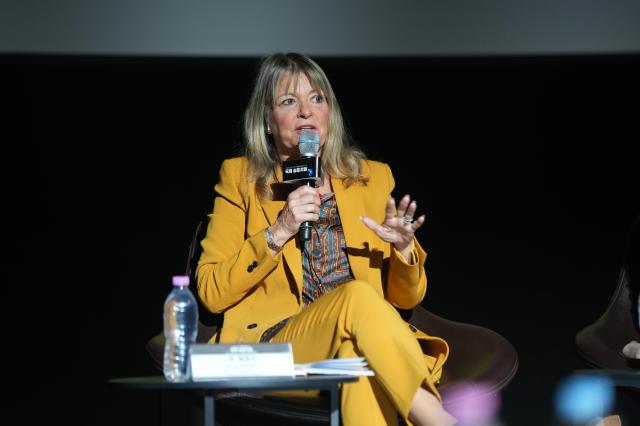
Anne Bamford, a professor at the University of Sydney who led a survey of 60 countries for UNESCO, advised that arts education must be implemented in school environments to ensure that no child is excluded from cultural arts education.
Bamford cautioned that inadequate arts education could diminish children's creativity, stating, "One-third of all arts education has actually harmed children," and noted that overly strict education could lead to a loss of interest, causing children to abandon playing instruments and stifling their creativity. She added that arts education should be systematic and sustained over the long term.
* This article has been translated by AI.
Copyright ⓒ Aju Press All rights reserved.