
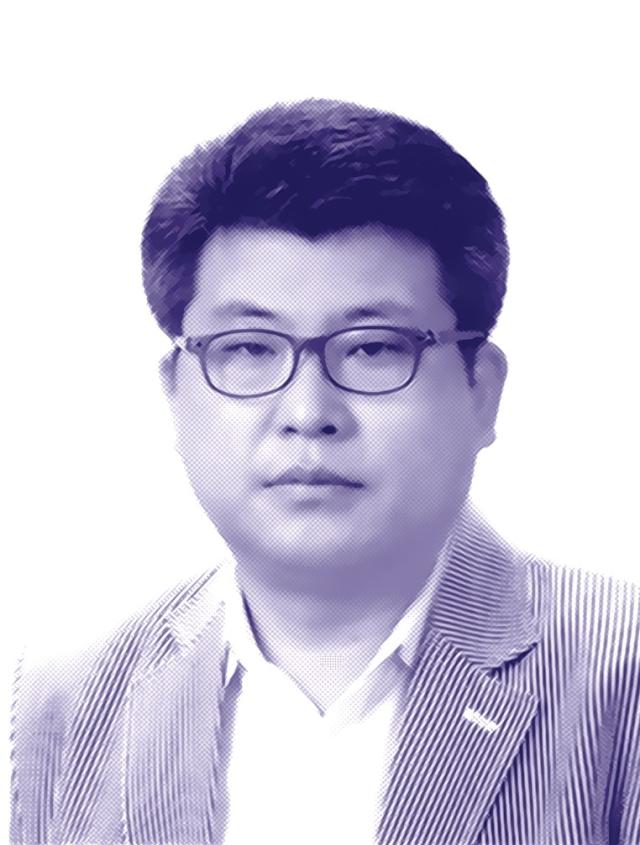
The only televised debate for the Seoul mayoral election ultimately showcased a direct confrontation between the themes of accountability and stability. However, what lingered in voters' minds after the debate was less about the accountability of Oh Se-hoon, the candidate from the People Power Party, and more about the scrutiny surrounding Jung Won-o from the Democratic Party.
The debate, organized by the National Election Commission, took place from 11 p.m. on May 28 to 1 a.m. on May 29, serving as a crucial moment just before early voting.
In a rare occurrence of only one debate, the four candidates—Oh Se-hoon, Jung Won-o, Kim Jeong-cheol from the Reform Party, and Kwon Yeong-guk from the Justice Party—engaged in a heated discussion on pressing issues in Seoul, including real estate, the economy, the missing rebar in the GTX project, the Suseo high-rise demolition disaster, and redevelopment challenges.
At the start of the debate, Jung Won-o introduced the anticipated theme of the '10-year judgment on the administration.' He urged voters to hold Oh Se-hoon accountable for what he described as a decade of incompetence, criticizing his administration for showy governance, safety issues, and failures in housing supply. He also pointed to the Suseo demolition incident, asserting that Oh's absence from the site indicated a lack of safety awareness.
In contrast, Oh Se-hoon defended his record, stating, "I have done everything possible to normalize Seoul over the past five years," and countered with themes of stability and experience. He cited initiatives like the Rapid Integration Plan, revitalization of redevelopment and reconstruction, Seoul Run, and the Han River Renaissance, expressing his ambition to make Seoul a top-three global city. Regarding safety incidents, he extended condolences to the victims' families and pledged to establish stricter safety standards and management systems.
However, the debate's dynamics shifted unexpectedly, with more focus on scrutiny directed at Jung Won-o rather than his attacks on Oh. The most pointed criticism came from Kim Jeong-cheol, who revisited Jung's past controversy regarding alcohol-related incidents, directly asking, "Did you ever force anyone to stay out overnight during a drinking session?"
Jung responded by saying, "Bringing up unrelated topics only muddles the election." However, the interpretation of whether a candidate's past actions and moral integrity are relevant to the debate is subjective, as voters assess not only policy capabilities but also the qualities and responsibilities of public officials, including crisis management skills.
Notably, Jung Won-o appeared to focus on defensive rhetoric, labeling questions about his past as "black propaganda," "negative campaigning," and "unrelated to the topic." This defensive stance seemed inadequate, and at times, he displayed visibly agitated reactions. As a challenger who should have been on the offensive, spending more time on defense was a missed opportunity.
The controversy over Jung's avoidance of debates clearly weighed on him. On this occasion, Kim Jeong-cheol even brought a panel labeled 'Jung Won-o's Debate Avoidance Calendar,' claiming to have documented every date Jung had evaded debate proposals.
The Seoul mayoral election is the largest local election in the country, with the choices of 8 million voters at stake. Compared to previous elections, which featured multiple televised debates for policy and character scrutiny, the fact that this election has only one official debate leaves voters wanting more.
Oh Se-hoon was not immune to criticism either. Kwon Yeong-guk pressed him hard on the missing rebar issue at the GTX Samsung Station, asking, "Did you really not receive any reports about this?" Jung Won-o also targeted Oh over the Suseo disaster and the shortfall in housing supply.
In response, Oh stated, "I was not informed. I learned about it through the news," emphasizing that he was campaigning while under a suspension of duties. He countered the housing supply criticisms by noting, "We are in the process of restoring 389 redevelopment and reconstruction zones that were released during the Park Won-soon administration."
Overall, while Oh Se-hoon faced attacks, he maintained a relatively calm demeanor, emphasizing his experience and administrative continuity. In contrast, Jung Won-o, despite leading with the theme of accountability, found himself on the defensive due to overlapping scrutiny issues, including the alcohol controversy and the debate avoidance allegations.
Of course, one debate will not determine the election outcome. Seoul's public sentiment often remains concealed until the last moment. However, it is clear that this debate centered more on the scrutiny surrounding Jung Won-o than on the accountability of Oh Se-hoon.
* This article has been translated by AI.
Copyright ⓒ Aju Press All rights reserved.