
Jin Seung-wook's leadership at DaeShin Securities emphasizes 'stability after expansion.' Recently, the firm surpassed 4 trillion won in equity, meeting the criteria for entering the large investment banking sector. The focus now shifts from mere growth to whether this can be translated into a sustainable growth structure. Jin, a 'one-club man' with over 30 years at DaeShin and its affiliates, faces the challenge of transforming a retail-focused brokerage into a corporate finance and asset management platform based on investment notes.
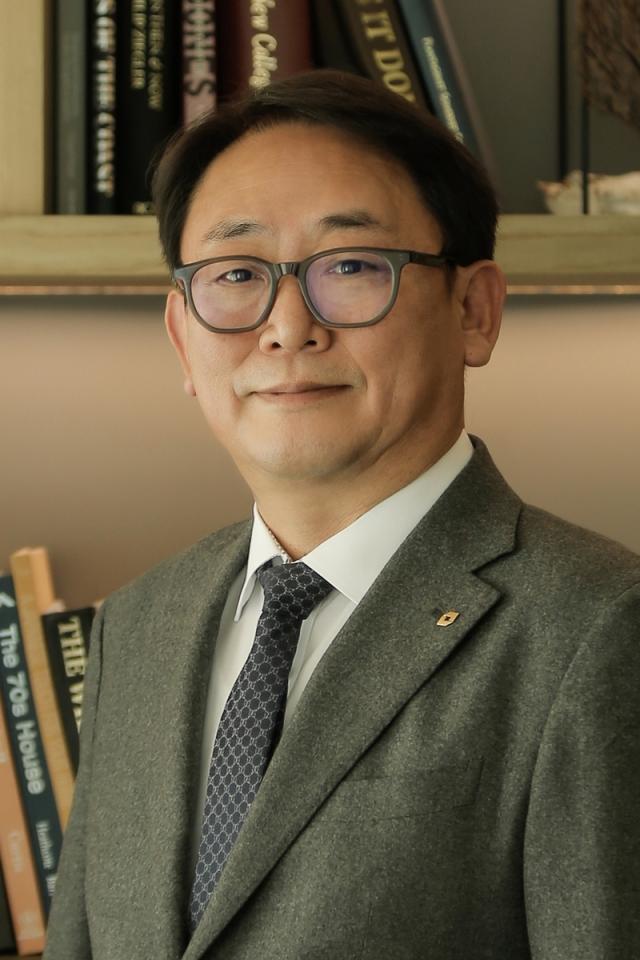
A Strategic Leader Driving Change at DaeShin Securities
Jin Seung-wook is a representative strategic CEO who has grown within DaeShin Securities. He joined the company in 1993 through a public recruitment process and has since gained experience across various sectors, including global business, strategic support, management planning, DaeShin F&I, and DaeShin Asset Management. His unique background combines sales, finance, strategy, and affiliate operations.
His leadership aligns with DaeShin Securities' current situation. The firm has rapidly expanded its capital in recent years, achieving significant growth. By the end of 2025, its standalone equity reached 4.1316 trillion won, and it was designated as a comprehensive financial investment business operator. The remaining tasks include obtaining large investment bank approval and entering the investment note business.
The challenge begins here. Becoming a large investment bank requires more than just capital size; a stable revenue structure, internal controls, and risk management capabilities are essential. Financial authorities have recently emphasized internal controls and financial soundness as key factors in the approval process for large investment banks. This is why under Jin's leadership, there is a focus on both 'growth' and 'substance.'
Upon taking office, he identified 'establishing a stable revenue base,' 'customer-centric management,' and 'strengthening risk management' as core tasks. This is not merely a declaration of conservative management; it signifies a shift towards substantial improvement following expansion.
Ultimately, the crux of Jin Seung-wook's leadership is whether DaeShin Securities can evolve from a mid-sized brokerage into a stable capital market platform.
Simultaneously Enhancing Wealth Management Stability and Investment Banking Profitability
DaeShin Securities is traditionally recognized for its strong retail and wealth management (WM) capabilities. As of the fourth quarter of last year, total WM assets reached 108 trillion won, a 38% increase from the previous year. The number of clients with assets exceeding 100 million won also rose significantly to 74,400.
This is a vital asset for DaeShin Securities. A stable customer base and competitive asset management become strengths amid increasing market volatility. Jin aims to maintain this foundation while simultaneously expanding corporate finance and investment banking capabilities.
Recently, DaeShin Securities has restructured its investment banking organization. The previous system has been changed to a '1 general manager, 3 divisions, 3 responsibilities' structure, focusing on enhancing corporate lending, refinancing, and IPO capabilities. Preparations for the investment note business are also part of this trend.
Jin opts for balance here. Rather than pursuing aggressive global expansion like Mirae Asset Securities, he aims to strengthen both WM stability and IB profitability. This approach aligns with DaeShin's pragmatic strategy.
The company's performance is also showing improvement. Last year, DaeShin Securities reported a consolidated operating profit of 301.4 billion won and a net profit of 186.7 billion won, with increases in brokerage, interest income, and trading profits. However, the decline in IB commission income indicates that strengthening IB capabilities remains a key challenge.
Ultimately, Jin's strategy is clear: to build IB competitiveness on a stable WM foundation and transition into a large investment bank.
The Key to Becoming a Large Investment Bank: Risk Management
The most significant test for Jin Seung-wook's leadership will be risk management. DaeShin Securities is considered a brokerage with a relatively high exposure to real estate finance and overseas real estate investments. As of the end of last year, the balance of securitized debt guarantees was approximately 4.3 trillion won, exceeding its equity.
This is a critical variable in the process of obtaining large investment bank approval. Financial authorities consider not only capital size but also sustainable revenue structures and internal control systems. Recent cases of some brokerages facing difficulties in obtaining investment note approvals due to internal control issues have been interpreted as a warning to the market.
DaeShin Securities has also faced internal control issues in the past due to allegations involving some employees in stock price manipulation. In response, the company implemented stringent measures, including the dismissal of related employees and restrictions on stock trading.
Jin views this aspect as a top priority. He emphasizes strengthening risk management systems and compliance over aggressive growth. In fact, the market tends to evaluate his leadership more as a 'stability-focused strategist' rather than an 'expansion-oriented CEO.'
Ultimately, Jin Seung-wook's entrepreneurial spirit in finance is not merely about aggressive management. He aims to connect DaeShin Securities to a long-term growth structure through the establishment of a 'stable system' necessary after capital expansion. Becoming a large investment bank is just a goal; the real challenge lies in ensuring sustainability thereafter.
: SWOT Analysis :
Strength
Jin Seung-wook's leadership strength lies in his balanced experience in strategy, finance, and affiliate operations. He possesses a high understanding of the internal dynamics needed to lead both WM stability and large investment bank initiatives.
Weakness
There are evaluations that DaeShin's IB competitiveness is still limited compared to larger brokerages. The burden of real estate finance exposure is also seen as a weakness.
Opportunity
Obtaining large investment bank approval and entering the investment note business present new growth opportunities. Expanding WM assets can also serve as a stable revenue base.
Threat
The real estate market downturn, interest rate volatility, and increased financial regulations pose key risks. The potential for recurring internal control issues may also impact market trust.
* This article has been translated by AI.
Copyright ⓒ Aju Press All rights reserved.