
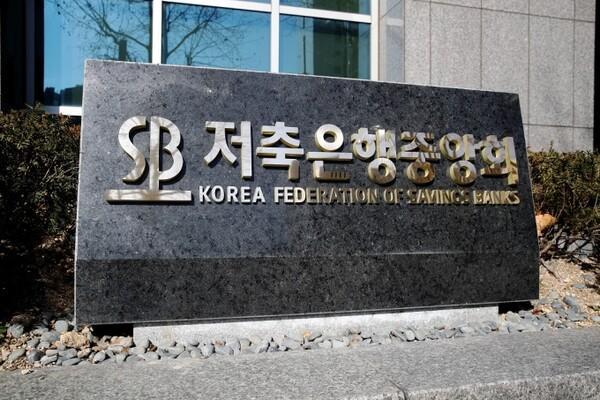
According to the Savings Bank Association's report on the first quarter of 2026, the net income for the sector was 333.8 billion won, an increase of 289.8 billion won compared to 44 billion won during the same period last year.
The improvement in performance was driven by increased non-interest income and a decrease in the burden of provisions. Operating profit for the first quarter reached 422 billion won, up 370.6 billion won from 51.4 billion won a year earlier. Interest income rose slightly to 1.36 trillion won, an increase of 12 billion won, while non-interest income surged to 294.4 billion won, up 267.7 billion won. The amount allocated for provisions decreased by 104 billion won to 801.8 billion won compared to the same period last year.
The total assets of savings banks also saw a slight increase. As of the end of March, total assets amounted to 119.3 trillion won, up 13 trillion won from the previous quarter. Loans increased by 15 trillion won to 95 trillion won. Notably, loans to small and medium-sized enterprises rose by 12 trillion won, from 42 trillion won at the end of last year to 43.2 trillion won by the end of March. Deposits increased by 6 trillion won to 99.6 trillion won compared to the previous quarter.
Capital adequacy remained at a healthy level. The BIS ratio at the end of March was 16.0%, up 0.1 percentage points from 15.9% at the end of the previous quarter. The Savings Bank Association explained that the increase in capital was due to profit generation outpacing the growth in risk-weighted assets associated with loan expansion. The liquidity ratio stood at 170.8%, exceeding the legal requirement of 100% by 70.8 percentage points. The provision coverage ratio was also above the legal standard at 108.3%.
However, asset quality indicators worsened. The delinquency rate for savings banks rose to 6.7% at the end of March, up 0.7 percentage points from 6.0% at the end of the previous quarter. The delinquency rate for corporate loans increased from 8.0% to 8.9%, a rise of 0.9 percentage points, while the delinquency rate for household loans edged up from 4.7% to 4.8%. The ratio of non-performing loans also increased to 8.6%, up 0.2 percentage points from the previous quarter.
* This article has been translated by AI.
Copyright ⓒ Aju Press All rights reserved.