
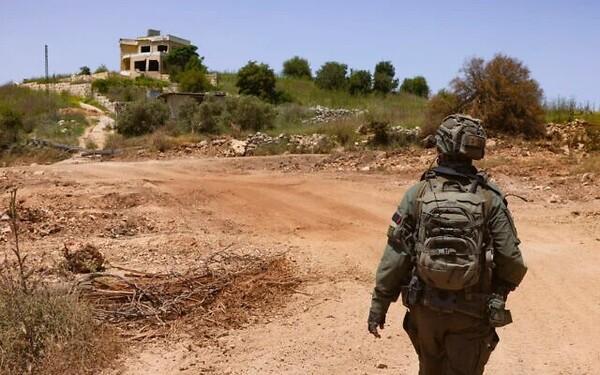
According to the Wall Street Journal on May 28, Israeli officials report that Hezbollah drones have become the primary concern on the northern front, surpassing traditional weapons such as anti-tank missiles.
The Israeli military stated that of the 11 soldiers killed since the ceasefire between Israel and Lebanon took effect in April, seven died from drone strikes.
Hezbollah is adapting its tactics by utilizing first-person view (FPV) drones and night vision equipment. Recent footage released by the group showed an FPV drone targeting the fuel tanks of Israeli vehicles, employing a method that has been used in the Ukraine conflict to maximize damage through explosions.
The increase in casualties has also highlighted vulnerabilities in the Israeli military's defenses. Experts noted instances where troops and vehicles were clustered together or where protective measures were inadequately implemented. Concerns were also raised about equipment, such as munitions, being exposed outdoors.
The Israeli military has announced efforts to enhance protective equipment and soldier training while targeting drone production and launch facilities in southern Lebanon. However, soldiers on the ground reported that despite Hezbollah's shift to nighttime operations, they have not received clear response guidelines.
Within Israel, calls for a tougher stance have grown. Residents in the north and politicians from both parties are urging Prime Minister Benjamin Netanyahu to take stronger military action. Netanyahu stated this week that Israel is "expanding operations in Lebanon," and the military has conducted successive strikes in southern Lebanon and parts of Beirut.
This issue also poses challenges for ongoing negotiations led by the United States. As the U.S. and Iran discuss a peace agreement, Iran insists that a halt to fighting in Lebanon must be part of the terms. Conversely, Israel has conveyed to the U.S. that it should retain the ability to conduct military operations against Hezbollah even after any agreement.
While the ceasefire is a result of an agreement between the Israeli and Lebanese governments, there are limitations due to the government's inability to control Hezbollah. Observers warn that if Hezbollah's drone attacks continue, the Lebanon ceasefire and U.S.-Iran negotiations could become increasingly unstable.
* This article has been translated by AI.
Copyright ⓒ Aju Press All rights reserved.