
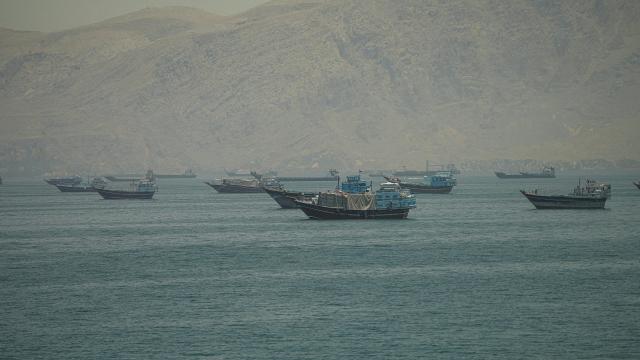
As Iran continues its blockade of the Hormuz Strait, some vessels are reportedly navigating the waterway with their Automatic Identification Systems (AIS) turned off, a practice known as "dark transit," while receiving support from the U.S. military, according to a report by The Wall Street Journal on May 29.
The report indicates that in recent weeks, supertankers and LNG carriers transporting crude oil and liquefied natural gas have been taking risks to pass through the Hormuz Strait. Dark transit involves minimizing ship lighting and disabling AIS to reduce the risk of detection and attack by Iran.
However, operating without AIS makes it difficult to determine the positions of nearby vessels, increasing the risk of collisions and requiring skilled navigation. The Wall Street Journal reported that the U.S. military is communicating with these ships, advising them on when to disable AIS and how to respond to Iranian threats.
The issue of navigation through the Hormuz Strait has become a key point in ongoing ceasefire negotiations between the U.S. and Iran. The U.S. maintains that the strait should be open to all vessels under international law, while Iran asserts its right to control the strait and collect tolls. On May 27, the U.S. Treasury Department's Office of Foreign Assets Control (OFAC) added the Persian Gulf Shipping Association (PGSA), established by Iran, to its sanctions list, aiming to curb Iran's attempts to impose tolls.
Despite some vessels successfully navigating the strait through dark transit, overall traffic remains significantly below pre-war levels. The risk of war has driven insurance costs for ships to rise between 2.5% and 4% of their value, increasing the burden on vessels remaining in the Persian Gulf, according to The Wall Street Journal.
* This article has been translated by AI.
Copyright ⓒ Aju Press All rights reserved.