
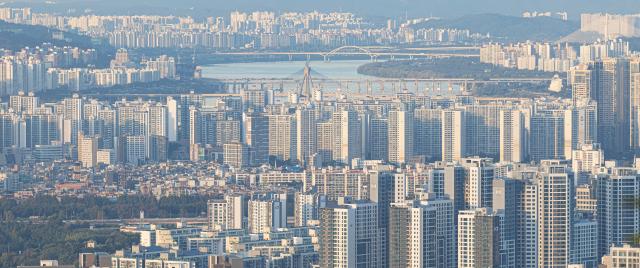
As of June 4, the Lee Jae-myung administration marks its first year with a focus on establishing a market order centered on actual residents and curbing speculative demand. The government has implemented a series of financial, tax, and administrative regulations aimed at putting pressure on multiple homeowners and gap investors since its inception.
The stringent regulations have sent warning signals to the overheated high-end housing market, effectively dampening speculative buying. However, there are concerns that the emphasis on demand suppression has limited actual supply expansion and rental stability.
Shortly after taking office, the government introduced measures such as the June 27 financial regulations, the October 15 housing market stabilization plan, and the resumption of increased capital gains tax for multiple homeowners, tightening loans, transactions, and tax systems simultaneously. Following these regulations, there were short-term effects, including a slowdown in price increases and a surge in urgent sales in parts of the Gangnam area and the Han River belt.
However, as time has passed, a phenomenon of inventory lockup has emerged. According to real estate big data firm Asil, as of May 29, the number of apartment listings in Seoul stood at 61,767, down 9.8% from 68,495 on May 9, just before the end of the capital gains tax exemption. Analysts suggest that multiple homeowners are withdrawing listings or opting for gifts, reducing the available supply in the market.
Price trends are also becoming unstable again. According to the Korea Real Estate Agency, the increase in apartment sale prices in Seoul during the third week of May was 0.31%, the highest rate in seven months. While the price rise in the Gangnam area has slowed, demand is shifting to the relatively less regulated northern regions and outskirts of Seoul.
The instability in the rental market is another key variable in evaluating the government's policies. The administration believed that if homes owned by multiple homeowners were transferred to actual residents, the impact on the rental market would be limited. However, concerns are growing about a decrease in rental listings and rising prices.
Lee Chang-moo, a professor at Hanyang University, noted at a recent seminar on the evaluation of the Lee Jae-myung government's real estate policies that the average rental price in Seoul has increased by 8.66% over the past 11 months. In the four northern districts of Gangbuk, Nowon, Dobong, and Seongbuk, rental prices rose by 12.63%, while monthly rents increased by 13.14%.
The government is also pursuing supply measures. Through the September 7 plan, it set a goal to supply 1.35 million housing units in the metropolitan area during its term, and in early January, it announced plans to supply 10,000 units in the Yongsan International Business District. Recently, it has also unveiled plans to expand non-apartment supply, public rental purchases, and utilize idle urban spaces.
However, there are still criticisms regarding the lack of specificity about the timing, location, and quality of the supply that the market desires. While construction goals and permit numbers have been presented, the actual move-in dates, competitive locations, and quality standards that could replace apartment preferences remain unclear.
Choi Hwang-soo, a professor at Konkuk University, commented, "The government's justification for curbing speculative demand was clear, but the details needed to create an exit for the market's self-correction were insufficient."
Go Jun-seok, a professor at Yonsei University's Sangnam Business School, added, "If new supply is difficult to come by immediately, there should have been consideration for opening a pathway for existing properties owned by multiple homeowners to enter the market."
* This article has been translated by AI.
Copyright ⓒ Aju Press All rights reserved.