
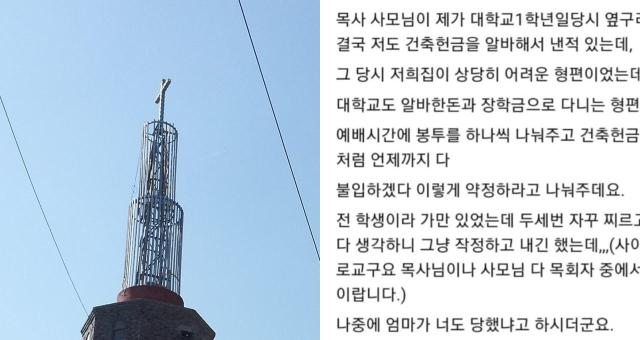
In South Korea, negative perceptions of Protestant Christianity remain persistent, as a recent post on an online community has reignited controversy over church donations.
The author of the post claims that their family was asked to tithe on a loan taken out to build a house. They stated, "The pastor said that the borrowed money counts as income, so we should tithe on it," adding that the family was shocked to later discover a significant construction donation had been made without their knowledge.
According to the author, the family protested, saying, "A loan is a debt, not income. Why should we tithe on it?" However, the donation had already been made. The author expressed confusion over the pastor's mindset, stating, "I do not deny the act of giving to God, but I cannot understand why a loan would be considered a basis for tithing."
Another account shared in the post described how, during college, the church's pastor's wife persistently encouraged the author to contribute to construction donations, even when they were financially struggling. The author recalled, "Every worship service, they handed out envelopes for construction donations with a target amount written on them. At the time, I gave out of faith, but looking back, it felt like pressure."
The post also claimed that the pastor later became embroiled in controversy over embezzlement and luxury spending, which resonated with many online users. However, this claim remains unverified and is based solely on the author's assertion.
In response, internet users commented, "This is why churches receive criticism," "Tithing should be a matter of faith, but it becomes distorted when forced," "Donations should be voluntary, not pressured," and "This issue seems to occur too frequently in Christianity."
The negative perception of Protestantism in South Korea is often attributed to aggressive evangelism, pressure for donations, controversies over church inheritance, and allegations of misconduct among pastors. Observers note that while most churches and pastors operate sincerely, a few cases significantly tarnish the overall image.
Meanwhile, voices within the Protestant community emphasize that donations should be a voluntary act of faith, warning against any practices that effectively coerce or psychologically pressure individuals into giving.
* This article has been translated by AI.
Copyright ⓒ Aju Press All rights reserved.