
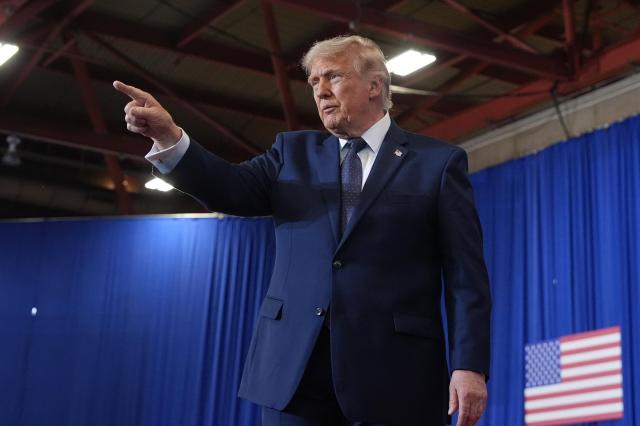
As negotiations between the U.S. and Iran approach a critical juncture, President Donald Trump has reiterated that a key condition for any agreement is the prohibition of nuclear weapons development and acquisition. In response, Iran has indicated it will propose amendments and prepare for a potential breakdown in talks.
In an interview on Fox News with his daughter-in-law Lara Trump on May 30, Trump stated regarding the peace agreement with Iran, "I will make a deal. We can open the Strait of Hormuz immediately upon signing." However, he emphasized, "One guarantee I need is that they cannot have nuclear weapons."
Trump noted, "They (Iran) agreed. They originally said they would not develop nuclear weapons, and when I asked, 'What if you buy nuclear weapons?' they now say they will not develop or purchase military weapons in any way. There is a significant difference."
He added, "I am not rushing. Slowly but surely, we are getting what we want," and warned, "If we do not get what we want, we will end it in another way," suggesting the possibility of resuming military action if negotiations fail.
U.S. officials have also continued to apply pressure on Iran. Treasury Secretary Scott Bancen stated in a Fox News interview on May 31, "Completing our mission means opening the Strait of Hormuz, securing enriched uranium, and ensuring Iran does not possess nuclear weapons." He noted that discussions about Iran not having nuclear weapons are happening for the first time in 47 years, thanks to Trump, and that this previously taboo topic is now on the negotiation table.
Kevin Hassett, Chairman of the White House Council of Economic Advisers, mentioned in an ABC interview that Iran is under significant pressure to agree to the conditions set forth by Trump.
Alongside diplomatic pressure, military tensions are escalating. The U.S. Central Command announced on June 1 via X (formerly Twitter) that it conducted defensive strikes against Iranian radar and drone control facilities on the islands of Goruk and Qeshm over the weekend. The Central Command described the strikes as a measured and deliberate response to Iran's aggressive actions, including the downing of a U.S. MQ-1 drone operating in international airspace.
In retaliation, the Islamic Revolutionary Guard Corps (IRGC) announced through state media that it targeted the airbase responsible for a recent U.S. military attack on communication towers on Sirik Island in the Hormuz region.
Meanwhile, both countries continue to negotiate the terms of a peace agreement. The New York Times reported that Trump did not approve a preliminary memorandum of understanding (MOU) established between the U.S. and Iran, instead sending it back with strengthened conditions.
However, specific details on what changes were made have not been disclosed. The semi-official Tasnim news agency reported that Iran is also expected to propose new amendments. A source stated, "The exchange of drafts is ongoing, and Iran will naturally reflect its own amendments in the agreement. Nothing has been finalized yet."
The source emphasized, "Iran's criterion is whether we can agree on the text directly," adding that just because Trump’s team has applied amendments does not mean Iran will accept them. He also noted that Iran is thoroughly preparing for a scenario where no deal is reached.
Iran has made it clear that it will not accept an agreement that does not guarantee its rights. Mohammad Bagher Ghalibaf, Iran's chief negotiator, stated in a televised address, "We will not approve any agreement until we are assured that the rights of the Iranian people are protected," adding, "The Iranian negotiating team does not trust the enemy's words or promises." Foreign Minister Abbas Araghchi also mentioned in an interview with state TV that while dialogue and message exchanges between Iran and the U.S. continue, no judgments can be made until clear results are achieved. Thus, the possibility of negotiations breaking down remains.
Amid these developments, there are reports of internal conflicts in Iran regarding the peace negotiations and future decision-making structures. According to the semi-official Fars news agency, President Masoud Pezeshkian, identified as a pro-negotiation figure, stated during a cabinet meeting on May 31, "Iran's leadership should not consist solely of a limited group of leaders and bureaucrats." This reflects the confusion in Iran's decision-making process amid the rising influence of hardliners, particularly within the IRGC.
Pezeshkian emphasized that the general public, as well as all social groups, economic stakeholders, and scientists, should participate in Iran's decision-making process, asserting that the more the public is involved in decision-making and problem-solving, the higher the likelihood of resolving issues. He urged that those responsible must stand with the people to address challenges during difficult times.
* This article has been translated by AI.
Copyright ⓒ Aju Press All rights reserved.