SEOUL, June 24 (AJP) — South Korea extended its record birth streak this year with four-month tally nearing 100,000 mark for the first time in seven years and helping to bolster the fertility rate closer to 1.
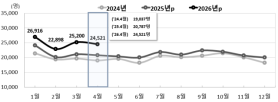
According to the Ministry of Data and Statistics on Wednesday, 24,521 babies were born in April, up 3,734, or 18.0 percent, from a year earlier. It was the highest April figure since 2019 and marked the largest year-on-year increase for the month since monthly records began in 1981.
Births have now risen for 22 consecutive months since July 2024.
From January to April, a total of 99,534 babies were born, the highest level for the period since 2019. The cumulative increase of 15.5 percent from a year earlier was also a record.
The rebound pushed April's total fertility rate — the average number of children a woman is expected to have over her lifetime — to 0.93, up from 0.80 a year earlier.
Marriages, a leading indicator for future births, also maintained their upward trajectory.
April marriages rose 9.0 percent from a year earlier to 20,622, extending a multi-year recovery and surpassing the 20,000 threshold for the first time since 2016 for the month of April.
The sustained increase reflects several factors that have emerged over the past two years, including a rise in marriages, a larger population of women in their 30s and a more positive perception of childbirth.
Women in their 30s continued to drive the recovery. The birth rate among women aged 30 to 34 climbed to 86.8 births per 1,000 women, up 12.7 from a year earlier, while that for women aged 35 to 39 rose to 63.4, up 12.3.
Birth rates also increased among women in their late 20s, though those aged 24 and younger remained on a downward trend.
By birth order, first-born children accounted for 62.2 percent of births and second-born children 32.2 percent, both slightly higher than a year earlier, while the share of third or later children fell to 5.6 percent.
Deaths fell 1.3 percent to 28,405 in April, leaving the country with a natural population decline of 3,884 people. That was a marked improvement from the loss of 8,004 recorded a year earlier.
Still, experts urged caution against declaring victory.
When South Korea's fertility rate climbed to 0.99 in January, experts attributed much of the rebound to the so-called second echo-boom generation — those born between 1991 and 1995, the children of the country's second baby boomers — entering their peak marriage and childbearing years.
That demographic support is expected to continue for another two to three years, but analysts say it should not be mistaken for a permanent shift.
Copyright ⓒ Aju Press All rights reserved.