
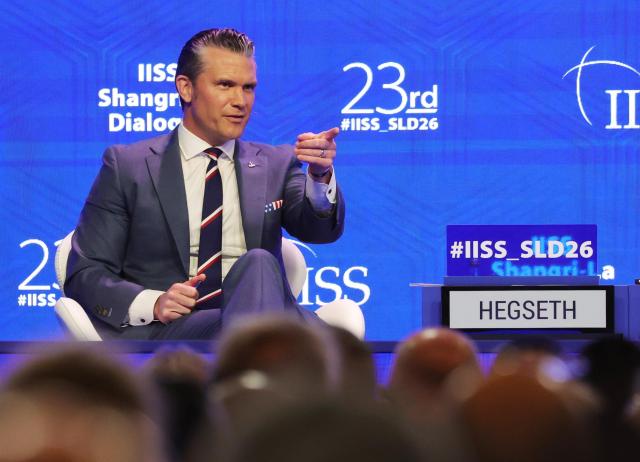
The world is changing fast, and the recent defense meeting in Singapore proved it. United States Defense Secretary Pete Hegseth spoke at the Shangri-La Dialogue, and his words carry a heavy message. For South Korea, sitting right between major global powers, his speech is a loud wake up call. The days of relying on a system where America promises to protect everyone without asking for much in return are officially over. Washington wants friends to pay more and do much more on their own. This new demand forces South Korea to look closely at how it protects itself, spends its money, and deals with China. Hegseth made it very clear that the United States is shifting its focus. The focus is no longer on keeping peace purely out of goodness. The focus is on finding partners who will share the heavy lifting and the heavy costs. This means every country that relies on the United States must completely change how it thinks about the future.
To understand what this means for citizens in Seoul, we need to look at what Hegseth said about China. He pointed out that Beijing is building up its military forces at a historic speed. He warned that this rapid growth could change the balance of power in the Pacific Ocean forever. If one country becomes too strong and takes over the neighborhood, it could threaten the safety and wealth of everyone else. Hegseth said clearly that the United States and its friends cannot let this happen. He asked allied nations to increase defense spending immediately to match this growing challenge. But he also noted relations between Washington and Beijing are somewhat better right now, following a meeting between President Donald Trump and President Xi Jinping. That important meeting in Beijing did not change the big picture, but it did change the temperature. The two leaders agreed to keep their militaries talking, which helps prevent accidental wars. However, the deep competition between the two giant nations remains exactly the same. They still view each other as main rivals.
For South Korea, this ongoing situation is incredibly difficult to manage. On one hand, the United States is South Korea's most important friend and protector. The two countries have shared a military alliance for decades. On the other hand, China is South Korea's biggest trading partner. South Korean businesses sell millions of products to China every single year, supporting countless jobs back home. If South Korea follows Hegseth's strict advice and spends massive amounts of money to specifically push back against China, Beijing might get very angry. We have seen this happen before. When South Korea allowed the United States to place a missile defense system on its land to watch North Korea, China punished South Korean businesses severely. Popular stores closed overnight, and tourism stopped completely. Therefore, South Korea must be very careful. It wants to keep its strong bond with Washington, but it simply cannot afford to destroy its economic relationship with Beijing. It is like walking on a thin tightrope high in the air with no safety net below to catch you if you fall.
Another massive problem Hegseth brought up is the serious issue of weapons and supplies. Right now, the United States is involved in a severe conflict with Iran in the Middle East. This war started in late February and has used up a shocking amount of American military supplies. This fighting has rattled global markets and caused energy prices to jump, which hurts countries like South Korea that need to buy fuel overseas. But the biggest worry is weapons. The most important supplies are advanced missiles used to shoot down enemy attacks. These systems are complicated to build and cost about twelve million dollars for every single shot fired. Because they are being used so fast in the Middle East, the United States is running out of them at an alarming rate. Experts say it will take two or three years just to replace the weapons that have already been fired. This creates a very dangerous gap in global security that affects everyone.
This news is truly terrifying for South Korea. South Korea lives right next door to North Korea, a country with many missiles and a long history of making sudden threats. For a long time, South Korea felt safe because it knew the United States had enough weapons stored up to protect it. But if American factories cannot build missiles fast enough to fight a war in the Middle East and keep Asia safe at the exact same time, South Korea finds itself in great danger. This empty weapon storage problem shows a cold and difficult reality. The United States is still the strongest country in the world, but its resources are stretched thin across the globe. It simply cannot fight everywhere all at once anymore. If North Korea decides to cause trouble right now, taking advantage of the distraction, will the United States have enough weapons left over to help? The answer is no longer a guaranteed yes, and that uncertainty is frightening.
Hegseth basically admitted this hard truth when he said America needs partners, not protectorates. A protectorate is a weaker country that relies entirely on a stronger country for safety and does not contribute much. A partner is someone who pulls their own weight and helps out. Hegseth stated very clearly in Singapore that the era of the United States paying for the defense of rich nations is completely over. He said there can be no more free riding on American money. For South Korea, a wealthy and successful modern nation, this means Washington expects a much bigger check very soon. The United States currently keeps thousands of soldiers in South Korea to help keep the peace. Every few years, Seoul and Washington sit down to argue about how much money South Korea should pay to help keep those soldiers there. Hegseth's speech tells us that the next argument over money will be the hardest and most painful one yet.
The current American government looks at alliances almost like business deals. If the deal does not make strict financial sense to them, they might just walk away. They want to see a solid return on their investment. We already see this unpredictable behavior happening in Europe. The American government has confused its European friends by saying it will move troops around, take some away from Germany, and maybe send some to Poland, based on who is paying enough money and following the rules. South Korea cannot assume that the American soldiers currently stationed on its soil will stay there forever no matter what happens. If Seoul does not agree to pay more, or if Washington decides those troops are needed somewhere else, South Korea could quickly find itself completely alone. This is exactly why the country must start thinking differently about its own survival right now. It cannot just write a bigger check every year and hope everything stays exactly the same.
Then there is the very sensitive issue of Taiwan, which Hegseth also talked about at length. Taiwan is an island near China, and China firmly believes Taiwan belongs to it. Taiwan operates like its own country with its own government, and it wants to stay that way. This intense disagreement is probably the most dangerous flashpoint in the entire world today. President Xi Jinping recently warned President Trump face to face that if the Taiwan situation is handled badly, it could lead to devastating fighting. Trump seems to understand this great danger. He recently told Taiwan not to officially declare independence, trying hard to keep things calm and quiet for now. Hegseth told the crowd in Singapore that the United States still supports Taiwan, but he added a very interesting twist. He said President Trump himself will make the final decision on whether to sell a huge fourteen billion dollar package of weapons to Taiwan.
This statement means Washington is currently using weapons sales as a bargaining chip in its big game with China. For South Korea, the extreme tension around Taiwan is a matter of life and death, even if South Korea is never directly involved in the fight itself. The oceans sitting right around Taiwan are some of the busiest and most important shipping lanes on the planet. Almost all of the oil and gas that South Korea desperately needs to keep its factories running comes on huge ships that sail right past Taiwan. Furthermore, many of the valuable products South Korea sells to the rest of the world leave on container ships that travel through those exact same waters. If a war breaks out over Taiwan, those shipping lanes will close immediately and completely. The South Korean economy would crash in a matter of days because it relies heavily on trade. Even worse, if the United States military gets pulled into a fierce fight over Taiwan, the American forces based in South Korea might be sent away to help fight the battle.
Because the overall risks are so incredibly high, South Korea has to do everything in its power to make sure peace continues in the Taiwan Strait for as long as possible. But as Hegseth's speech clearly shows, South Korea cannot simply trust Washington to handle the problem smoothly all the time. The current American government's approach is highly unpredictable. Sometimes it acts very tough and loud, and sometimes it pulls back quietly to make a sudden deal behind closed doors. South Korea desperately needs a long term strategy that protects its own national interests, no matter what mood Washington is in on any given day. So, what exactly should South Korea do right now to prepare for this changing world? First and foremost, the country must speed up the process of building its own advanced weapons. The terrible news about the severe shortage of American missiles should act as a massive warning sign for the defense department.
South Korea already has very smart engineers and incredibly strong manufacturing companies. It already builds excellent tanks, fast ships, and modern airplanes. Now, it must focus heavily on building its own missile defense systems as fast as possible. If the United States runs out of interceptor missiles, South Korea must have its own ready to fire into the sky. True self reliance is an absolute necessity for survival today. Secondly, South Korea must quickly learn how to negotiate in this harsh new business like environment. When Washington demands more money for its troops next time, Seoul should not just say yes or complain and say no. It needs to offer different kinds of value to make the partnership stronger. For example, South Korean factories could offer to help build the exact weapons that the United States is currently running out of. By helping to fix the giant American supply chain problem, South Korea becomes a truly valuable partner to Washington, not just a customer paying a high bill.
Thirdly, South Korea has to manage its delicate relationship with China very carefully and quietly. Even though the United States is loudly pushing for a united front against Beijing, South Korea cannot simply join a block that seeks to isolate China completely. It must keep talking directly to Chinese leaders. It must explain clearly that South Korea's military moves are only meant to defend against North Korea, not to threaten China in any way. By keeping the lines of communication wide open, South Korea can try to prevent dangerous misunderstandings and protect its vital trade relationship. This difficult task requires skillful diplomats who know exactly how to speak softly while building military strength quietly in the background. Furthermore, South Korea should reach out to other friendly countries in the region that are feeling the exact same pressures right now.
Countries like Japan and Australia are watching the wild changes in Washington and the rapid rise of China with deep concern. If these middle powers work together, they can share the heavy burden of keeping the region safe. The old way of doing things in global politics was simple to understand. The big powers made the rules, and smaller powers followed them in exchange for safety. What Hegseth said at the Shangri La Dialogue proves this old world is gone. The United States is tired of carrying the whole load. It wants to look after its own interests first. South Korea has spent decades building a truly powerful society. It is no longer a weak nation. The simple truth remains perfectly clear. No one else is going to guarantee South Korea's future. The country must forge its own path forward in a messy world where old friends expect a lot more and old rivals are growing bolder.
Copyright ⓒ Aju Press All rights reserved.
