
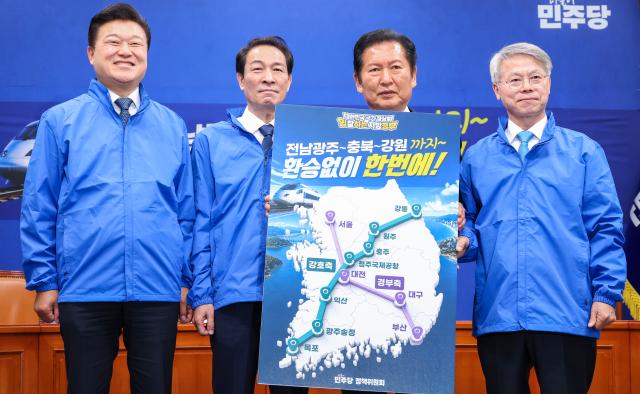
In the upcoming local elections, 37 out of 52 candidates for 16 metropolitan governments have proposed 92 development promises, but 78 of these (85%) lack budget allocations. The Citizen's Coalition for Economic Justice reported on June 1 that 37 candidates submitted at least one development promise to the National Election Commission.
By party, 15 out of 16 candidates from the ruling Democratic Party, excluding Wi Seong-gon (Jeju), presented development promises, representing 94%. In the People Power Party, 13 out of 16 candidates, excluding Kim Jin-tae (Gangwon), Park Wan-soo (Gyeongnam), and Moon Seong-yu (Jeju), made promises, accounting for 81%. Among the Reform Party candidates, 3 out of 7 (43%) proposed development promises, while 2 out of 3 (67%) from the Progressive Party and 1 out of 2 (50%) from the Justice Party did the same. Additionally, 3 out of 5 independent candidates (60%) presented development promises.
However, the analysis revealed a lack of specific budget or funding plans. Of the 92 promises made by these candidates, 78 did not specify a budget, and 66 (72%) shifted budget responsibility to private sector projects.
Democratic Party candidates proposed a total of 42 development promises, with 37 (88%) lacking budget details, and 30 (71%) categorized as private sector projects. In the People Power Party, 26 out of 35 development promises (74%) did not specify a budget, with 27 (77%) being private sector projects.
Candidates from the Reform Party, Progressive Party, Justice Party, and independents did not provide budget details for their development promises. Among them, 4 out of 5 (80%) from the Reform Party, 1 out of 3 (33%) from the Progressive Party, and 4 out of 5 (80%) from independents were categorized as private sector projects. The Justice Party proposed 2 development promises and was the only party not to mention private investment.
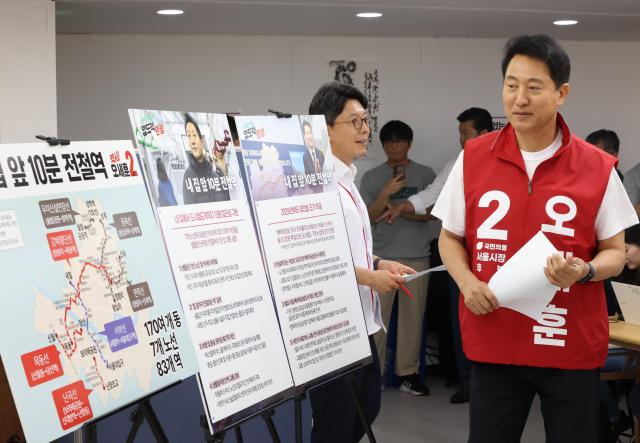
The development promises include large-scale construction projects and industry and tourism initiatives. Specifically, they encompass the establishment of industrial complexes, new airports, ports, railways, urban rail systems (trams), new and extended roads, underground roads, new stations, and new government buildings, while excluding housing, welfare, healthcare, culture, and sports projects due to their public nature.
The most frequently proposed development promise was the establishment of industrial complexes, mentioned 58 times, primarily aimed at regional economic development and job creation under various names such as promotion zones, business districts, specialized zones, mixed-use complexes, clusters, and special zones. Following this, railway and urban railway construction proposals totaled 25, with 14 for airports and ports, 13 for roads and bridges, 8 for transfer centers, stations, and government buildings, and 5 for underground roads.
The Citizen's Coalition for Economic Justice stated, "As seen in past elections, development projects lacking specific details, plans, feasibility assessments, and budget and funding strategies are nothing more than empty promises. The indiscriminate proliferation of development promises leads to significant budget waste and social conflict, with the resulting harm falling on the citizens and local residents."
They further suggested that "large-scale national projects should only be decided by a permanent expert body" and emphasized the need for in-depth discussions on establishing a permanent independent and neutral national project decision-making body, tentatively named the 'National Project Committee.'
* This article has been translated by AI.
Copyright ⓒ Aju Press All rights reserved.