
Jensen Huang, CEO of NVIDIA, has expressed significant interest in South Korea's robotics industry, drawing attention from the sector. This aligns with his belief that the future of AI will extend beyond generative AI and data centers. Analysts suggest that we are on the brink of an era defined by 'physical AI,' where AI is implemented in factories, warehouses, hospitals, construction sites, and homes.
NVIDIA has dominated the AI semiconductor market, but to sustain growth, it must expand its business territory. Physical AI requires sensors, motors, batteries, industrial equipment, and robotic platforms, making South Korea, with its world-class manufacturing capabilities, an important partner.
Huang, who is expected to visit South Korea this week after a stop in Taiwan, is likely to meet with major corporate leaders in the country. Discussions are anticipated to cover collaboration opportunities in memory semiconductors, automotive, battery, and industrial automation sectors. This indicates a desire to broaden partnerships beyond the AI semiconductor supply chain to establish a physical AI ecosystem.
This represents a crucial turning point for the South Korean industry. The nation's economic future cannot rely solely on memory semiconductors. Both semiconductors and physical AI must be nurtured as dual pillars of growth.
The AI industry is already evolving from digital AI to physical AI that operates in the real world. Tesla is developing the humanoid robot Optimus, while China is investing heavily in its robotics sector at the national level. Japan is also leveraging its competitive edge in industrial robotics to capture market share.
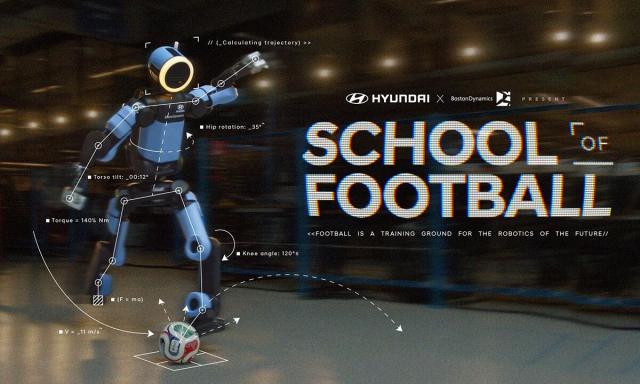
In South Korea, companies like Hyundai Motor's Atlas, Samsung Electronics, LG Electronics, and Doosan Robotics are showcasing their potential, but a national strategy is lacking. While individual companies excel, the industrial ecosystem remains fragmented. There is no visible strategy to consolidate national resources as seen in the memory semiconductor sector.
To develop physical AI into a second memory industry, three essential conditions must be met.
First, it should be designated as a national strategic industry, expanding tax benefits and research and development support while also innovating regulations. Establishing a talent development system that integrates AI software, mechanical engineering, and control engineering is also urgent.
The strengths of a manufacturing powerhouse must be actively utilized. South Korea possesses global competitiveness in automotive, shipbuilding, batteries, semiconductors, and smart factories. These are the industries where physical AI will be applied first. If manufacturing sites are used as testing grounds for AI and robotics, South Korea can seize the market faster than other countries.
Expanding collaboration with global platform companies is inevitable. Now is the opportunity as NVIDIA shows interest in South Korea. Just as the memory industry grew alongside the global IT ecosystem, a joint development framework must be established in the physical AI sector with big tech companies.
In the 1980s, South Korea focused its national capabilities on memory semiconductors, emerging as a global leader. Many believed it would be difficult to catch up with Japan and the United States, but the outcome was different.
Physical AI stands at a similar inflection point. What Jensen Huang sees in South Korea is not just a few robotics companies. He is focusing on the industrial foundation that can combine AI with manufacturing. We must not underestimate this potential ourselves.
The leadership in the AI era is no longer determined within data centers. Physical AI, which operates in the real world, is emerging as a new growth axis. The time has come to choose whether we can replicate the HBM success story in the realm of physical AI.
* This article has been translated by AI.
Copyright ⓒ Aju Press All rights reserved.