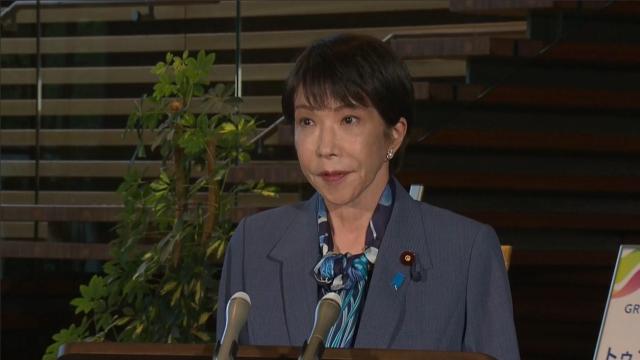
SEOUL, August 15 (AJP) -Japanese Prime Minister Sanae Takaichi dropped the word "remorse" from her first Aug. 15 war memorial address on Saturday, returning to language associated with her political mentor Shinzo Abe even as she stayed away from the diplomatically sensitive Yasukuni Shrine.
Marking the 81st anniversary of Japan's World War II surrender, Takaichi pledged that the horrors of war "must never be repeated," but omitted the "remorse" invoked last year by her predecessor Shigeru Ishiba, who restored the term after a 13-year absence.
The shift was closely watched in South Korea and China, where the wording of Japanese leaders' Aug. 15 statements and visits to Yasukuni are regarded as measures of Tokyo's willingness to confront its colonial and wartime past.
At the government-sponsored National Memorial Ceremony for the War Dead at Tokyo's Nippon Budokan, Takaichi said Japan had "consistently walked the path of a nation that values peace" and worked for global peace and prosperity.
"The horrors of war must never be repeated," Takaichi said. "Although 81 years have now passed, no matter how time flows, we will remain committed to this resolute pledge, passing it down across generations," she added.
Her speech nevertheless marked a reversal from Ishiba's language at last year's 80th anniversary ceremony.
Ishiba became the first Japanese prime minister since 2012 to use the word "remorse" in an Aug. 15 memorial address, saying Japan must keep in its heart the "remorse and lesson from that war." He also renewed a pledge against war.
Japanese prime ministers had regularly referred to wartime remorse and the suffering inflicted on other Asian countries before Abe returned to office in December 2012. From Abe's 2013 address onward, explicit references to remorse and Japan's wartime aggression disappeared from the annual ceremony.
Takaichi, a conservative who has long identified politically with Abe, also avoided direct mention of Japan's aggression in Asia or its 1910-45 colonial rule of the Korean Peninsula.
Her choice of wording reinforced the distinction.
Takaichi described Japan as a "nation that values peace," language previously associated with Abe and former Prime Minister Yoshihide Suga. More recent prime ministers, including Fumio Kishida and Ishiba, had referred to Japan as a "peaceful nation."
The omission of "remorse" stood in contrast with Emperor Naruhito, who attended the memorial with Empress Masako and again expressed "deep remorse" while reflecting on the war. The emperor also called for memories of suffering during and after the conflict to be passed to future generations.
About 3.1 million Japanese military personnel and civilians died in the war. Participants observed a minute of silence at noon, the time Emperor Hirohito's radio broadcast announcing Japan's acceptance of the Allied surrender terms began on Aug. 15, 1945.
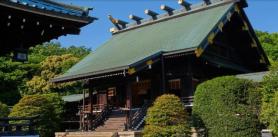
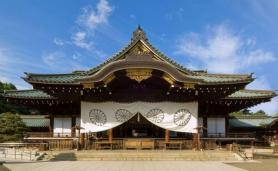
Takaichi's shift in memorial language came even as she exercised restraint over Yasukuni.
The prime minister did not visit the shrine Saturday, instead paying from her own pocket for a ritual offering known as a tamagushi in her capacity as president of the ruling Liberal Democratic Party.
Before becoming prime minister, Takaichi regularly visited Yasukuni on Aug. 15 and during its major spring and autumn festivals. She also stayed away from the shrine's spring festival in April after taking office, sending an offering instead.
Her decision to skip an in-person visit Saturday had been widely interpreted in Japanese media as an effort to avoid damaging improving relations with South Korea and adding to tensions with China. Kyodo had reported before the anniversary that Tokyo was also mindful of trilateral security cooperation with Seoul and Washington.
No serving Japanese prime minister has visited Yasukuni since Abe in December 2013. Junichiro Koizumi was the last prime minister to go to the shrine on Aug. 15, in 2006.
Instead, Defense Minister Shinjiro Koizumi visited Yasukuni at around 7 a.m. Saturday, leaving without answering reporters' questions. Hitoshi Kikawada, minister of state for Okinawa and Northern Territories affairs, also visited and made an offering.
Koizumi's appearance was particularly sensitive because of his defense portfolio. He became the first sitting Japanese defense minister to visit Yasukuni on Aug. 15 since Minoru Kihara, now chief Cabinet secretary, did so in 2024. Koizumi also visited the shrine on the surrender anniversary last year when he was agriculture minister.
The visits mean at least one serving Cabinet minister has gone to Yasukuni on Aug. 15 for seven consecutive years since 2020. The streak reached six years in 2025.
LDP Secretary-General Shunichi Suzuki, General Council Chair Haruko Arimura and Election Strategy Committee Chair Yasutoshi Nishimura visited the shrine together Saturday.
The South Korean government on Friday expressed “deep regret” over what it called “anachronistic acts that ignore history” after senior Japanese figures again made ritual offerings or visited Yasukuni Shrine.
“The government strongly urges Japan’s responsible leaders to face history squarely and demonstrate through their actions humble reflection and sincere remorse over the past,” the Foreign Ministry said in a statement.
“We emphasize that this is an important foundation for building a future-oriented Korea-Japan relationship based on mutual trust.”
Yasukuni honors more than 2.4 million people who died in wars involving Japan since the late 19th century. Among those enshrined are 14 Class-A war criminals convicted after World War II, including wartime Prime Minister Hideki Tojo. Their inclusion has made the shrine a recurring source of diplomatic friction with South Korea and China, where visits by Japanese political leaders are viewed as symbols of insufficient reckoning with Japan's wartime aggression and colonial rule.
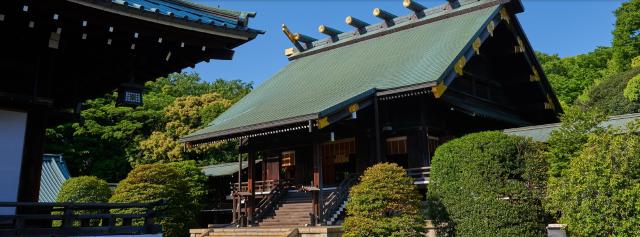
Aug. 15 carries sharply different historical meanings across the region. In South Korea it is Liberation Day, marking the end of Japan's 1910-45 colonial rule. Japan observes the date as the day to commemorate the war dead and pray for peace, marking Emperor Hirohito's announcement in 1945 that Japan would accept the Allied terms of surrender.
AJP Takeaways:
- Takaichi chose distance, not disassociation: The prime minister skipped Yasukuni but sent a privately funded ritual offering as LDP president.
- Cabinet and party conservatives remained visible: Defense Minister Shinjiro Koizumi, another minister and three senior LDP executives visited the shrine on Aug. 15.
- History remains a diplomatic fault line: The visits came on the same date Japan commemorates its war dead and South Korea celebrates liberation from 35 years of Japanese colonial rule.
Copyright ⓒ Aju Press All rights reserved.